Digital Photo Management 2026: Organize US Memories

Anúncios
Effectively managing digital photos in 2026 involves adopting advanced organizational tools and secure storage solutions to safeguard your precious memories.
Anúncios
In an increasingly digital world, the sheer volume of images we capture can feel overwhelming. Mastering digital photo management in 2026 is not just about tidiness; it’s about preserving your life’s most cherished moments for years to come. This guide offers practical strategies for US residents to efficiently organize and safeguard their memories.
Anúncios
Understanding the Digital Deluge: Why Organization Matters
The ease of capturing photos with smartphones and digital cameras has led to an explosion of digital images. Without a robust system, these precious memories can quickly turn into an unmanageable mess, lost in countless folders or forgotten on old devices. Effective organization transforms this chaos into an accessible, enjoyable archive.
Consider the emotional value of your photographs. They are more than just data; they are snapshots of life’s journey, from everyday moments to significant milestones. A well-organized digital library ensures these memories are not only preserved but also easily shareable and viewable whenever you desire.
The Hidden Costs of Disorganization
Neglecting digital photo organization can lead to several frustrations and potential losses. These range from wasted time searching for specific images to the irreversible loss of files due to hardware failure or accidental deletion.
- Time Consumption: Endless scrolling and searching for a specific photo can be incredibly frustrating and time-consuming.
- Duplicate Files: Unmanaged collections often contain numerous duplicates, wasting valuable storage space.
- Data Loss Risk: Without a clear system, critical photos might not be properly backed up, leaving them vulnerable.
- Emotional Stress: The thought of losing irreplaceable memories can be a significant source of anxiety.
By investing time in setting up a proper management system, you’re not just organizing files; you’re investing in peace of mind and the long-term enjoyment of your personal history. This proactive approach ensures that your digital memories remain a source of joy, not stress.
Ultimately, a structured approach to digital photo management in 2026 is foundational for anyone looking to maintain control over their ever-growing collection of images. It’s about creating a system that serves you, making your memories easily accessible and safe.
Choosing the Right Storage Solutions for Your Photos
Selecting appropriate storage is a cornerstone of effective digital photo management. In 2026, a blend of local and cloud-based solutions offers the best balance of accessibility, security, and redundancy. Understanding the pros and cons of each type is crucial for making informed decisions tailored to your needs.
Local storage, such as external hard drives and network-attached storage (NAS) devices, provides immediate access and control over your files. Cloud storage, on the other hand, offers unparalleled accessibility from anywhere and robust protection against local hardware failures.
Cloud Storage: Accessibility and Redundancy
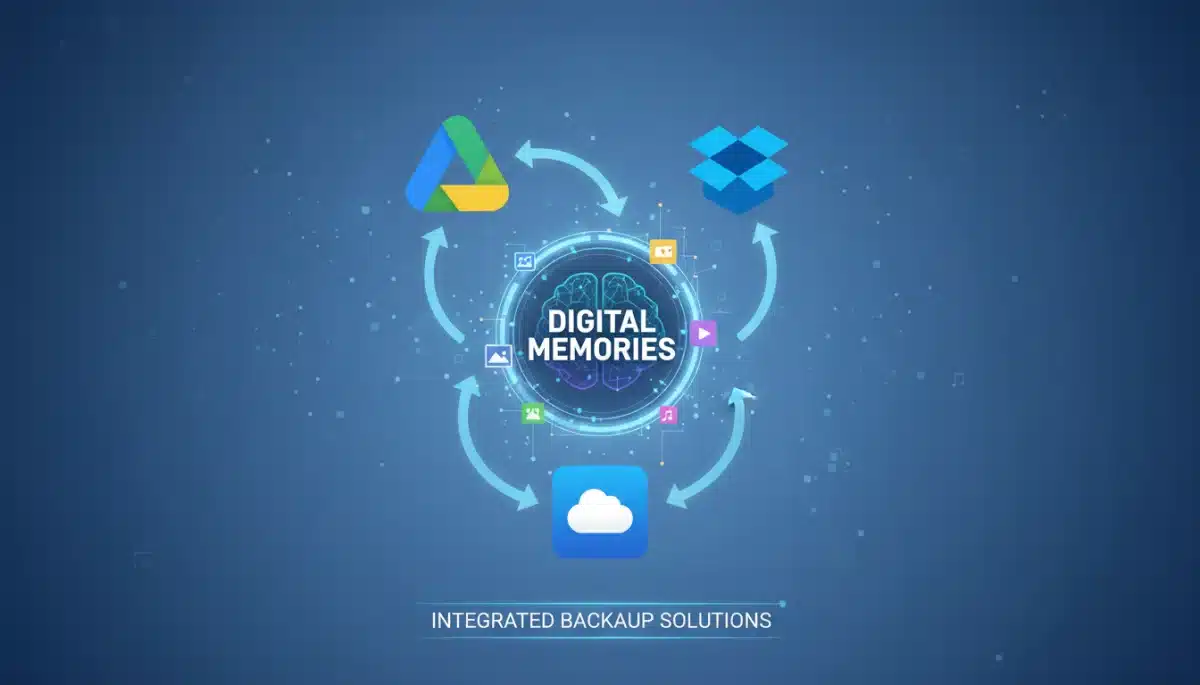
Cloud services have evolved significantly, offering more competitive pricing and advanced features. Platforms like Google Photos, Apple iCloud, Dropbox, and Amazon Photos provide various plans suitable for different storage needs.
- Google Photos: Excellent for AI-powered organization and search, with generous storage options.
- Apple iCloud: Seamless integration for Apple users, keeping photos synchronized across devices.
- Dropbox: A versatile option, great for sharing and collaboration, with robust syncing capabilities.
- Amazon Photos: Unlimited full-resolution photo storage for Amazon Prime members, a significant perk.
The primary advantage of cloud storage is its off-site backup capability, protecting your photos even if your local devices are lost, stolen, or damaged. Many services also offer automatic uploads, simplifying the backup process significantly.

Local Storage: Speed and Control
External hard drives remain a popular choice for their speed and the ability to keep your data physically close. For larger collections or those seeking more advanced control, NAS devices offer a personal cloud experience.
When selecting local storage, prioritize reputable brands and consider solid-state drives (SSDs) for faster performance, though traditional hard disk drives (HDDs) still offer more storage capacity per dollar. Always use at least two separate local drives for backup redundancy.
A comprehensive strategy for digital photo management in 2026 should ideally incorporate both cloud and local storage. This ‘3-2-1 backup rule’ (three copies of your data, on two different types of media, with one copy off-site) is a gold standard for data preservation.
Establishing an Effective Naming and Folder Structure
A consistent naming convention and logical folder structure are paramount for efficient retrieval and long-term organization. Without these, even the best storage solutions can become overwhelming. The goal is to create a system that is intuitive and scalable.
Start by thinking about how you typically search for photos. Do you look by date, event, or people? Your folder structure should reflect these natural search patterns. Consistency is key; once you establish a system, stick to it rigorously.
Date-Based Organization
One of the most robust and universally applicable organizational methods is a date-based structure. This creates an objective timeline for your photos, making it easy to navigate through years, months, and specific events.
- Year Folders: Create a top-level folder for each year (e.g., ‘2026’).
- Month Subfolders: Within each year, create subfolders for months (e.g., ‘2026-01 January’, ‘2026-02 February’).
- Event Sub-subfolders: Inside monthly folders, create specific event folders (e.g., ‘2026-01-15 Sarah’s Birthday’).
This hierarchical approach allows for quick navigation and ensures that even if you forget the specific name of an event, you can usually locate it by its approximate date. It’s a highly scalable system that works well for personal and professional archives.
Consistent File Naming
Beyond folders, consistent file naming adds another layer of organization. Avoid generic names like ‘IMG_0001.jpg’. Instead, incorporate relevant information directly into the filename.
A common and effective filename structure includes the date, a brief description, and a sequential number if multiple photos share the same description (e.g., ‘2026-01-15_SarahsBirthday_001.jpg’). Many photo management software tools can automate parts of this renaming process, saving significant time.
Implementing a clear naming and folder structure from the outset will drastically improve your digital photo management in 2026. It transforms a scattered collection into a well-indexed archive, making every memory easily retrievable.
Leveraging Photo Management Software and AI Tools
In 2026, photo management software has become incredibly sophisticated, often integrating artificial intelligence to simplify organization, tagging, and even editing. These tools can significantly reduce the manual effort involved in maintaining a vast digital library.
From comprehensive desktop applications to cloud-based platforms with smart features, choosing the right software can revolutionize your workflow. Consider factors like your operating system, the size of your photo collection, and your budget when making a selection.
Popular Software Solutions
Several leading photo management applications offer robust features for organizing, editing, and sharing. Each has its strengths, catering to different user needs.
- Adobe Lightroom: A professional-grade tool for organizing, editing, and syncing photos across devices, ideal for serious photographers.
- Mylio Photos: Designed for cross-device synchronization and organization, allowing you to access your entire library from anywhere without relying solely on cloud storage.
- Phototheca: A Windows-specific solution offering powerful organization features, including smart albums and duplicate detection.
- Apple Photos (macOS/iOS): Deeply integrated into the Apple ecosystem, offering facial recognition, smart albums, and seamless iCloud synchronization.
These platforms often include features like facial recognition, object detection, and geotagging, which automatically categorize photos, making them searchable by people, places, or things. This automation is a game-changer for digital photo management in 2026.
The Power of AI in Photo Organization
Artificial intelligence is increasingly at the heart of modern photo management. AI algorithms can analyze images to identify content, automatically tag photos, and even suggest optimal organizational structures. This reduces the need for manual tagging, which can be incredibly time-consuming for large collections.
Look for software that offers intelligent search capabilities, allowing you to find photos based on complex queries like ‘beach photos from 2023 with my dog.’ The more advanced the AI, the less manual effort you’ll need to exert, freeing you to enjoy your memories.
Embracing these powerful software and AI tools is a crucial step towards efficient digital photo management. They transform a daunting task into an intuitive process, ensuring your memories are not just stored but truly organized and accessible.
Developing a Robust Backup Strategy
Even the most meticulously organized photo collection is vulnerable without a solid backup strategy. Data loss can occur due to hardware failure, accidental deletion, cyberattacks, or natural disasters. A multi-layered backup plan is essential to protect your irreplaceable memories.
Think of backups as insurance for your digital life. You hope you never need to use them, but if disaster strikes, they are your only safeguard. The ‘3-2-1 backup rule’ is widely recommended and easily achievable with today’s technology.
Implementing the 3-2-1 Backup Rule
The 3-2-1 rule dictates that you should have:
- 3 copies of your data: The original plus two backups.
- 2 different types of media: For example, an external hard drive and cloud storage.
- 1 copy off-site: Stored remotely, typically via cloud services, to protect against local disasters.
For example, your original photos might reside on your computer. Your first backup could be on an external hard drive, and your second, off-site backup would be on a cloud service like Google Photos or Dropbox. This redundancy ensures that even if one backup method fails, you have others to fall back on.
Automating Your Backups
Manual backups are prone to human error and inconsistency. In 2026, most operating systems and cloud services offer automated backup features. Set these up to run regularly, ideally daily or weekly, depending on how frequently you add new photos.
Regularly verify your backups to ensure they are complete and restorable. This might involve occasionally restoring a test file to confirm the process works as expected. Automated backups, combined with the 3-2-1 rule, form an impenetrable defense for your digital memories.
A robust backup strategy is non-negotiable for effective digital photo management in 2026. It provides the ultimate peace of mind, knowing that your cherished photos are safe, regardless of unforeseen circumstances. Don’t wait until it’s too late; implement your backup plan today.
Preserving Your Digital Legacy for Future Generations
Beyond immediate organization and backup, considering the long-term preservation of your digital photos is vital. What happens to your memories decades from now, or even after you’re gone? This involves thinking about file formats, metadata, and digital legacy planning.
The goal is to ensure your photos remain accessible and viewable by future generations, despite changes in technology. This foresight transforms your collection from mere files into a lasting historical record.
Future-Proofing File Formats
While JPEG is ubiquitous, consider saving important photos in more robust, less lossy formats where possible. RAW files (for photographers) and TIFF are excellent choices for archival purposes, as they retain more image data.
Even for JPEGs, ensure you’re saving high-resolution versions. As technology advances, higher resolutions will become the standard, and low-resolution images may appear dated or pixelated on future displays. Regularly check for evolving best practices in digital archiving.
Enriching Photos with Metadata
Metadata—data about your data—is crucial for long-term discoverability. This includes:
- Keywords/Tags: Add descriptive tags (e.g., ‘vacation’, ‘California’, ‘beach’, ‘sunset’) to make photos searchable.
- Captions: Write brief descriptions or stories about the photo’s content, context, and significance.
- Geotags: Ensure location data is embedded, which most modern devices do automatically.
- Date and Time: Verify that the correct date and time are associated with each photo.
Metadata helps future generations understand the context of your photos and provides a rich narrative alongside the visual. It’s a small investment of time that yields immense long-term value for your digital photo management in 2026.
Digital Legacy Planning
Consider how your digital assets, including your photo collection, will be handled after your passing. This is an often-overlooked aspect of digital preservation.
Create a digital will or a clear set of instructions for trusted individuals, outlining access credentials for cloud services, external hard drives, and any specific wishes for the disposition of your photos. Services exist that specialize in digital legacy management, ensuring your memories live on as you intend.
By addressing these aspects of preservation and legacy, you ensure that your digital photo management in 2026 extends beyond your lifetime, securing your family’s visual history for generations to come.
| Key Aspect | Brief Description |
|---|---|
| Organization | Implement consistent naming and folder structures (e.g., date-based) for easy retrieval. |
| Storage | Combine local (external drives) and cloud solutions for accessibility and redundancy. |
| Backup | Follow the ‘3-2-1 rule’ with automated backups to prevent data loss. |
| Legacy | Future-proof file formats and plan for digital inheritance to preserve memories. |
Frequently Asked Questions About Digital Photo Management
Begin by consolidating all photos into one central location. Then, implement a date-based folder structure (Year/Month/Event) and use consistent naming conventions. Prioritize current photos, then gradually work backward through older archives, deleting duplicates as you go.
Ideally, use both. Cloud storage offers off-site redundancy and accessibility, while external hard drives provide fast local access and control. This ‘hybrid’ approach, combined with the 3-2-1 backup rule, offers the most robust protection for your digital memories.
It depends on how frequently you take photos. For active photographers, daily backups are recommended. For most users, weekly automated backups suffice. Ensure your backup system is set to run automatically to avoid manual oversight and ensure consistency.
Metadata is data embedded within a photo file, such as date, location (geotags), camera settings, and user-added tags or captions. It’s crucial because it enhances searchability and provides context, making photos easier to find and understand years later.
Focus on using stable, widely supported file formats (like high-res JPEGs or TIFFs), embed rich metadata, and establish a clear digital legacy plan. This includes documenting access to your archives and expressing your wishes for their long-term preservation and sharing.
Conclusion
Effective digital photo management in 2026 is an ongoing process, not a one-time task. By adopting a systematic approach to organization, leveraging robust storage and backup solutions, and embracing intelligent software tools, you can transform a potential digital burden into a treasure trove of accessible memories. Investing time today in these strategies ensures that your cherished moments are not only preserved but also easily shareable and viewable for years, and even generations, to come. Take control of your digital legacy and safeguard your visual history with confidence.