2026 Fed Rate Hikes: Homeowners’ 5-Step Money Guide

Anúncios
Homeowners must strategically prepare for the 2026 Federal Reserve interest rate hikes to safeguard their financial stability and optimize mortgage strategies proactively.
Anúncios
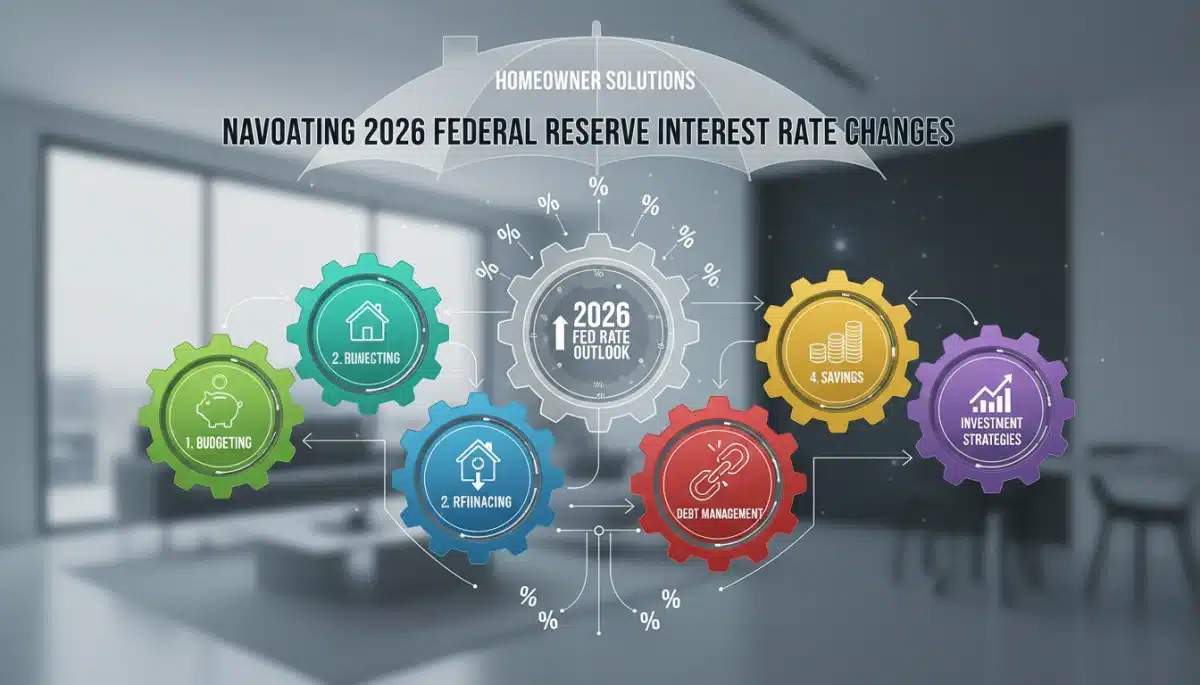
Understanding and preparing for the 2026 Federal Reserve interest rate hikes is crucial for homeowners across the United States. These anticipated adjustments by the Fed could significantly impact your mortgage payments, home equity, and overall financial health. This guide offers a clear, five-step approach to help you make informed money decisions and secure your future.
Anúncios
Understanding the Federal Reserve’s Role and 2026 Outlook
The Federal Reserve, often called the Fed, plays a pivotal role in the U.S. economy by influencing interest rates. Its primary goal is to maintain maximum employment and stable prices. When inflation rises, the Fed typically increases interest rates to cool down the economy, making borrowing more expensive. Conversely, when the economy slows, it lowers rates to stimulate growth.
The outlook for 2026 suggests potential continued rate hikes, driven by persistent inflationary pressures or robust economic growth that warrants monetary tightening. For homeowners, these changes are not abstract economic theories; they translate directly into tangible impacts on personal finances, especially for those with adjustable-rate mortgages (ARMs) or considering refinancing. Preparing now means understanding the potential scale and timing of these shifts, allowing for proactive rather than reactive financial planning.
Why the Fed Raises Rates
The decision to raise interest rates is complex, driven by a multitude of economic indicators. The Fed monitors:
- Inflation Data: Consumer Price Index (CPI) and Personal Consumption Expenditures (PCE) are key measures.
- Employment Figures: Unemployment rates and job growth reports offer insights into economic health.
- GDP Growth: A strong economy often signals inflationary risks, prompting rate adjustments.
- Global Economic Conditions: International events can also influence domestic monetary policy.
These factors collectively inform the Federal Open Market Committee (FOMC)’s decisions, which directly affect the federal funds rate and, subsequently, other interest rates like those for mortgages. Understanding this mechanism is the first step in preparing for the 2026 landscape.
In conclusion, the Fed’s actions are a direct response to prevailing economic conditions, aiming to balance growth and stability. Homeowners must stay informed about these macroeconomic trends to anticipate how they might affect personal financial strategies in the coming years.
Step 1: Assess Your Current Mortgage Situation
Before any significant financial decision, a thorough assessment of your current mortgage is essential. This involves understanding your interest rate, loan type, remaining term, and current equity. For many homeowners, the type of mortgage they hold will dictate the immediate impact of the 2026 Federal Reserve interest rate hikes.
Fixed-rate mortgage holders will generally be less affected by direct rate increases, as their interest rate remains constant. However, those with adjustable-rate mortgages (ARMs) could see their monthly payments rise significantly when their adjustment period hits. Knowing your mortgage’s specifics allows you to project potential payment changes and plan accordingly. This initial assessment forms the bedrock of your proactive strategy.
Fixed vs. Adjustable Rate Mortgages
The distinction between fixed and adjustable rates is paramount when considering future rate changes:
- Fixed-Rate Mortgages: Offer stability, with the interest rate locked in for the entire loan term. Your monthly principal and interest payments remain predictable, shielding you from future rate hikes.
- Adjustable-Rate Mortgages (ARMs): Feature an initial fixed-rate period, after which the interest rate adjusts periodically based on a chosen index, plus a margin. Rising rates mean higher payments for ARM holders.
Beyond the rate type, understanding your remaining loan balance and the estimated value of your home provides a clear picture of your equity. This equity can be a valuable asset for future financial maneuvers, such as refinancing or home equity loans, even in a rising rate environment. A detailed review of your mortgage statement and a quick online home valuation can provide these critical insights.
Ultimately, a clear understanding of your current mortgage situation is the starting point for any effective financial strategy. It empowers you to identify vulnerabilities and opportunities before the 2026 rate changes fully materialize.
Step 2: Optimize Your Budget and Emergency Savings
With potential 2026 Federal Reserve interest rate hikes on the horizon, strengthening your financial foundation through budgeting and robust emergency savings becomes more critical than ever. An optimized budget provides a clear picture of your income and expenses, allowing you to identify areas for savings and reallocate funds effectively. This proactive approach ensures you are not caught off guard by increased housing costs or other unexpected expenses.
Emergency savings act as a crucial buffer against financial shocks. Experts typically recommend having at least three to six months’ worth of essential living expenses saved. For homeowners, this buffer is even more vital, as it can cover unexpected home repairs, job loss, or a sudden increase in mortgage payments due to rising interest rates. Building this reserve now offers peace of mind and financial flexibility.
Creating a Resilient Budget
A resilient budget isn’t about deprivation; it’s about control and foresight. Consider these steps:
- Track Everything: Document all income and expenses for at least a month to understand where your money goes.
- Categorize Spending: Differentiate between needs (housing, utilities, groceries) and wants (dining out, entertainment).
- Identify Savings Opportunities: Look for subscriptions you don’t use, areas where you can cut back, or opportunities to reduce discretionary spending.
- Automate Savings: Set up automatic transfers from your checking to your savings account immediately after you get paid.
Beyond simply tracking, actively seeking ways to reduce high-interest debt, such as credit card balances, can free up significant cash flow. Every dollar saved or freed up from debt repayment can be redirected towards your emergency fund or preparing for potential mortgage adjustments. This strategic budgeting ensures you are financially agile and ready to adapt.
In summary, optimizing your budget and prioritizing emergency savings are fundamental steps in preparing for an environment of rising interest rates. These practices provide the financial stability needed to navigate future economic changes with confidence.
Step 3: Explore Refinancing Options Proactively
For homeowners with adjustable-rate mortgages or those with fixed rates significantly higher than current market offerings, exploring refinancing options before the full impact of 2026 Federal Reserve interest rate hikes is a critical step. Refinancing allows you to secure a new loan with potentially better terms, often converting an ARM to a fixed-rate mortgage, thus locking in a predictable payment for years to come. This move can provide invaluable stability amidst anticipated market volatility.
Even if you have a fixed-rate mortgage, it’s worth evaluating if current rates are lower than yours. A lower rate could reduce your monthly payments or shorten your loan term, saving you substantial money over the life of the loan. However, remember that refinancing involves closing costs, so a careful cost-benefit analysis is essential to ensure it’s a financially sound decision for your specific situation.
Types of Refinancing to Consider
Several refinancing options exist, each with distinct advantages:
- Rate-and-Term Refinance: Focuses on securing a lower interest rate or changing the loan term (e.g., from 30 to 15 years) without cashing out equity.
- Cash-Out Refinance: Allows you to borrow more than your current mortgage balance, converting a portion of your home equity into cash. This can be useful for debt consolidation or home improvements, but it increases your loan amount.
- FHA Streamline Refinance: For existing FHA loan holders, this option often requires less paperwork and no appraisal, making it a quicker process.
- VA Streamline Refinance (IRRRL): Similar to FHA streamline, designed for veterans with existing VA loans.
Consulting with multiple lenders is advisable to compare rates, fees, and terms. A mortgage broker can also provide valuable insights into the best options tailored to your financial profile and goals. Don’t wait until rates have already climbed; proactive exploration can save you thousands.
Refinancing is a powerful tool for managing mortgage costs in a rising rate environment. By acting early, homeowners can lock in favorable terms and gain greater control over their housing expenses, mitigating the impact of future Fed rate adjustments.
Step 4: Reduce High-Interest Debt and Build Equity
As we approach the potential 2026 Federal Reserve interest rate hikes, strategically reducing high-interest debt and actively building home equity becomes paramount for homeowners. High-interest debts, such as credit card balances or personal loans, become even more burdensome as overall interest rates climb. Prioritizing their repayment reduces your monthly financial obligations and frees up cash flow, which can be critical if mortgage payments increase.
Simultaneously, increasing your home equity offers a dual benefit: it strengthens your financial position and provides a larger buffer against market fluctuations. Equity is the portion of your home that you truly own, calculated by subtracting your outstanding mortgage balance from your home’s current market value. A higher equity stake gives you more financial leverage and security.
Strategies for Debt Reduction and Equity Growth
There are several effective strategies homeowners can employ:
- Debt Avalanche or Snowball Method: The avalanche method prioritizes paying off debts with the highest interest rates first, while the snowball method focuses on smaller balances to build momentum. Both are effective for systematic debt reduction.
- Extra Mortgage Payments: Even small additional payments towards your principal each month can significantly reduce the total interest paid over the life of the loan and build equity faster.
- Bi-weekly Payments: By making half of your mortgage payment every two weeks, you end up making an extra full payment each year, accelerating principal reduction.
- Home Equity Line of Credit (HELOC) or Loan Consolidation: While these can be useful for consolidating high-interest debt, exercise caution, especially in a rising rate environment, as they use your home as collateral.
Reducing debt and building equity are not just about financial discipline; they are about creating a stronger, more resilient financial profile. This proactive approach minimizes your exposure to rising interest costs and maximizes your most significant asset: your home.
In conclusion, by aggressively tackling high-interest debt and consciously accelerating equity growth, homeowners can significantly improve their financial health and better withstand the pressures of upcoming interest rate adjustments.
Step 5: Diversify Investments and Seek Professional Advice
In anticipation of the 2026 Federal Reserve interest rate hikes, a diversified investment strategy coupled with expert financial advice is crucial for homeowners looking to protect and grow their wealth. Rising interest rates can impact various asset classes differently. While some investments, like bonds, may see their values decline, others, such as certain dividend stocks or inflation-protected securities, might perform better. Diversification spreads risk across different asset types, shielding your portfolio from excessive exposure to any single market segment.
Navigating complex economic landscapes requires more than just intuition. Engaging with a qualified financial advisor offers personalized insights and strategies tailored to your unique financial situation, risk tolerance, and long-term goals. Their expertise can help you make informed decisions about your mortgage, investments, and overall financial planning in a dynamic environment.
The Value of Diversification and Professional Guidance
Effective financial planning in a changing rate environment involves:
- Portfolio Review: Regularly assess your investment portfolio to ensure it aligns with your risk tolerance and objectives, making adjustments as economic conditions shift.
- Asset Allocation: Consider a mix of stocks, bonds, real estate (beyond your primary residence), and potentially alternative investments to spread risk.
- Inflation Protection: Explore investments designed to perform well during inflationary periods, such as Treasury Inflation-Protected Securities (TIPS) or real estate investment trusts (REITs).
- Financial Advisor Consultation: A professional can help you understand the nuances of rate hikes, assess your current financial health, and develop a comprehensive plan that integrates your mortgage, savings, and investment strategies.
A financial advisor can also provide guidance on tax implications, retirement planning, and estate planning, ensuring all aspects of your financial life are cohesive and optimized. Their objective perspective can be invaluable in avoiding emotional decisions driven by market fear or exuberance.
Ultimately, a well-diversified investment portfolio, guided by professional advice, positions homeowners to not only mitigate the risks associated with rising interest rates but also to potentially capitalize on new opportunities. This holistic approach ensures long-term financial resilience and growth.
Long-Term Financial Planning Beyond 2026
While the immediate focus is on the 2026 Federal Reserve interest rate hikes, a truly robust financial strategy extends far beyond this singular event. Long-term planning involves anticipating future economic cycles, understanding personal financial goals, and building a flexible framework that can adapt to unforeseen changes. For homeowners, this means continually assessing their mortgage, savings, and investment strategies against a backdrop of evolving market conditions and personal life stages.
Future rate adjustments, inflation trends, and housing market dynamics will continue to shape the financial landscape. Therefore, establishing a habit of regular financial reviews and adjustments is more beneficial than a one-time preparation. This continuous engagement ensures that your financial decisions remain aligned with your objectives, whether it’s paying off your mortgage early, saving for retirement, or funding your children’s education.
Key Elements of Sustainable Financial Health
Sustainable financial health for homeowners encompasses several ongoing practices:
- Regular Budget Reviews: Revisit your budget annually, or whenever significant life events occur, to ensure it still reflects your income and expenses accurately.
- Mortgage Check-ups: Periodically evaluate your mortgage terms against prevailing market rates. What seemed like a good rate today might not be optimal in five years.
- Emergency Fund Replenishment: If you tap into your emergency savings, make it a priority to replenish it as quickly as possible.
- Investment Rebalancing: Over time, your investment portfolio’s asset allocation can drift. Rebalancing ensures it stays aligned with your risk tolerance and goals.
- Estate Planning: Ensure your will, trusts, and beneficiaries are updated to reflect your current wishes and family situation.
Furthermore, staying informed about broader economic indicators and housing market forecasts can help you make more proactive decisions. Subscribing to reputable financial news sources and attending educational webinars can provide valuable insights without the need for constant, in-depth research.
In essence, long-term financial planning is an ongoing journey, not a destination. By embedding these practices into your routine, homeowners can create a durable financial foundation that withstands economic shifts and supports their aspirations for many years to come.
| Key Strategy | Brief Description |
|---|---|
| Assess Mortgage | Understand your loan type, rate, and equity to predict impact of rate hikes. |
| Optimize Budget | Create a robust budget and build emergency savings for financial resilience. |
| Explore Refinancing | Consider refinancing to lock in lower fixed rates before further Fed increases. |
| Diversify Investments | Adjust portfolio and seek professional advice for optimal growth and protection. |
Frequently Asked Questions About 2026 Fed Rate Hikes
If you have an ARM, your interest rate will likely increase when its adjustment period arrives, leading to higher monthly payments. The extent depends on your loan’s specific terms, including caps and the index it follows. Proactive planning is key to mitigating these increases.
Refinancing a fixed-rate mortgage can be beneficial if current rates are significantly lower than your existing rate, allowing you to reduce monthly payments or shorten your loan term. Always consider closing costs and your break-even point before making a decision.
The most effective way is to automate savings by setting up regular transfers to a separate, easily accessible savings account. Aim for three to six months of essential living expenses, prioritizing this fund over discretionary spending to ensure financial security.
Reducing high-interest debt frees up cash flow, which can then be allocated to absorb potential increases in mortgage payments or to build your emergency fund. It also lowers your overall debt burden, improving your financial flexibility and credit score.
Homeowners should seek professional financial advice as soon as they become concerned about the impact of future rate hikes. A financial advisor can provide personalized strategies for budgeting, refinancing, debt management, and investment diversification tailored to your unique situation.
Conclusion
The anticipation of 2026 Federal Reserve interest rate hikes presents both challenges and opportunities for homeowners. By diligently following this 5-step money decision guide—assessing your mortgage, optimizing your budget and savings, exploring refinancing, reducing high-interest debt, and diversifying investments with professional guidance—you can proactively safeguard your financial stability. These strategic measures ensure you are well-prepared to navigate the evolving economic landscape, turning potential challenges into opportunities for greater financial resilience and long-term security. The time to act is now, setting a solid foundation for your financial future.