2026 Federal Reserve Interest Rate Outlook: Mortgage & Lending Impact
Anúncios
The 2026 Federal Reserve interest rate outlook is poised to significantly influence U.S. mortgage rates and consumer lending, affecting borrowing costs and economic activity across various sectors.
Understanding the 2026 Federal Reserve Rates is crucial for every American, as decisions made by the nation’s central bank directly shape the financial landscape, from the cost of buying a home to the interest on your credit card. How will these anticipated shifts impact your personal finances and the broader U.S. economy?
Anúncios
The Federal Reserve’s Mandate and Monetary Policy Tools
The Federal Reserve, often called the Fed, operates with a dual mandate from Congress: to achieve maximum employment and stable prices. These two goals are intrinsically linked and guide the Fed’s monetary policy decisions, including setting the federal funds rate target. The federal funds rate is the benchmark for many other interest rates in the economy, making its outlook a critical factor for financial planning in 2026.
Anúncios
To fulfill its mandate, the Fed employs several tools. The primary tool for influencing economic activity is the federal funds rate, which banks charge each other for overnight lending. By adjusting this target rate, the Fed can make borrowing more or less expensive throughout the financial system. When the Fed raises rates, borrowing becomes costlier, which can slow down inflation but might also temper economic growth. Conversely, lowering rates stimulates borrowing and spending, potentially boosting economic activity but risking higher inflation.
Key Monetary Policy Instruments
- Federal Funds Rate: The target rate for interbank overnight lending, influencing short-term interest rates.
- Discount Rate: The interest rate at which eligible commercial banks can borrow money directly from the Federal Reserve.
- Reserve Requirements: The amount of funds banks must hold in reserve against deposits, though this tool is less frequently adjusted now.
- Open Market Operations (OMO): The buying and selling of government securities in the open market to influence the money supply and interest rates.
Additionally, the Fed utilizes quantitative easing (QE) or quantitative tightening (QT), which involve large-scale asset purchases or sales to influence long-term interest rates and the overall financial market. The balance sheet of the Fed, which expanded significantly during periods of QE, is now a key factor in future monetary policy discussions. The interplay of these tools creates a complex but crucial framework that will dictate the economic environment in 2026.
In conclusion, the Federal Reserve’s mandate to balance employment and price stability drives its use of various monetary policy tools. These instruments, particularly the federal funds rate, are pivotal in shaping the cost of money and credit, directly influencing the economic landscape and the financial decisions of individuals and businesses across the U.S. in the coming years.
Economic Indicators Guiding the Fed’s 2026 Decisions
The Federal Reserve doesn’t make decisions in a vacuum. Its policy choices are heavily influenced by a continuous assessment of various economic indicators, providing a real-time pulse of the U.S. economy. Understanding these key data points is essential for anticipating the Fed’s actions regarding 2026 Federal Reserve Rates and their subsequent impact on markets and consumers.
Inflation remains a paramount concern. The Fed primarily monitors the Personal Consumption Expenditures (PCE) price index, especially the core PCE, which excludes volatile food and energy prices. If inflation remains stubbornly high or shows signs of re-acceleration, the Fed might be compelled to maintain or even increase interest rates. Conversely, a sustained decline in inflation towards the Fed’s 2% target could open the door for rate cuts.
Critical Economic Data Points
- Inflation Data: PCE price index (core and headline) is the Fed’s preferred measure, alongside the Consumer Price Index (CPI).
- Employment Statistics: Non-farm payrolls, unemployment rate, wage growth, and labor force participation rates offer insights into the health of the job market.
- GDP Growth: Gross Domestic Product figures indicate the overall economic output and growth trajectory.
- Consumer Spending and Sentiment: Reports on retail sales and consumer confidence surveys reflect household financial health and future spending intentions.
Beyond inflation, the labor market is another cornerstone of the Fed’s dual mandate. Strong employment growth, low unemployment rates, and rising wages typically signal a healthy economy. However, an overly tight labor market can also contribute to inflationary pressures. The Fed seeks a balance where employment is robust without overheating the economy. Furthermore, global economic conditions, geopolitical events, and financial market stability also play a role, adding layers of complexity to the Fed’s decision-making process.
The Fed’s forward guidance and the minutes from its Federal Open Market Committee (FOMC) meetings also offer invaluable clues. These documents provide insights into policymakers’ perspectives on current economic conditions and their projections for future growth, inflation, and employment. Investors and analysts scrutinize these releases for any hints about potential shifts in monetary policy. The cumulative assessment of these diverse indicators shapes the Fed’s strategy and dictates the path of interest rates.
In summary, the Federal Reserve’s interest rate decisions for 2026 will be a direct reflection of prevailing economic conditions, with inflation and employment data at the forefront. A careful watch on these indicators, alongside global factors and Fed communications, is vital for understanding the future trajectory of monetary policy.
Projected Trajectory of Federal Funds Rate in 2026
Forecasting the exact path of the federal funds rate in 2026 is challenging, given the dynamic nature of economic forces and unforeseen global events. However, based on current economic projections and the Fed’s stated objectives, we can outline a probable trajectory for the 2026 Federal Reserve Rates. Most analysts anticipate a period of stabilization followed by potential adjustments, depending on how inflation and employment figures evolve.
Following a period of aggressive rate hikes to combat inflation, the Fed will likely transition into a more data-dependent phase. This means that each policy meeting will be heavily influenced by the latest economic releases. If inflation continues its downward trend towards the 2% target, accompanied by a stable but not overheating labor market, the Fed might consider modest rate cuts to avoid an economic slowdown. These cuts would likely be gradual, aimed at achieving a “soft landing” for the economy.
Potential Scenarios for Rate Adjustments
- Inflation Cools Steadily: Gradual rate cuts could begin in late 2025 or early 2026, bringing the federal funds rate to a more neutral stance.
- Inflation Proves Persistent: Rates might remain elevated for longer, or even see minor increases, if inflationary pressures resurface unexpectedly.
- Economic Downturn: A significant recession could trigger more aggressive rate cuts to stimulate growth, though this is a less desired outcome.
Conversely, if inflation proves more stubborn than anticipated, or if geopolitical events disrupt supply chains and push prices higher, the Fed might be forced to maintain higher rates for a longer duration. This “higher for longer” scenario would have different implications for borrowing costs and economic growth. The Fed’s commitment to its 2% inflation target is strong, suggesting that it will prioritize price stability even if it means some short-term economic discomfort.
Furthermore, the concept of a “neutral” interest rate—a theoretical rate that neither stimulates nor restricts economic growth—will be a significant point of discussion. As the economy adjusts to post-pandemic realities, the estimated neutral rate might shift, influencing where the Fed ultimately aims to anchor the federal funds rate. This long-term perspective will shape the overall interest rate environment beyond 2026, affecting investment and borrowing decisions for years to come.
In conclusion, the projected trajectory of the federal funds rate in 2026 is one of careful calibration, balancing inflation control with economic stability. While a gradual easing of rates is a probable scenario if inflation subsides, the Fed’s data-dependent approach means flexibility will be key, with potential for adjustments based on evolving economic realities.
Impact on U.S. Mortgage Rates in 2026
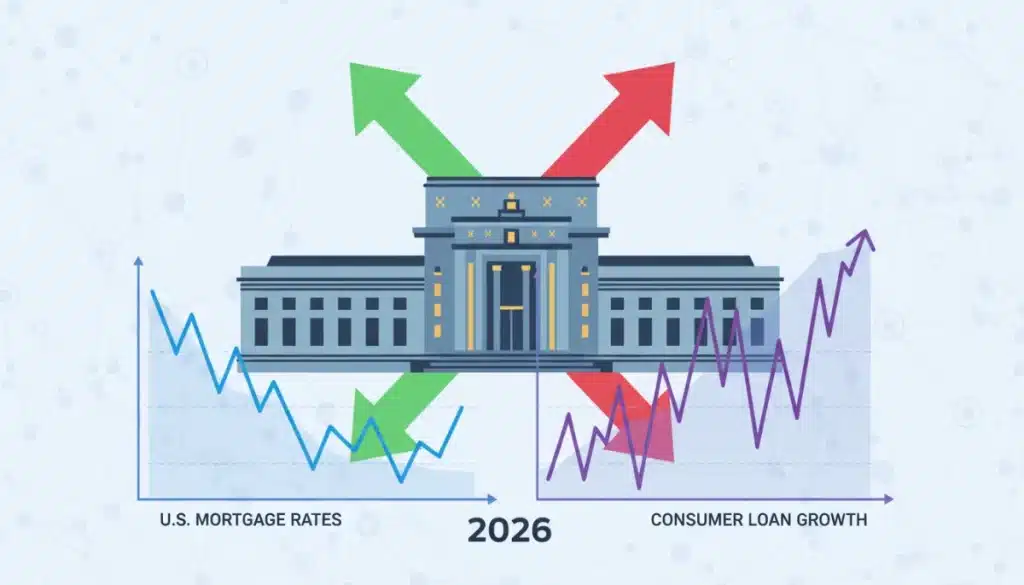
The Federal Reserve’s interest rate policies have a profound and direct impact on U.S. mortgage rates. As we look towards 2026, understanding this relationship is crucial for homeowners, prospective buyers, and real estate investors. The trajectory of the 2026 Federal Reserve Rates will largely dictate the affordability and accessibility of housing finance across the nation.
Mortgage rates, particularly for fixed-rate loans, are primarily influenced by the yield on long-term Treasury bonds, which are in turn affected by the Fed’s monetary policy and market expectations of future inflation and economic growth. When the Fed raises its federal funds rate, it generally leads to higher yields on Treasury bonds, which then translates into higher mortgage rates. Conversely, a period of stable or declining Fed rates can lead to a more favorable borrowing environment for mortgages.
Direct and Indirect Influences on Mortgages
- Federal Funds Rate: While a short-term rate, its influence ripples through the financial system, affecting longer-term rates like mortgages.
- Inflation Expectations: Lenders price in anticipated inflation over the life of a loan, so higher inflation expectations lead to higher rates.
- Economic Growth Outlook: A strong economy generally means higher demand for credit and potentially higher rates, while a slowdown can depress them.
- Global Capital Flows: International investment in U.S. bonds can also influence yields, impacting mortgage rates.
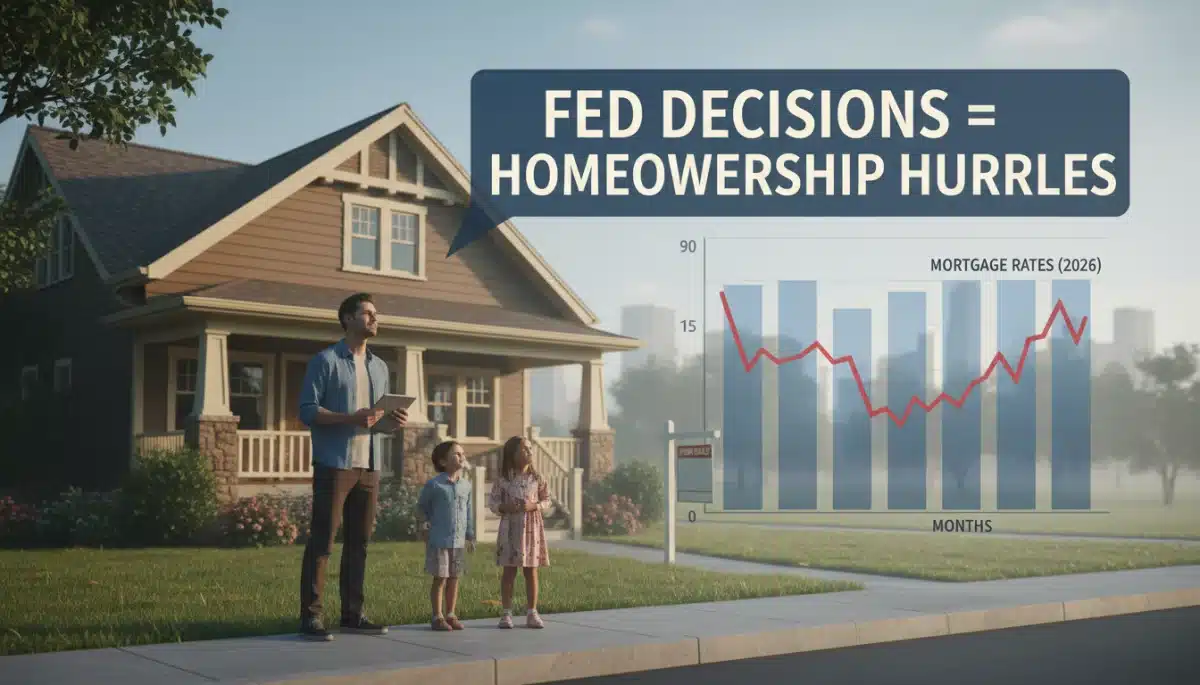
For potential homebuyers, a higher interest rate environment means a more expensive mortgage. Even a small percentage increase can significantly raise monthly payments and the total cost of a home over the loan’s lifetime. This can cool down a hot housing market by reducing buyer affordability and demand. Those looking to refinance existing mortgages will also find the decision heavily influenced by the prevailing rates; lower rates make refinancing more attractive, while higher rates can deter it.
The housing market’s resilience will be tested by these rate movements. While some forecasts suggest a moderation of rates in 2026, the specific timing and magnitude will depend on the Fed’s actions. Real estate professionals and economists will closely monitor the Fed’s stance, as it directly affects housing inventory, sales volumes, and home price appreciation. A period of lower rates could reignite demand, while persistently high rates might lead to a more balanced or even buyer-favored market.
In conclusion, the 2026 Federal Reserve interest rate outlook is a primary determinant of U.S. mortgage rates. Both direct policy decisions and their broader impact on economic expectations will shape the landscape of housing finance, presenting opportunities and challenges for individuals and the real estate sector alike.
Consequences for Consumer Lending and Credit Markets
Beyond mortgages, the Federal Reserve’s interest rate decisions in 2026 will permeate all facets of consumer lending and credit markets. From auto loans to credit card interest and personal loans, the cost of borrowing for everyday Americans is directly tied to the trajectory of the 2026 Federal Reserve Rates. Understanding these implications is vital for managing personal finances effectively.
When the Fed raises its benchmark rate, the cost of funds for banks increases. This higher cost is then passed on to consumers in the form of higher interest rates on various credit products. For example, adjustable-rate mortgages (ARMs), home equity lines of credit (HELOCs), and credit cards with variable interest rates will typically see their rates adjust upwards. This means higher monthly payments for borrowers carrying balances on these products, reducing their disposable income.
Affected Consumer Credit Products
- Credit Cards: Variable APRs will likely increase, making carrying balances more expensive.
- Auto Loans: New and used car loan rates will generally rise, impacting affordability for vehicle purchases.
- Personal Loans: Both secured and unsecured personal loan rates will reflect the broader interest rate environment.
- Student Loans: While federal student loan rates are set annually by Congress, private student loan rates can be more sensitive to market changes.
Conversely, if the Fed begins to cut rates in 2026, consumers could experience some relief. Lower rates would translate into reduced borrowing costs for new loans and potentially lower payments on existing variable-rate debt. This can stimulate consumer spending and investment, contributing to overall economic growth. However, the impact might not be immediate or uniform across all credit products, as market competition and individual lender policies also play a significant role.
The credit market as a whole will also experience shifts. Higher interest rates can lead to a tightening of lending standards, as banks become more cautious about extending credit to borrowers perceived as higher risk. This could make it more challenging for some individuals and small businesses to obtain loans. For savers, higher rates can be a silver lining, as returns on savings accounts, certificates of deposit (CDs), and money market accounts may increase, offering a better yield on their deposits.
In conclusion, the Federal Reserve’s interest rate outlook for 2026 will profoundly influence consumer lending and credit markets. Borrowers should anticipate adjustments in the cost of various credit products, while savers may see improved returns. These changes will necessitate careful financial planning and adaptation from households across the U.S.
Broader Economic Implications for the U.S. Economy
The ripple effect of the 2026 Federal Reserve Rates extends far beyond individual mortgages and consumer loans, touching virtually every corner of the U.S. economy. These broader economic implications are crucial for businesses, investors, and policymakers as they navigate the coming years. The Fed’s decisions are a primary lever in managing the nation’s economic health.
One significant area of impact is business investment. When interest rates are high, the cost of borrowing for businesses increases, making it more expensive to finance new projects, expand operations, or invest in capital expenditures. This can slow down economic growth and job creation. Conversely, lower rates can encourage businesses to borrow and invest, stimulating expansion and innovation. The Fed aims to find a balance that supports sustainable economic growth without triggering excessive inflation.
Key Economic Sectors Affected
- Corporate Borrowing: Higher rates increase the cost of corporate debt, influencing investment and expansion plans.
- Stock Market Performance: Interest rate changes can affect company valuations and investor sentiment, leading to market volatility.
- U.S. Dollar Value: Higher rates can strengthen the dollar, impacting trade and the cost of imports/exports.
- Government Debt: Increased rates mean a higher cost for the U.S. government to service its national debt.
The stock market is also highly sensitive to interest rate changes. Higher rates can make bonds more attractive relative to stocks, as they offer a guaranteed return with less risk. This can lead to a reallocation of investment away from equities. Additionally, higher borrowing costs can reduce corporate profits, which in turn can negatively impact stock valuations. Investors will be closely watching the Fed’s communications for any signals that could influence market sentiment.
Internationally, the Fed’s rate decisions affect the value of the U.S. dollar. Higher U.S. interest rates tend to strengthen the dollar, as it makes dollar-denominated assets more attractive to foreign investors. A stronger dollar can make U.S. exports more expensive and imports cheaper, influencing trade balances. It also affects emerging markets, as many dollar-denominated debts held by foreign entities become more expensive to service. These global interdependencies add another layer of complexity to the Fed’s considerations.
In conclusion, the 2026 Federal Reserve interest rate outlook will have far-reaching economic implications, influencing business investment, stock market dynamics, the value of the U.S. dollar, and global trade. The Fed’s careful calibration of monetary policy is essential for maintaining a stable and growing U.S. economy amidst domestic and international pressures.
Navigating the 2026 Interest Rate Environment: Strategies for Consumers and Businesses
As the 2026 Federal Reserve Rates outlook unfolds, both consumers and businesses will need to adopt proactive strategies to navigate the evolving interest rate environment. Preparing for potential shifts can help mitigate risks and capitalize on new opportunities, ensuring financial resilience and growth.
For consumers, a key strategy involves managing debt effectively. If interest rates are expected to rise or remain elevated, prioritizing the repayment of high-interest, variable-rate debt, such as credit card balances and HELOCs, becomes even more critical. Consolidating debt into a fixed-rate loan if available and advantageous could also be a wise move. Conversely, if rates are projected to fall, evaluating refinancing options for existing mortgages or other loans could unlock significant savings.
Consumer and Business Strategies
- For Consumers: Prioritize high-interest debt repayment, consider fixed-rate options, and build emergency savings.
- For Businesses: Secure financing at favorable rates, manage cash flow tightly, and explore hedging strategies for interest rate risk.
- Investment Decisions: Re-evaluate portfolios, considering assets that perform well in different rate environments.
Businesses, particularly those reliant on borrowing for operations or expansion, should focus on securing favorable financing terms. This might involve locking in fixed-rate loans if current rates are deemed acceptable or exploring alternative financing options. Maintaining a strong balance sheet and healthy cash flow will provide greater flexibility to withstand interest rate volatility. Small businesses, in particular, should monitor their credit lines and be prepared for potential adjustments in borrowing costs.
From an investment perspective, the interest rate environment affects asset allocation. In a rising rate environment, fixed-income investments like bonds can become more attractive, though existing bond portfolios may see their values decline. For equities, companies with strong balance sheets and consistent earnings may be more resilient. Diversification and a long-term investment horizon remain crucial, regardless of the Fed’s stance. Consulting with a financial advisor can provide personalized guidance tailored to individual circumstances and risk tolerance.
Ultimately, staying informed about the Fed’s communications and economic data releases is paramount. These insights allow for timely adjustments to financial plans. Both consumers and businesses should regularly review their budgets, debt obligations, and investment portfolios to ensure they align with the prevailing interest rate outlook and their personal or corporate financial goals. Adaptability will be a key trait for success.
In conclusion, navigating the 2026 interest rate environment requires a strategic approach from both consumers and businesses. Proactive debt management, informed financing decisions, and adaptable investment strategies will be essential tools for fostering financial stability and achieving objectives in a dynamic economic climate influenced by the Federal Reserve.
| Key Point | Brief Description |
|---|---|
| Fed’s Dual Mandate | Achieve maximum employment and stable prices, guiding all interest rate decisions. |
| Mortgage Rate Impact | Federal Reserve rates directly influence mortgage costs, affecting housing affordability. |
| Consumer Lending Effects | Credit card, auto, and personal loan rates adjust with Fed policy, impacting household budgets. |
| Economic Stability | Fed policies aim for balanced growth, managing inflation without stifling employment. |
Frequently Asked Questions About 2026 Federal Reserve Rates
The Federal Reserve’s primary goal is to achieve its dual mandate of maximum employment and stable prices. This involves carefully adjusting the federal funds rate to manage inflation while fostering a healthy job market and sustainable economic growth.
Changes in the federal funds rate indirectly influence long-term Treasury yields, which mortgage rates often track. When the Fed raises rates, mortgage rates typically increase, making home loans more expensive. Conversely, lower Fed rates generally lead to lower mortgage rates.
The likelihood of rate cuts in 2026 is data-dependent, primarily hinging on inflation trending towards the Fed’s 2% target and a stable labor market. While some analysts predict gradual cuts, persistent inflation or an economic downturn could alter this trajectory significantly.
If the Federal Reserve raises rates, interest rates on variable-APR credit cards will likely increase, making it more expensive for consumers to carry balances. Conversely, rate cuts could lead to lower credit card interest rates, reducing borrowing costs for cardholders.
Businesses should prepare by reviewing their debt structures, potentially securing fixed-rate financing if rates are favorable, and maintaining robust cash flow. Monitoring Fed communications and economic indicators can help inform strategic financial planning and investment decisions.
Conclusion
The 2026 Federal Reserve interest rate outlook stands as a pivotal factor shaping the financial landscape for millions of Americans. From influencing the affordability of mortgages and the cost of consumer loans to impacting broader economic growth and investment, the Fed’s careful navigation of monetary policy will be under intense scrutiny. While a data-dependent approach promises flexibility, consumers and businesses alike must remain vigilant, adapting their financial strategies to the evolving rate environment. Proactive planning, informed decision-making, and a clear understanding of the Fed’s objectives will be essential for fostering financial stability and capitalizing on opportunities in the years to come.