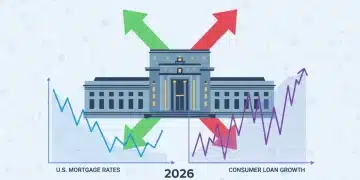
Mortgage Outlook 2026: Federal Interest Rate Impact

Anúncios
Understanding how new federal interest rates will impact your mortgage in 2026 is crucial for making informed financial decisions, as these adjustments directly influence borrowing costs and housing market dynamics.
Anúncios
Are you wondering how the upcoming shifts in federal interest rates might affect your biggest investment – your home? Making smart money decisions: how new federal interest rates impact your mortgage in 2026 is not just about understanding numbers; it’s about safeguarding your financial future. This guide will help you navigate the complexities and prepare for potential changes.
Anúncios
Understanding the Federal Reserve’s Role in Mortgage Rates
The Federal Reserve, often simply called the Fed, plays a pivotal role in the economic landscape of the United States. Its decisions on the federal funds rate directly influence the cost of borrowing across various sectors, including the housing market. While the federal funds rate isn’t the same as mortgage rates, it acts as a foundational benchmark that affects how lenders price their products.
When the Fed adjusts this key rate, it sends ripple effects through the entire financial system. For potential and existing homeowners, these adjustments can mean significant changes to monthly payments, affordability, and overall market dynamics. Understanding this connection is the first step in preparing for 2026 and beyond.
The mechanism of rate adjustments
The Fed’s Federal Open Market Committee (FOMC) meets several times a year to assess economic conditions and determine the appropriate target range for the federal funds rate. This rate is what banks charge each other for overnight lending. Changes here influence the prime rate, which in turn impacts consumer loan rates, including those for mortgages. A higher federal funds rate generally leads to higher mortgage rates, and vice versa.
- Inflation Control: The Fed raises rates to cool an overheating economy and combat inflation.
- Economic Stimulus: Lowering rates stimulates borrowing and spending to boost economic growth.
- Market Expectations: Future rate expectations often get priced into mortgage rates even before official announcements.
The connection is not always direct or immediate, but the trend is clear. Lenders factor in their cost of capital, which is influenced by the federal funds rate, when setting their mortgage rates. Therefore, staying informed about the Fed’s stance and projections is essential for anyone looking to enter or remain in the housing market.
Projected Federal Interest Rate Environment for 2026
Forecasting interest rates is always a complex endeavor, but economic indicators and expert analyses offer valuable insights into the likely scenario for 2026. Several factors will influence the Federal Reserve’s decisions, ranging from inflation trends and employment data to global economic stability. Understanding these projections can help homeowners and buyers anticipate potential shifts.
While no one has a crystal ball, the consensus among many economists suggests a more normalized interest rate environment compared to the historically low rates seen in previous years. This doesn’t necessarily mean drastically higher rates, but rather a move towards levels that reflect a healthier, more balanced economy. Keeping an eye on these forecasts is crucial for anyone planning their financial future.
Key economic indicators influencing the Fed
The Federal Reserve relies on a suite of economic data to guide its monetary policy. These indicators provide a snapshot of the economy’s health and help the Fed determine whether to raise, lower, or maintain interest rates. For 2026, the primary focus will likely remain on inflation and labor market conditions.
- Inflation Data: The Consumer Price Index (CPI) and Personal Consumption Expenditures (PCE) index are closely watched for signs of persistent or easing inflation.
- Employment Figures: Unemployment rates, job growth, and wage increases provide insights into the strength of the labor market.
- GDP Growth: Gross Domestic Product (GDP) reports indicate the overall economic output and health.
Beyond these, geopolitical events, supply chain stability, and consumer confidence also play a role. Any significant shifts in these areas could prompt the Fed to adjust its trajectory. Therefore, staying updated on these economic releases is as important as understanding the Fed’s direct announcements. These factors collectively shape the landscape for mortgage interest rates 2026.
Direct Impact on Mortgage Rates and Affordability
The direct correlation between federal interest rates and mortgage rates is a primary concern for homeowners and prospective buyers. When the Fed raises its benchmark rate, the cost of borrowing for banks increases, which they then pass on to consumers in the form of higher mortgage rates. This can significantly impact monthly payments and overall home affordability.
For those with adjustable-rate mortgages (ARMs), these changes can be felt almost immediately, as their interest rates reset periodically. Fixed-rate mortgage holders, however, are shielded from these fluctuations until they consider refinancing. Understanding this direct link is vital for making informed decisions about your housing finances in 2026.
How higher rates affect monthly payments
Even a small increase in mortgage rates can lead to a substantial difference in monthly payments over the life of a loan. For example, on a $300,000 mortgage, a half-percentage point increase could add tens of thousands of dollars to the total cost of the loan. This directly impacts a buyer’s purchasing power and an existing homeowner’s budget if they consider refinancing.

Prospective homebuyers might find that their budget restricts them to a smaller loan amount or a less desirable property. Existing homeowners might delay plans for refinancing or home equity loans if rates are unfavorable. This ripple effect underscores the importance of monitoring federal rate decisions. The higher the rates, the more expensive it becomes to borrow, making it harder for individuals to qualify for the same mortgage amount they might have afforded previously. This directly influences mortgage interest rates 2026 and housing affordability.
Ultimately, the affordability of housing is inextricably linked to the prevailing interest rate environment. As federal rates fluctuate, so too does the landscape for homeownership, making careful financial planning a necessity for all market participants. Being prepared for these changes can mean the difference between realizing your homeownership dreams and facing unexpected financial hurdles.
Strategies for Homeowners with Existing Mortgages
For current homeowners, understanding the federal interest rate outlook for 2026 is crucial for proactive financial management. Your strategy will largely depend on the type of mortgage you currently hold. Those with adjustable-rate mortgages (ARMs) will face different considerations than those with fixed-rate loans. Adapting your financial plan to potential rate changes can help you minimize risks and maximize benefits.
Even if you have a fixed-rate mortgage, the broader economic impact of changing interest rates can affect your overall financial health, from savings accounts to investment portfolios. Therefore, a comprehensive review of your financial situation in light of these projections is a prudent step.
Adjustable-rate mortgages (ARMs) and refinancing options
If you have an ARM, you are directly exposed to interest rate fluctuations. As federal rates rise, your monthly payments will likely increase when your rate adjusts. It’s essential to review your mortgage terms, understand your adjustment period, and calculate potential new payments. This foresight allows you to plan accordingly, perhaps by increasing savings or exploring refinancing options.
- Monitor Adjustment Periods: Be aware of when your ARM is scheduled to reset its interest rate.
- Budget for Higher Payments: Start setting aside extra funds to cushion the impact of potential increases.
- Evaluate Refinancing: Consider refinancing into a fixed-rate mortgage if current rates are still favorable or if you anticipate significant rate hikes.
For fixed-rate mortgage holders, the immediate impact of rising federal rates on your monthly payment is negligible. However, if you’re considering a home equity loan, a HELOC, or a cash-out refinance, these products would be subject to the prevailing higher rates. Carefully weigh the benefits against the increased borrowing costs. Ultimately, staying informed empowers you to make smart money decisions that protect your equity and financial stability.
Advice for Prospective Homebuyers in 2026
Prospective homebuyers in 2026 face a unique set of challenges and opportunities influenced by the federal interest rate environment. Understanding how these rates might shape the housing market is essential for successful homeownership. Preparing financially and strategically can make a significant difference in securing a home that fits your budget and long-term goals.
The market conditions in 2026 will likely demand a more informed approach, where buyers need to be agile and well-researched. This foresight will not only help in navigating potential rate increases but also in identifying opportunities within a dynamic market. Being proactive rather than reactive will be a key differentiator for successful home purchases.
Pre-approval, budgeting, and market timing
Securing a mortgage pre-approval early can lock in an interest rate for a certain period, providing stability in a fluctuating market. This also gives you a clear understanding of your borrowing capacity. Beyond pre-approval, meticulous budgeting is paramount. Factor in potential rate increases and ensure your monthly payments remain comfortably within your financial means, even if rates climb slightly.
- Get Pre-Approved: Obtain a pre-approval to understand your buying power and potentially lock in a rate.
- Stress Test Your Budget: Calculate your monthly payments with slightly higher interest rates to ensure affordability.
- Save for a Larger Down Payment: A larger down payment can reduce your loan amount and, consequently, your interest expenses over time.
Market timing is notoriously difficult, but observing trends in federal rate announcements and housing inventory can offer clues. Don’t rush into a purchase solely based on fear of rising rates, but also don’t delay indefinitely. Focus on finding a home that meets your needs and is within your carefully planned budget. This balanced approach helps ensure that mortgage interest rates 2026 don’t derail your homeownership dreams.
Long-Term Financial Planning and Economic Outlook
Beyond the immediate impact on mortgages, the federal interest rate environment in 2026 has broader implications for long-term financial planning and the overall economic outlook. These rates influence everything from savings account yields and investment returns to the cost of consumer credit. A holistic view of your finances, accounting for these broader changes, is crucial for sustained financial health.
As the economy continues to evolve, the Fed’s policies will respond to maintain stability and foster sustainable growth. This means that financial planning should not be a static exercise but rather an ongoing process of adjustment and adaptation. Understanding these wider economic forces empowers you to make more robust and resilient financial choices for the future.
Diversifying investments and managing debt
In an environment of potentially higher interest rates, diversifying your investment portfolio becomes even more critical. Assets that perform well in rising rate environments, such as certain types of bonds or dividend-paying stocks, might offer better returns. Conversely, managing existing debt, especially high-interest consumer debt, becomes more urgent as borrowing costs increase.
Prioritizing the reduction of credit card debt or personal loans can free up more disposable income, making your household finances more robust against economic shifts. This proactive debt management, coupled with a diversified investment strategy, strengthens your financial foundation. It’s about building resilience and ensuring your money works smarter, not just harder.
The economic outlook for 2026, shaped by federal interest rates, will demand a thoughtful approach to personal finance. By understanding the interplay between monetary policy, investment markets, and debt management, individuals can position themselves for long-term success. This proactive engagement is key to navigating the financial landscape effectively and making truly smart money decisions.
| Key Point | Brief Description |
|---|---|
| Fed’s Influence | Federal Reserve rate decisions directly impact mortgage rates and borrowing costs. |
| Mortgage Impact | Higher federal rates mean increased monthly payments for ARMs and higher refinancing costs. |
| Homebuyer Strategy | Pre-approval, budgeting, and saving for larger down payments are crucial for 2026 buyers. |
| Financial Resilience | Diversifying investments and managing debt are key for long-term financial health. |
Frequently Asked Questions About 2026 Mortgage Rates
While the Fed’s rate isn’t your mortgage rate, it influences the cost of borrowing for banks. When the Fed raises its benchmark, banks typically increase their lending rates, leading to higher rates for new mortgages and adjustable-rate mortgages (ARMs).
If you have a fixed-rate mortgage, your payments won’t change. However, if current rates are significantly lower than your existing rate, refinancing could save you money over the long term, regardless of future rate hikes. Evaluate your current rate versus prevailing rates.
First-time homebuyers should focus on saving a substantial down payment, getting pre-approved for a mortgage to lock in a rate, and carefully budgeting to ensure affordability even with potential rate fluctuations. Explore government-backed loan programs like FHA or VA loans.
Higher interest rates can cool down the housing market by reducing buyer affordability and demand. This often leads to a moderation in home price growth or, in some cases, slight declines, depending on local market conditions and inventory levels. It varies by region.
Key indicators include inflation data (CPI, PCE), employment reports (unemployment rate, job growth), and GDP growth. These provide insights into the overall health of the economy, which the Federal Reserve closely monitors when making interest rate decisions.
Conclusion
Navigating the landscape of mortgage interest rates 2026 requires a proactive and informed approach. The Federal Reserve’s monetary policy, driven by economic indicators like inflation and employment, will continue to shape the cost of borrowing for homeowners and aspiring buyers alike. By understanding these dynamics, assessing your current financial situation, and adopting smart strategies, you can effectively mitigate risks and capitalize on opportunities. Whether you’re refinancing, buying a new home, or simply managing your existing mortgage, staying informed and planning diligently will be your greatest assets in making sound financial decisions for the years ahead.