2026 Economic Forecast: Agile Money Decisions for Market Shifts

Anúncios
To adapt to the 2026 economic forecast and market shifts, individuals should implement agile money decisions focusing on diversification, debt management, and strategic investments.
Anúncios
As we look towards 2026, the global economic landscape continues to evolve rapidly, presenting both challenges and opportunities. Understanding and implementing agile money decisions will be crucial for navigating these anticipated market shifts and securing your financial future.
Anúncios
Understanding the 2026 Economic Landscape
The year 2026 is projected to bring a complex mix of economic forces, influenced by ongoing geopolitical dynamics, technological advancements, and evolving consumer behaviors. Inflationary pressures, interest rate fluctuations, and supply chain adjustments are likely to remain significant factors. Preparing for these shifts requires a proactive and informed approach to personal finance.
Global Economic Projections and Their Impact
Experts anticipate a period of moderate global growth, but with considerable regional variations. The United States, while generally resilient, may experience sectorspecific slowdowns or accelerations. Understanding these broader trends is the first step in making informed financial choices.
- Geopolitical stability will play a pivotal role in global trade and investment flows.
- Technological innovations, particularly in AI and automation, will reshape labor markets and industries.
- Climate change policies and energy transitions will influence commodity prices and investment opportunities.
The interconnectedness of the global economy means that events far afield can have immediate repercussions on domestic markets and individual portfolios. Staying informed about international developments is no longer optional but a necessity for astute financial management. This holistic view allows for better anticipation of potential market volatility and enables quicker adjustments to financial strategies.
In conclusion, the 2026 economic landscape demands a nuanced understanding of various macroeconomic factors. Acknowledging these influences is fundamental to developing the agility needed to protect and grow wealth amidst uncertainty.
Decision 1: Diversify Your Investment Portfolio Wisely
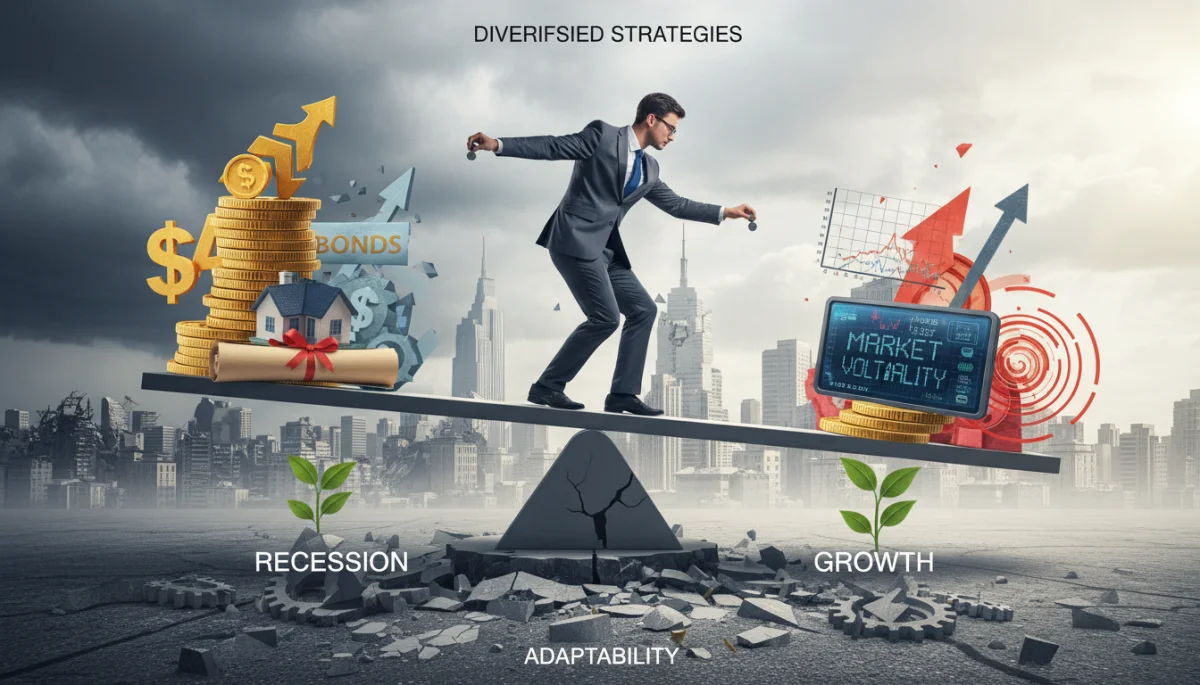
In an unpredictable economic climate, diversification is more than just a buzzword; it’s a foundational principle for risk management. Spreading investments across different asset classes, industries, and geographies can cushion your portfolio against sudden downturns in any single area. This strategy is particularly vital as market shifts become more frequent and less predictable.
The Importance of Asset Allocation
Effective asset allocation involves carefully balancing risk and return based on your financial goals and risk tolerance. This isn’t a static exercise; it requires regular review and rebalancing to align with market conditions and personal circumstances. Consider a mix of traditional assets like stocks and bonds, alongside alternatives.
- Stocks: Focus on sectors with strong growth potential in 2026, such as renewable energy, advanced technology, and healthcare innovation.
- Bonds: Incorporate a mix of government and corporate bonds to provide stability and income, adjusting duration based on interest rate forecasts.
- Real Estate: Evaluate opportunities in real estate, both physical and through REITs, considering regional economic outlooks and demographic shifts.
- Alternative Investments: Explore commodities, private equity, or even digital assets cautiously, understanding their unique risk profiles.
Diversification also means looking beyond your domestic market. Investing in international equities can provide exposure to different growth cycles and currencies, further reducing concentrated risks. However, such investments come with their own set of considerations, including currency fluctuations and geopolitical risks. Always conduct thorough due diligence or consult a financial advisor.
Ultimately, a well-diversified portfolio acts as a resilient shield against market volatility. It ensures that even if one segment underperforms, others may compensate, leading to a more stable overall return. This proactive approach to investment is a cornerstone of agile money decisions.
Decision 2: Prioritize Debt Reduction and Management
High levels of debt can severely limit your financial flexibility, especially in an economic environment characterized by rising interest rates or unexpected challenges. Making debt reduction a top priority liberates capital that can then be deployed for investments or emergency savings, enhancing your financial agility.
Strategies for Effective Debt Payoff
Developing a clear strategy for debt payoff is essential. This often involves identifying high-interest debts first and aggressively paying them down. The ‘snowball’ or ‘avalanche’ methods are popular approaches, each offering distinct psychological and financial benefits.
- High-Interest Debt First: Focus on credit card balances or personal loans with the highest interest rates to minimize the total cost of debt.
- Consolidation: Consider consolidating multiple debts into a single loan with a lower interest rate, if available and financially prudent.
- Budgeting: Create a stringent budget that allocates extra funds specifically towards debt repayment, reducing discretionary spending temporarily.
Beyond active payoff, managing existing debt responsibly is equally important. This includes making payments on time to avoid late fees and negative impacts on your credit score, and critically, avoiding taking on new unnecessary debt. A strong credit score is an invaluable asset, opening doors to better lending terms when needed.
By systematically reducing and managing debt, individuals can significantly improve their financial health and responsiveness. This decision frees up cash flow, allowing for greater investment capacity and a stronger safety net, which are vital components of agile money decisions in 2026.
Decision 3: Build and Maintain a Robust Emergency Fund
An emergency fund is your first line of defense against unforeseen financial disruptions, such as job loss, medical emergencies, or unexpected home repairs. In an economic climate prone to sudden shifts, having readily accessible cash is paramount to avoiding debt and maintaining financial stability. This fund should ideally cover several months of essential living expenses.
Determining Your Emergency Fund Needs
The ideal size of your emergency fund depends on various factors, including your employment stability, health, and household expenses. Financial experts generally recommend having three to six months’ worth of living expenses saved, though some prefer even more in uncertain times. Calculating this amount accurately is crucial.
- Calculate Monthly Expenses: Itemize all essential monthly costs, including housing, utilities, food, transportation, and insurance.
- Assess Job Security: If your job is less secure, aim for a larger fund (e.g., six to twelve months).
- Consider Health and Dependents: Larger families or those with significant health concerns may require a more substantial buffer.
Once you’ve determined your target, make saving for this fund a non-negotiable part of your budget. Treat it like any other bill, setting up automatic transfers to a separate, easily accessible savings account. This separation helps prevent accidental spending and ensures the funds are there when truly needed.
Maintaining a robust emergency fund is not just about having money; it’s about peace of mind and the ability to make rational financial decisions during crises, rather than being forced into desperate measures. It’s a fundamental agile money decision that underpins all other financial strategies.
Decision 4: Reassess Your Budget and Spending Habits
As economic conditions change, so too should your budget. Regularly reassessing your income and expenses is a critical component of agile financial management. This isn’t about deprivation, but about optimization – ensuring your money is working for you and aligning your spending with your financial goals and the prevailing economic realities.
Optimizing Your Financial Flow
Start by tracking every dollar. Many people are surprised by how much they spend on non-essentials once they gain clear visibility into their cash flow. Identifying areas where you can cut back, even minimally, can free up significant funds for savings or investments.
- Categorize Expenses: Differentiate between fixed (rent, mortgage) and variable (groceries, entertainment) expenses.
- Identify Discretionary Spending: Pinpoint areas where spending can be reduced or eliminated without significantly impacting quality of life.
- Automate Savings: Set up automatic transfers to savings or investment accounts immediately after receiving your paycheck.
Beyond cutting costs, look for opportunities to increase income, whether through a side hustle, negotiating a raise, or optimizing investments. The goal is to create a positive cash flow that supports your financial aspirations. A well-crafted budget acts as a roadmap, guiding your financial decisions and helping you stay on track, even when the economic path becomes bumpy.
Regularly reviewing and adjusting your budget ensures that your financial plan remains relevant and effective. This adaptability in managing your daily finances is a key agile money decision, allowing you to respond proactively to any economic shifts.
Decision 5: Explore Opportunities in Emerging Markets and Technologies
While diversification across traditional assets is crucial, the 2026 economic forecast suggests that significant growth opportunities will emerge from innovative sectors and developing economies. Agile investors should actively research and consider strategic allocations to these areas, understanding their higher risk-reward profiles.
High-Growth Sectors for 2026
Certain industries are poised for substantial expansion due to technological breakthroughs and shifting global priorities. Investing in these sectors, either directly or through specialized funds, can offer significant returns, provided due diligence is exercised.
- Artificial Intelligence (AI): Investments in AI development, applications, and infrastructure are expected to surge.
- Biotechnology and Healthcare Innovation: Advances in medical science and personalized healthcare will drive growth.
- Renewable Energy: The global transition to sustainable energy sources presents long-term investment opportunities.
- Fintech: Financial technology continues to disrupt traditional banking, offering new avenues for efficient transactions and wealth management.
Emerging markets, particularly those with growing middle classes and robust technological adoption, also present attractive prospects. These markets often offer higher growth rates than developed economies, though they can come with increased political and economic volatility. A balanced approach means allocating a portion of your portfolio to these areas without overexposing yourself to undue risk.
By staying abreast of global trends and being willing to explore new frontiers, you can uncover investment opportunities that align with the future economic landscape. This forward-thinking approach is a hallmark of making agile money decisions, positioning you to capitalize on the innovations defining 2026 and beyond.
Decision 6: Invest in Your Skills and Education
In an economy increasingly shaped by technology and automation, your human capital—your skills, knowledge, and adaptability—is one of your most valuable assets. Investing in continuous learning and skill development is an agile money decision that pays dividends through increased earning potential and career resilience, especially in a dynamic job market.
Future-Proofing Your Career
Identify skills that are in high demand or are projected to be critical in the coming years. This might include digital literacy, data analysis, project management, or soft skills like critical thinking and problem-solving. Education doesn’t always mean a formal degree; it can involve online courses, certifications, workshops, or even self-study.
- Digital Skills: Proficiency in cloud computing, cybersecurity, and data analytics is increasingly essential across industries.
- AI Literacy: Understanding how AI impacts your field and learning to leverage AI tools can provide a competitive edge.
- Soft Skills: Communication, collaboration, and adaptability remain highly valued by employers.
- Networking: Building a strong professional network can open doors to new opportunities and insights.
Consider the return on investment for any educational pursuit. Will it lead to a higher salary, better job security, or new career paths? Investing in yourself is a strategic move that enhances your ability to adapt to changes in the labor market, making you more resilient to economic shifts. It also empowers you to seize new professional opportunities as they arise.
Ultimately, a robust skill set makes you an invaluable asset in any economic climate. This proactive investment in personal development is a powerful agile money decision, ensuring long-term financial stability and career growth.
Decision 7: Plan for Retirement with Flexibility
Retirement planning in 2026 requires a flexible and adaptable approach, given the uncertainties surrounding inflation, market returns, and healthcare costs. Traditional retirement strategies may need adjustment to account for these evolving conditions, emphasizing diversified savings vehicles and periodic review.
Adapting Your Retirement Strategy
Rather than relying on a single approach, consider a multi-faceted retirement plan that can withstand various economic scenarios. This includes maximizing contributions to tax-advantaged accounts and exploring different investment vehicles.
- Maximize Tax-Advantaged Accounts: Fully utilize 401(k)s, IRAs, and HSAs to grow your savings tax-efficiently.
- Diversify Retirement Investments: Ensure your retirement portfolio is well-diversified across asset classes, similar to your general investment strategy.
- Consider Longevity Planning: Factor in increasing life expectancies and potential long-term care costs.
- Regular Review: Periodically reassess your retirement goals and adjust your contributions and investment mix based on market performance and personal circumstances.
The ability to adjust your retirement plan is key. This might mean increasing your savings rate during periods of strong market performance or reallocating assets to more conservative options as you approach retirement. Furthermore, understanding potential changes in social security or pension benefits is crucial for comprehensive planning.
A flexible retirement strategy allows you to pivot as economic conditions change, ensuring your long-term financial security remains on track. This agile money decision provides peace of mind and the confidence to navigate the future.
| Key Decision | Brief Description |
|---|---|
| Diversify Investments | Spread assets across various classes and geographies to mitigate risk. |
| Reduce Debt | Prioritize paying off high-interest debt to free up capital and increase flexibility. |
| Emergency Fund | Build a robust cash reserve for unexpected expenses, covering 3-6 months. |
| Invest in Skills | Enhance human capital through continuous learning for career resilience and earning potential. |
Frequently Asked Questions About 2026 Economic Decisions
The primary economic risks for 2026 include persistent inflation, interest rate volatility, geopolitical instability impacting supply chains, and potential sector-specific downturns due to rapid technological shifts. Staying informed about these factors is crucial for proactive financial planning and agile responses.
Start by assessing your risk tolerance and financial goals. Then, spread investments across different asset classes like stocks, bonds, and real estate. Consider various industries and geographies. Regularly review and rebalance your portfolio to maintain optimal diversification and align with market changes.
Focus on high-interest debts first, such as credit cards, using methods like the ‘debt avalanche.’ Create a strict budget to free up extra funds for repayment and avoid taking on new unnecessary debt. Consolidating debts with lower interest rates can also be beneficial if managed carefully.
An emergency fund provides a critical financial buffer against unexpected events like job loss, medical emergencies, or market downturns. In a volatile economic landscape, having readily accessible cash for 3-6 months of expenses prevents falling into debt and allows for more rational financial decisions.
Investing in relevant skills and education, especially in areas like AI, digital literacy, and problem-solving, enhances your earning potential and career resilience. This makes you more adaptable to evolving job markets, securing your income stream and improving long-term financial stability against economic shifts.
Conclusion
Navigating the 2026 economic landscape successfully demands more than just traditional financial planning; it requires an agile mindset and proactive decision-making. By embracing the seven strategies outlined—diversifying investments, prioritizing debt reduction, building a robust emergency fund, reassessing budgets, exploring emerging opportunities, investing in skills, and planning for retirement with flexibility—individuals can position themselves not just to withstand market shifts, but to thrive amidst them. The key lies in continuous adaptation, informed choices, and a commitment to long-term financial health.