Fixed Income 2026: U.S. Treasury & Corporate Debt Deep Dive

Anúncios
Evaluating fixed income opportunities in 2026 requires a nuanced understanding of U.S. Treasury bonds and corporate debt, balancing potential returns against prevailing market risks and economic forecasts.
As we navigate the complexities of the global financial landscape, understanding where to position your portfolio is paramount. For many investors seeking stability and consistent returns, fixed income remains a cornerstone. This article delves into fixed income opportunities in 2026, offering a comprehensive look at U.S. Treasury bonds and corporate debt, dissecting their unique characteristics, and outlining what investors can expect in the coming year.
Anúncios
The Economic Backdrop for Fixed Income in 2026
The economic environment in 2026 will significantly shape the performance of fixed income assets. Factors such as inflation, interest rate policies by the Federal Reserve, and global economic growth trajectories will all play crucial roles. Understanding these broader macroeconomic forces is the first step in making informed investment decisions within the fixed income space.
Anúncios
Current projections suggest a continued but perhaps moderating global economic expansion. Inflation, while having shown volatility in recent years, is anticipated to stabilize closer to central bank targets. This stabilization could provide a more predictable environment for bond yields, moving away from the sharp fluctuations observed during periods of high inflationary pressure.
Federal Reserve Policy and Interest Rates
The Federal Reserve’s stance on monetary policy will be a primary determinant of U.S. Treasury yields. Should inflation remain contained, the Fed might adopt a more accommodative approach, potentially leading to stable or even slightly declining short-term rates. Conversely, persistent inflationary pressures could necessitate a hawkish stance, pushing yields higher across the curve.
- Short-Term Rates: Directly influenced by Fed funds rate decisions.
- Long-Term Rates: Reflect market expectations of future inflation and economic growth.
- Yield Curve: Its shape provides insights into market sentiment regarding future economic activity.
Moreover, fiscal policy, including government spending and debt issuance, will also impact the supply and demand dynamics for U.S. Treasuries, indirectly affecting their yields. A balanced approach to fiscal responsibility combined with steady economic growth could create a favorable environment for fixed income investors.
In conclusion, the 2026 economic backdrop is expected to be one of cautious optimism, with central bank policies and inflation trends being key variables. Investors in fixed income will need to monitor these indicators closely to anticipate shifts in market conditions and adjust their strategies accordingly.
U.S. Treasury Bonds: A Foundation of Stability
U.S. Treasury bonds are widely regarded as one of the safest investments globally, backed by the full faith and credit of the U.S. government. In 2026, they will continue to serve as a critical component of diversified portfolios, offering both capital preservation and a reliable income stream. Their role as a safe-haven asset often becomes more pronounced during periods of market uncertainty.
The appeal of Treasuries lies in their liquidity and perceived lack of default risk. However, their returns are susceptible to interest rate fluctuations. As rates rise, the value of existing bonds with lower coupon rates typically falls, and vice versa. Therefore, understanding the duration of Treasury holdings becomes crucial for managing interest rate risk.
Types of U.S. Treasury Securities
Investors have several options within the U.S. Treasury market, each with distinct characteristics:
- Treasury Bills (T-Bills): Short-term securities maturing in up to one year.
- Treasury Notes (T-Notes): Medium-term securities maturing in two, three, five, seven, or ten years.
- Treasury Bonds (T-Bonds): Long-term securities maturing in twenty or thirty years.
- Treasury Inflation-Protected Securities (TIPS): Bonds whose principal value adjusts with inflation, offering protection against purchasing power erosion.
For 2026, the demand for Treasuries is expected to remain robust, driven by institutional investors, central banks, and individual investors seeking safety. The yield on these bonds will largely depend on the Federal Reserve’s monetary policy and the market’s inflation expectations. A scenario of stable inflation and moderate economic growth could lead to attractive real yields, especially for longer-duration bonds.
Investors considering U.S. Treasuries should assess their individual risk tolerance and investment horizon. While offering safety, their returns might be modest compared to riskier assets. However, their diversification benefits and role in preserving capital make them indispensable for a balanced portfolio in the current environment.
Corporate Debt: Balancing Risk and Reward
Corporate debt, issued by companies to finance operations or expansion, offers a higher yield potential than U.S. Treasuries due to the inherent credit risk. In 2026, the corporate debt market presents a diverse range of opportunities, from investment-grade bonds issued by stable companies to high-yield (junk) bonds from firms with lower credit ratings.
The performance of corporate debt is closely tied to the health of the economy and the financial strength of individual issuers. A strong economic environment typically translates into lower default rates and tighter credit spreads, enhancing bond values. Conversely, an economic downturn can lead to increased defaults and wider spreads, negatively impacting returns.
Investment-Grade vs. High-Yield Corporate Bonds
The distinction between investment-grade and high-yield bonds is crucial for risk assessment:
- Investment-Grade Bonds: Issued by companies with strong credit ratings (BBB- or higher by S&P/Fitch, Baa3 or higher by Moody’s). They offer lower yields but also lower default risk.
- High-Yield Bonds (Junk Bonds): Issued by companies with lower credit ratings. They offer higher yields to compensate for the increased risk of default.
In 2026, investors in corporate debt should pay close attention to credit cycles and sector-specific trends. Industries with strong cash flows and manageable debt levels will likely offer more secure investment opportunities. Furthermore, the overall interest rate environment will influence corporate borrowing costs and, consequently, the attractiveness of their bond offerings.
Diversification within corporate debt, across different sectors and credit ratings, can help mitigate risks. Active management strategies that focus on credit research and macroeconomic analysis will be particularly valuable in navigating this segment of the fixed income market. The potential for higher returns comes with a proportionate increase in risk, making careful due diligence essential.
Credit Ratings and Their Impact
Credit ratings provided by agencies like Standard & Poor’s, Moody’s, and Fitch are fundamental in evaluating corporate debt. These ratings assess an issuer’s ability to meet its financial obligations and are a primary determinant of a bond’s yield. A higher credit rating generally indicates lower risk and, consequently, a lower yield, while lower ratings correspond to higher yields to compensate for increased risk.
For investors in 2026, understanding credit rating methodologies and monitoring any changes in a company’s rating will be vital. Downgrades can lead to a decrease in bond prices, while upgrades can have the opposite effect. This dynamic highlights the importance of ongoing credit analysis, especially in a fluctuating economic climate.
Key Factors Influencing Credit Ratings
- Financial Health: Revenue stability, profitability, and cash flow generation.
- Debt Levels: The amount of outstanding debt relative to equity and earnings.
- Industry Outlook: The overall health and growth prospects of the sector in which the company operates.
- Management Quality: The effectiveness of the company’s leadership in navigating challenges and executing strategy.
The relationship between credit ratings and market perception is cyclical. Positive economic data can lead to improved corporate earnings and balance sheets, potentially resulting in credit upgrades across various sectors. This, in turn, can boost investor confidence in corporate debt. Conversely, economic headwinds can trigger downgrades, prompting investors to demand higher yields or shift towards safer assets.
In summary, credit ratings act as a critical lens through which to assess the risk-reward profile of corporate debt. Investors should not solely rely on these ratings but use them as a cornerstone of a broader, more comprehensive due diligence process that includes independent analysis of financial statements and industry trends.
Strategies for Fixed Income Investors in 2026
Navigating the fixed income landscape in 2026 requires a strategic approach that balances risk, return, and diversification. Given the ongoing evolution of economic conditions and monetary policy, investors should consider several strategies to optimize their fixed income portfolios. Flexibility and adaptability will be key to capturing opportunities and mitigating potential downsides.
One primary strategy involves laddering bond maturities. This approach involves purchasing bonds with staggered maturity dates, allowing investors to reinvest maturing principal at prevailing interest rates. This strategy helps to mitigate interest rate risk, as not all bonds mature at the same time, and provides a steady stream of income.
Diversification Across Fixed Income Segments
Diversification is not just about equities; it is equally important within fixed income. Combining U.S. Treasuries with corporate debt, and potentially other fixed income assets like municipal bonds or international bonds, can enhance portfolio resilience:
- U.S. Treasuries: Provide safety and liquidity.
- Investment-Grade Corporate Bonds: Offer higher yields than Treasuries with moderate risk.
- High-Yield Corporate Bonds: Potentially higher returns but with increased credit risk.
- TIPS: Protection against inflation for long-term investors.
Furthermore, considering actively managed fixed income funds or exchange-traded funds (ETFs) can provide professional management and instant diversification. These vehicles can be particularly beneficial for investors who lack the time or expertise to conduct individual bond research and monitoring. The managers of these funds are typically well-versed in market dynamics and credit analysis.
Another strategy involves monitoring the yield curve for inversion or steepening, which can signal economic shifts. A steepening curve, where long-term yields rise faster than short-term yields, often indicates expectations of stronger economic growth and inflation. An inverted curve, conversely, has historically preceded economic slowdowns. Adjusting portfolio duration based on these signals can be a proactive measure.
Ultimately, a well-thought-out fixed income strategy for 2026 will involve a blend of careful asset allocation, continuous monitoring of economic indicators, and a clear understanding of personal financial goals and risk tolerance. Staying informed and being prepared to adjust will be crucial for success.
Risks and Considerations in the 2026 Fixed Income Market
While fixed income investments are often perceived as less volatile than equities, they are not without risks. In 2026, investors must remain vigilant about several key factors that could impact their fixed income holdings. Understanding these risks allows for better portfolio construction and more realistic return expectations.
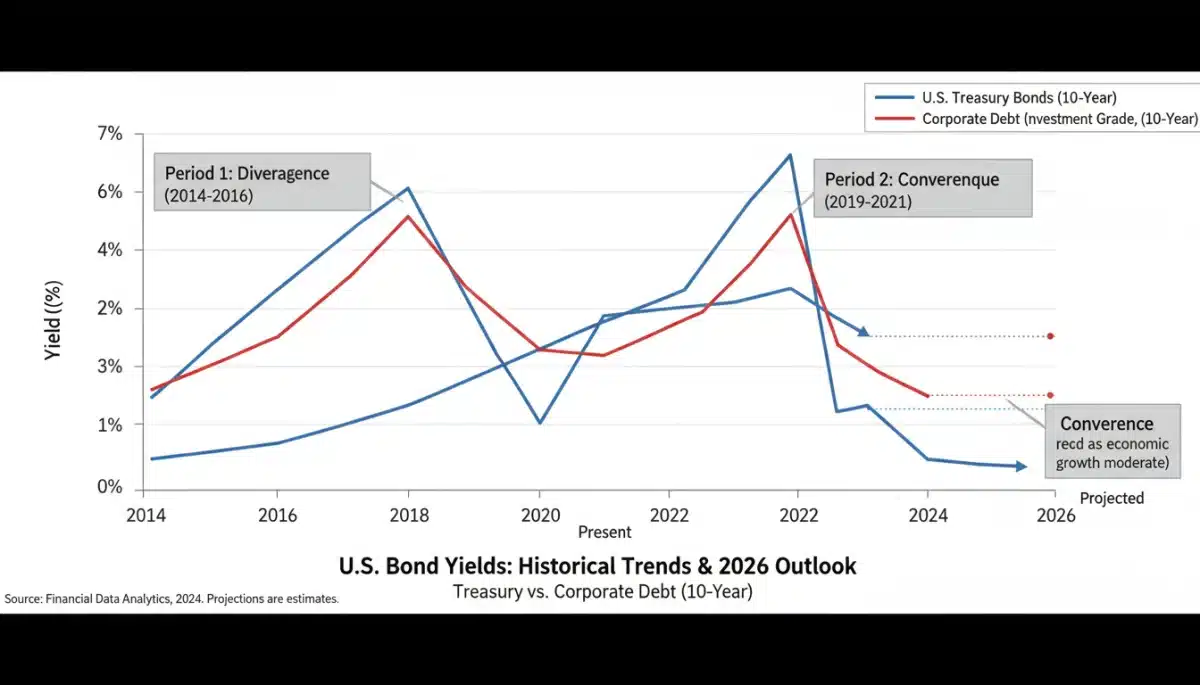
Interest rate risk is perhaps the most prominent. If interest rates rise, the market value of existing bonds, particularly those with longer durations, will fall. This is because newly issued bonds will offer higher yields, making older, lower-yielding bonds less attractive. Investors holding bonds to maturity will still receive their principal, but those who need to sell before maturity could incur losses.
Other Significant Risks
- Inflation Risk: The risk that inflation erodes the purchasing power of a bond’s future coupon payments and principal. TIPS are designed to mitigate this specific risk.
- Credit Risk: The risk that a bond issuer will default on its payments. This is more prevalent in corporate debt, especially high-yield bonds.
- Liquidity Risk: The risk that an investor may not be able to sell a bond quickly at a fair market price, particularly for less frequently traded corporate or municipal bonds.
- Reinvestment Risk: The risk that when a bond matures or is called, the investor will have to reinvest the proceeds at a lower interest rate, leading to reduced income.
Geopolitical events and global economic shocks can also introduce unexpected volatility into fixed income markets. Events such as trade disputes, political instability, or unforeseen economic crises can lead to flight-to-safety movements, impacting Treasury yields, or can increase credit risk for corporate issuers.
Therefore, a comprehensive risk management framework is essential. This includes conducting thorough due diligence on corporate issuers, diversifying across different types of fixed income assets, and regularly reviewing portfolio allocations in response to changing market conditions. While fixed income offers stability, a proactive approach to risk management will be crucial for protecting capital and achieving desired returns in 2026.
| Key Point | Brief Description |
|---|---|
| Economic Outlook 2026 | Moderating global growth, stable inflation, and Fed policy influence fixed income. |
| U.S. Treasury Bonds | Safe-haven assets offering stability, impacted by interest rate fluctuations. |
| Corporate Debt | Higher yield potential than Treasuries, with varying credit risk levels. |
| Key Risks | Interest rate, inflation, credit, and liquidity risks are crucial considerations. |
Frequently Asked Questions About Fixed Income in 2026
U.S. Treasury yields in 2026 will primarily be driven by the Federal Reserve’s monetary policy, inflation expectations, and the overall trajectory of U.S. economic growth. Global geopolitical events and government debt issuance also play significant roles.
Inflation erodes the purchasing power of a bond’s fixed payments and principal, reducing real returns. If inflation rises unexpectedly, the real value of fixed income assets decreases. Treasury Inflation-Protected Securities (TIPS) offer a hedge against this risk.
Investment-grade bonds are issued by companies with strong credit ratings, implying lower default risk and lower yields. High-yield (junk) bonds are from companies with lower credit ratings, offering higher yields to compensate for increased default risk.
Diversification across different types of fixed income assets, such as Treasuries, corporate bonds, and varying maturities, helps mitigate specific risks like interest rate risk or credit risk, enhancing portfolio resilience and stability.
Strategies include laddering bond maturities, investing in shorter-duration bonds, or using fixed income ETFs that actively manage duration. Monitoring Federal Reserve announcements and economic forecasts is also crucial for timely adjustments.
Conclusion
Evaluating fixed income opportunities in 2026 requires a diligent and informed approach. Both U.S. Treasury bonds and corporate debt offer distinct advantages and risks that must be carefully weighed against individual investment objectives and risk tolerance. While Treasuries provide a bedrock of safety and liquidity, corporate debt offers the potential for enhanced returns, albeit with increased credit risk. The macroeconomic environment, particularly Federal Reserve policy and inflation trends, will be instrumental in shaping the performance of these assets. By understanding the nuances of credit ratings, implementing robust diversification strategies, and staying vigilant against market risks, investors can strategically position their fixed income portfolios for stability and growth in the evolving financial landscape of 2026.