Workplace Discrimination: Identifying and Addressing Unfair Practices in 2026

Anúncios
Workplace discrimination, a persistent challenge, requires employees and organizations to understand its evolving forms and implement robust strategies for identification and resolution, ensuring fair and equitable treatment for all in 2026.
Anúncios
As we navigate 2026, understanding workplace discrimination 2026 is more crucial than ever. Many individuals face unfair treatment, often without realizing their rights or how to address these situations effectively. This article aims to shed light on identifying discriminatory practices and provides three key steps to combat them, ensuring a more equitable working world for everyone.
Anúncios
Understanding the Evolving Landscape of Workplace Discrimination in 2026
Workplace discrimination in 2026 is a multifaceted issue, extending beyond traditional forms. While overt acts of prejudice still occur, more subtle and systemic biases are becoming increasingly prevalent. These often manifest in hiring, promotion, compensation, and even daily interactions, creating an environment where certain individuals or groups are disadvantaged.
The legal framework in the United States, primarily through federal laws like Title VII of the Civil Rights Act, the Americans with Disabilities Act (ADA), and the Age Discrimination in Employment Act (ADEA), continues to evolve. These laws prohibit discrimination based on race, color, religion, sex (including sexual orientation and gender identity), national origin, age, disability, and genetic information. However, the application and interpretation of these laws are constantly being tested by new scenarios and technological advancements.
New Forms of Discrimination in the Digital Age
The rapid integration of AI and data analytics into HR processes presents new challenges. Algorithms, if not carefully designed and monitored, can perpetuate existing biases, leading to discriminatory outcomes in recruitment or performance evaluations. This ‘algorithmic bias’ is a growing concern for employment lawyers and civil rights advocates.
- Algorithmic Bias: Unfair outcomes produced by AI systems due to biased training data or flawed logic.
- Remote Work Challenges: Discrimination can occur through unequal access to resources, opportunities, or communication channels in remote or hybrid work setups.
- Social Media Discrimination: Employers may illegally use social media profiles to make discriminatory hiring decisions.
Furthermore, the increased focus on diversity, equity, and inclusion (DEI) initiatives, while positive, can sometimes lead to ‘reverse discrimination’ claims, although these are often difficult to prove. Understanding these evolving dynamics is the first step toward effective prevention and intervention.
In conclusion, the landscape of workplace discrimination in 2026 is complex and dynamic. It requires a keen eye not only for overt acts but also for systemic biases and the potential for new forms of discrimination arising from technological advancements and changing work models. Staying informed about legal precedents and emerging trends is vital for both employees and employers.
Identifying Unfair Practices: Recognizing the Signs of Discrimination
Recognizing unfair practices is often the most challenging part of addressing workplace discrimination. Discrimination is not always obvious; it can be subtle, indirect, and deeply ingrained in organizational culture. It’s crucial for individuals to be aware of the various ways discrimination can manifest, even if it doesn’t fit a stereotypical image.
Unfair practices often stem from protected characteristics, such as race, gender, age, disability, religion, or national origin. While a single incident might seem isolated, a pattern of behavior or a series of events can clearly indicate a discriminatory environment. It’s important to document these instances thoroughly.
Common Manifestations of Discrimination
Discrimination can appear in numerous aspects of employment. For instance, in recruitment, it might be evident if certain demographic groups are consistently overlooked despite being qualified. During employment, it could involve unequal pay for equal work, denial of promotions, or being subjected to a hostile work environment.
- Hiring and Firing: Being denied a job or terminated based on a protected characteristic.
- Compensation and Benefits: Receiving lower pay or fewer benefits than colleagues with similar qualifications and responsibilities.
- Promotion and Advancement: Being consistently passed over for promotions or development opportunities.
- Harassment: Experiencing unwelcome conduct based on a protected characteristic, creating a hostile work environment.
- Retaliation: Suffering negative consequences for reporting discrimination or participating in an investigation.
Additionally, workplace policies that appear neutral on the surface can sometimes have a discriminatory impact on certain groups. This is known as disparate impact. For example, a physical strength requirement for a job that isn’t truly necessary could disproportionately exclude women or individuals with certain disabilities.
Identifying unfair practices requires careful observation and an understanding of your rights. If something feels wrong or unjust, it’s worth investigating further. Trusting your instincts and gathering evidence are critical first steps in addressing potential discrimination.
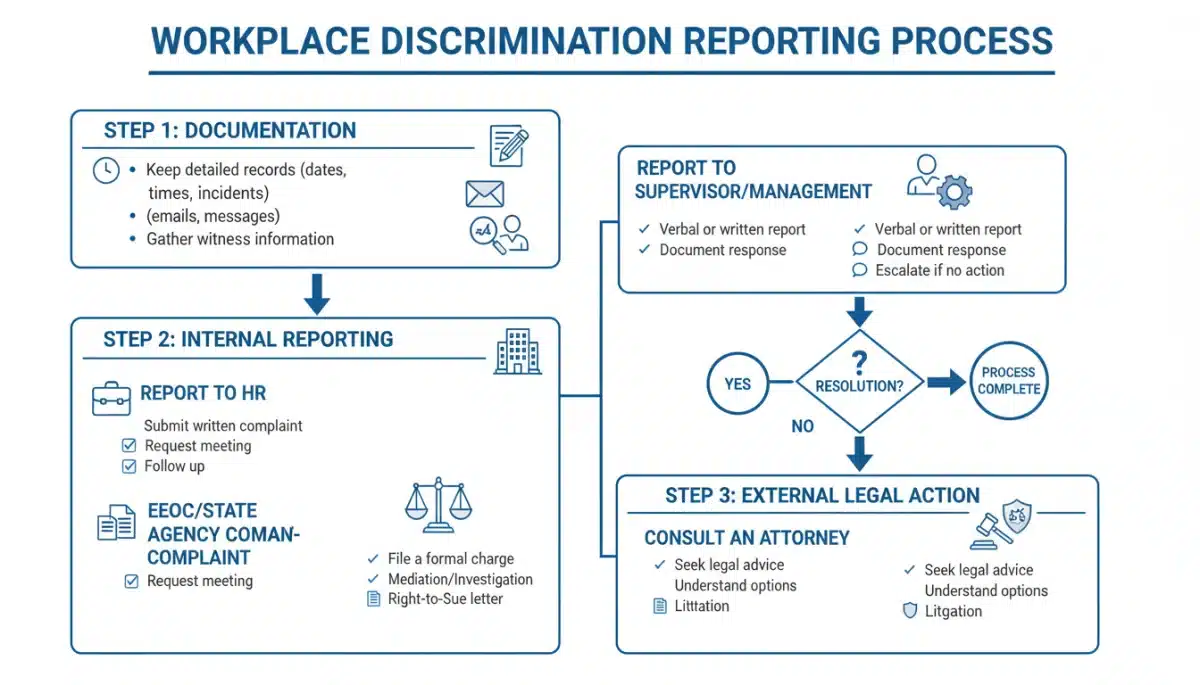
Step 1: Document Everything – Building Your Case
The first and arguably most critical step in addressing workplace discrimination is meticulous documentation. Without solid evidence, proving discrimination can be incredibly difficult. Think of documentation as building a robust case, piece by piece, to support your claims. This process should begin as soon as you suspect unfair treatment, not just when you decide to take action.
Start by keeping a detailed log of all incidents. This log should include dates, times, locations, and the names of all individuals involved, including any witnesses. Describe exactly what happened, what was said, and how it made you feel. Be objective and factual in your descriptions, avoiding emotional language as much as possible.
Types of Evidence to Collect
Beyond your personal log, gather any tangible evidence that supports your claims. This can include emails, text messages, performance reviews, disciplinary notices, or any other written communications that relate to the discriminatory incidents. If conversations occurred, try to send follow-up emails summarizing what was discussed to create a written record.
- Incident Log: Detailed record of dates, times, descriptions, and people involved.
- Written Communications: Emails, memos, texts, or chat logs.
- Performance Reviews: Documenting unfair or inconsistent evaluations.
- Company Policies: Copies of the employee handbook or anti-discrimination policies.
- Witness Statements: If possible, get written accounts from colleagues who witnessed incidents.
It’s also advisable to keep copies of your job description, company policies, and any documentation related to your employment history, such as promotion criteria or salary scales. This information can help demonstrate a pattern of unequal treatment compared to others in similar roles. Remember to keep all documentation in a secure place, ideally outside of your work computer or email, to ensure you retain access if your employment status changes.
Effective documentation is your foundation. It provides the concrete evidence needed to support your claims, whether you pursue internal resolution or external legal action. Without it, your case may rely solely on your word against another’s, which can be challenging to prove.
Step 2: Internal Reporting – Utilizing Company Channels
Once you have thoroughly documented the discriminatory incidents, the next crucial step is to utilize your company’s internal reporting mechanisms. Most organizations have policies and procedures in place for addressing complaints of discrimination and harassment. Following these channels is often a prerequisite for pursuing external legal action later on.
Review your employee handbook or company intranet for information on reporting procedures. Typically, this involves notifying your direct supervisor, a human resources (HR) representative, or a designated compliance officer. If your supervisor is involved in the discrimination, you should bypass them and report directly to HR or a higher-level manager.
Best Practices for Internal Reporting
When you make your report, do so in writing, if possible, or follow up a verbal report with an email summarizing the conversation. Refer to your detailed incident log and attach any relevant documentation you’ve collected. Be clear and concise about the nature of the discrimination, the parties involved, and the desired outcome. Maintain a professional tone, even if you are feeling emotional.
- Follow Policy: Adhere to the company’s official reporting procedures.
- Report in Writing: Create a paper trail for your complaint.
- Be Specific: Clearly state the discriminatory actions and individuals involved.
- Request Investigation: Ask for a formal investigation into your claims.
- Keep Records: Document all communications and meetings related to your report.
After filing a report, the company is typically obligated to conduct an investigation. Cooperate fully with the investigation, providing any additional information requested. It’s important to understand that retaliation for reporting discrimination is illegal. If you experience any negative actions after making your complaint, document those as well, as they constitute a separate form of unlawful conduct.
Internal reporting provides an opportunity for your employer to address and resolve the issue without external intervention. It also demonstrates that you attempted to resolve the matter internally, which can strengthen your position if further action becomes necessary. Even if the internal process doesn’t yield the desired outcome, it creates an official record of your complaint.
Step 3: External Action – Seeking Legal and Governmental Assistance
If internal reporting does not resolve the issue, or if you feel unsafe or fear retaliation, the third critical step is to seek external assistance. This involves contacting governmental agencies and potentially legal professionals who specialize in employment law. These external bodies can provide legal recourse, investigate your claims, and help enforce your rights.
In the United States, the primary federal agency responsible for enforcing anti-discrimination laws is the Equal Employment Opportunity Commission (EEOC). The EEOC investigates complaints of discrimination and can mediate disputes, file lawsuits on behalf of victims, or issue a “Right-to-Sue” letter, allowing you to pursue a private lawsuit.
Navigating External Avenues
Before filing a lawsuit, you generally must file a charge of discrimination with the EEOC or a state fair employment practices agency (FEPA). These agencies have strict deadlines for filing, so it’s crucial to act promptly. Consulting with an employment attorney before filing can help ensure your charge is properly drafted and filed within the statutory limits.
- Contact the EEOC: File a charge of discrimination with the Equal Employment Opportunity Commission.
- State Agencies: Explore state or local fair employment practices agencies, which may offer additional protections.
- Consult an Attorney: Seek advice from an employment lawyer specializing in discrimination cases.
- Understand Deadlines: Be aware of the strict time limits for filing charges and lawsuits.
- Prepare for Process: Understand that external action can be a lengthy process requiring patience and perseverance.
An employment attorney can provide invaluable guidance throughout this process. They can help you understand your legal options, assess the strength of your case, negotiate with your employer, and represent you in court if necessary. They can also advise on potential remedies, which may include back pay, reinstatement, compensatory damages, and punitive damages.
Taking external action can be daunting, but it is often necessary to achieve justice and hold discriminatory employers accountable. By diligently following these steps, you empower yourself to address unfair practices and contribute to fostering a more equitable workplace for all.
Preventing Discrimination: The Role of Proactive Measures
While addressing existing discrimination is crucial, preventing it from occurring in the first place is equally important. Proactive measures, both from employers and employees, significantly contribute to creating a fair and inclusive workplace. This involves fostering a culture of respect, implementing robust policies, and providing continuous education.
Employers in 2026 are expected to go beyond mere compliance with anti-discrimination laws. They should actively promote diversity, equity, and inclusion (DEI) at all levels of the organization. This includes regular training for all employees, from new hires to senior management, on unconscious bias, respectful workplace conduct, and the importance of an inclusive environment.
Key Preventative Strategies
Implementing clear, accessible, and well-communicated anti-discrimination policies is fundamental. These policies should explicitly define what constitutes discrimination and harassment, outline reporting procedures, and guarantee protection against retaliation. Regular review and updates of these policies ensure they remain relevant to the evolving workplace landscape.
- Comprehensive DEI Training: Educating employees on bias, respect, and inclusion.
- Clear Anti-Discrimination Policies: Well-defined policies with accessible reporting mechanisms.
- Fair Hiring Practices: Implementing blind resume reviews and diverse interview panels to reduce bias.
- Regular Policy Audits: Reviewing and updating policies to ensure effectiveness and compliance.
- Open Communication Channels: Encouraging employees to voice concerns without fear of reprisal.
Furthermore, employers should regularly audit their internal processes – from recruitment to performance reviews and promotions – to identify and mitigate potential biases. This could involve using diversity metrics, conducting pay equity analyses, and ensuring transparency in decision-making processes. For employees, being aware of and upholding these standards contributes to a collective effort against discrimination.
By investing in preventative measures, organizations not only fulfill their legal and ethical obligations but also cultivate a positive and productive work environment where all employees feel valued and respected. This proactive approach is essential for a truly equitable workplace in 2026 and beyond.
The Future of Workplace Equity: Beyond 2026
As we look beyond 2026, the pursuit of workplace equity will continue to evolve, driven by technological advancements, changing societal norms, and continuous legal developments. The goal is to move beyond simply preventing discrimination to actively fostering environments where diversity is celebrated, and inclusion is a fundamental aspect of organizational culture.
Future trends suggest an increased emphasis on predictive analytics to identify potential areas of bias before they escalate into discriminatory practices. AI tools are being developed to analyze language in job descriptions for gender-coded words or to flag inconsistencies in performance reviews that might indicate unconscious bias. However, vigilance will be necessary to ensure these tools themselves do not introduce new forms of discrimination.
Emerging Trends and Challenges
The rise of the global workforce and increasingly diverse teams will necessitate a deeper understanding of cultural nuances and how they intersect with anti-discrimination efforts. Companies will need to adapt their policies to accommodate a broader range of backgrounds and perspectives, ensuring that equity is upheld across different geographical and cultural contexts.
- AI-Powered Bias Detection: Utilizing technology to identify and mitigate biases in HR processes.
- Global Equity Standards: Developing universal principles for fair treatment across diverse international workforces.
- Neurodiversity Inclusion: Greater focus on accommodating and valuing individuals with diverse cognitive profiles.
- Flexible Work Policies: Designing policies that ensure equitable opportunities for remote and hybrid workers.
Additionally, mental health discrimination is gaining more recognition, with employers expected to provide reasonable accommodations and support for employees facing mental health challenges. The intersectionality of various protected characteristics will also be a key focus, acknowledging that individuals can experience discrimination based on multiple aspects of their identity simultaneously.
The journey toward complete workplace equity is ongoing. It requires continuous commitment, adaptability, and a willingness to challenge existing paradigms. By embracing these future trends and addressing emerging challenges, organizations can build truly inclusive and equitable workplaces that benefit everyone.
| Key Point | Brief Description |
|---|---|
| Evolving Discrimination | Workplace discrimination in 2026 includes algorithmic bias and remote work challenges, requiring new awareness. |
| Document Everything | Meticulous record-keeping of incidents, communications, and policies is crucial for building a strong case. |
| Internal Reporting | Utilize company HR channels or supervisors first, documenting all interactions and outcomes. |
| External Action | If internal means fail, contact the EEOC or an employment attorney for legal recourse and guidance. |
Frequently Asked Questions About Workplace Discrimination
Workplace discrimination in 2026 includes unfair treatment based on protected characteristics like race, gender, age, disability, and religion. It encompasses overt acts, systemic biases, and new forms such as algorithmic bias in HR processes, leading to unequal opportunities or hostile environments.
To document effectively, keep a detailed log of incidents with dates, times, and involved parties. Collect all relevant written communications like emails or texts. Secure copies of performance reviews, company policies, and witness statements. Store all documentation outside of your work systems.
Retaliation for reporting discrimination is illegal under federal and state laws. If you experience negative actions after making a complaint, document them immediately. You have the right to file a separate charge of retaliation with the EEOC or a state agency, and seek legal counsel.
You should contact the EEOC or an employment attorney if internal reporting mechanisms fail to resolve the issue, if you fear retaliation, or if you believe the company is not taking your complaint seriously. Be mindful of strict filing deadlines with these agencies.
Employers can prevent discrimination by implementing comprehensive DEI training, clear anti-discrimination policies, and fair hiring practices. Regular audits of internal processes, promoting open communication, and fostering a culture of respect are also crucial for proactive prevention.
Conclusion
Addressing workplace discrimination in 2026 requires a proactive and informed approach from both employees and employers. By understanding the evolving forms of discrimination, meticulously documenting incidents, utilizing internal reporting channels, and seeking external assistance when necessary, individuals can effectively champion their rights. Simultaneously, organizations must commit to fostering truly equitable and inclusive environments through robust policies, continuous education, and a culture of respect. The collective effort towards identifying and rectifying unfair practices is not just a legal obligation but a moral imperative, paving the way for workplaces where everyone can thrive.