US Job Market 2026: Tech, Green Energy, Healthcare Trends
Anúncios
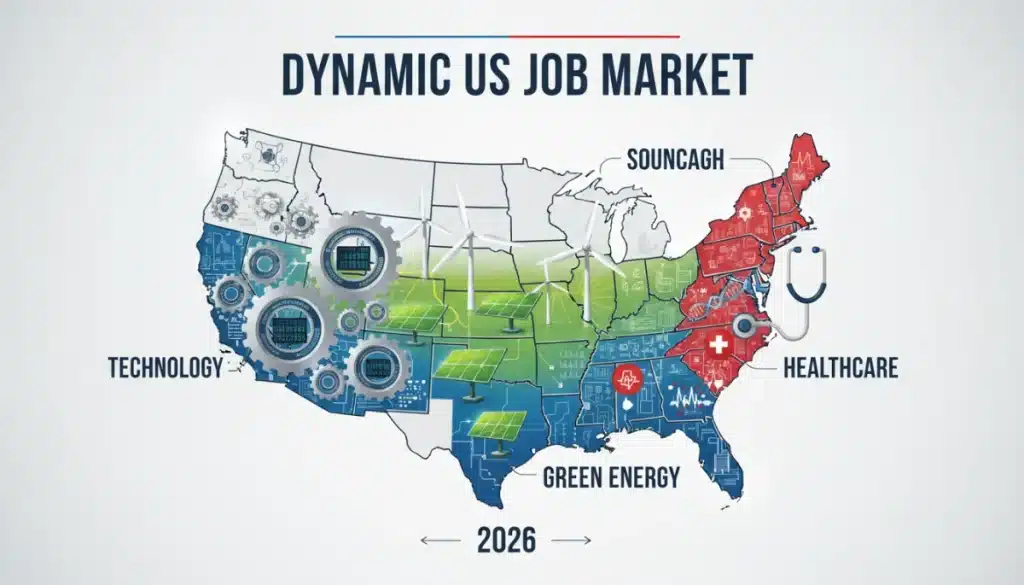
The 2026 US job market will be profoundly shaped by rapid advancements in technology, the expansion of green energy initiatives, and the sustained growth of the healthcare sector, creating distinct opportunities and challenges for the workforce.
Welcome to an in-depth exploration of the US job market in 2026, a landscape undergoing profound shifts driven by innovation and evolving societal needs. This analysis delves into the critical sectors of technology, green energy, and healthcare, identifying the trends that will define employment opportunities and career pathways in the coming years. Understanding these dynamics is crucial for job seekers, educators, and policymakers alike, as we navigate a future shaped by digital transformation, environmental imperatives, and demographic changes.
Anúncios
The Accelerating Pace of Technological Disruption
The technology sector remains a primary engine of growth and change within the US job market. By 2026, artificial intelligence (AI), machine learning (ML), and automation will not only create new roles but also redefine existing ones across various industries. The demand for skilled professionals capable of developing, implementing, and managing these advanced systems is set to skyrocket.
Anúncios
Beyond core development, the integration of technology into everyday business operations necessitates a workforce proficient in data analytics, cybersecurity, and cloud computing. These skills are no longer niche but foundational for success in a digitally-driven economy. Companies are increasingly investing in digital infrastructure, leading to a sustained need for IT specialists and system architects.
Emerging Tech Roles and Skill Gaps
The rapid evolution of technology means that certain roles that are nascent today will be mainstream by 2026. This creates both opportunities and challenges, particularly in addressing skill gaps.
- AI Ethics Specialists: As AI becomes more pervasive, the need for individuals to ensure ethical deployment and mitigate bias will be critical.
- Prompt Engineers: With the rise of generative AI, experts in crafting effective prompts for AI models will be in high demand.
- Quantum Computing Researchers: While still in early stages, advancements in quantum computing will require specialized scientific and engineering talent.
The challenge lies in equipping the current workforce with these new skills and attracting young talent into these specialized fields. Educational institutions and corporate training programs will play a vital role in bridging this gap, ensuring a steady supply of qualified professionals to meet technological demands.
In conclusion, the tech sector in 2026 will be characterized by continuous innovation and a pressing need for adaptable, skilled professionals. The focus will shift from merely adopting technology to strategically integrating it, demanding a workforce that is not only proficient in technical skills but also adept at understanding the broader implications of technological advancements.
Green Energy: A Burgeoning Sector for Sustainable Careers
The green energy sector is experiencing unprecedented growth, fueled by global climate initiatives, government incentives, and increasing environmental consciousness. By 2026, this sector is projected to be a major contributor to job creation in the US, offering diverse opportunities from engineering to manufacturing and installation.
Investment in renewable energy sources like solar, wind, and geothermal power continues to expand, leading to a strong demand for skilled labor. This includes not only highly technical roles but also a significant number of vocational positions, creating accessible career paths for a broad spectrum of the workforce. The transition to a greener economy is not just an environmental imperative but also a powerful economic driver.
Key Growth Areas in Green Energy Employment
The expansion of green energy encompasses several distinct areas, each with its own set of employment opportunities. These areas are interconnected, forming an ecosystem of sustainable development.
- Renewable Energy Technicians: Install, maintain, and repair solar panels, wind turbines, and other renewable energy systems.
- Environmental Engineers: Design and implement solutions to environmental problems, including pollution control and resource management.
- Sustainability Consultants: Advise businesses and organizations on adopting sustainable practices and reducing their environmental footprint.
- Electric Vehicle (EV) Infrastructure Specialists: Develop and maintain charging stations and related infrastructure to support the growing EV market.
The growth in green energy is also spurring innovation in energy storage solutions, smart grids, and sustainable manufacturing processes. This creates a ripple effect, generating jobs in research and development, supply chain management, and policy advocacy. The demand for professionals with a blend of technical expertise and an understanding of environmental principles will be crucial.
Ultimately, the green energy sector in 2026 will be a dynamic and expanding field, offering stable and impactful career opportunities. Its growth is intrinsically linked to global efforts to combat climate change, positioning it as a critical industry for future economic development and job security.
Healthcare: Enduring Demand and Evolving Specialties
The healthcare sector consistently remains one of the largest and most stable employers in the US, a trend that will undoubtedly continue into 2026. Driven by an aging population, advancements in medical technology, and an increased focus on preventative care, the demand for healthcare professionals is projected to grow significantly across all levels.
Beyond traditional roles, the sector is also experiencing a transformation due to the integration of technology, personalized medicine, and a greater emphasis on mental health and wellness. This evolution means that healthcare careers are becoming more diverse, requiring new skill sets and interdisciplinary collaboration.
Impact of Technology and Demographics on Healthcare Jobs
Several factors are shaping the future of healthcare employment, making it a complex yet rewarding field. The convergence of demographic shifts and technological advancements is particularly impactful.
- Geriatric Care Specialists: The aging baby boomer generation will continue to fuel demand for doctors, nurses, and caregivers specializing in elder care.
- Telehealth Providers: The expansion of telemedicine services, accelerated by recent global events, will create more opportunities for remote healthcare delivery.
- Health Informatics Professionals: Experts in managing and analyzing healthcare data will be crucial for improving patient outcomes and operational efficiency.
Furthermore, the focus on mental health services is expanding, leading to a greater need for psychologists, counselors, and social workers. Preventative care and wellness programs are also gaining traction, creating roles for health coaches and community health workers. The healthcare landscape in 2026 will be characterized by a holistic approach to patient well-being, requiring a broad range of dedicated professionals.
In summary, the healthcare sector will continue to be a cornerstone of the US job market in 2026, offering robust employment opportunities. The emphasis will be on specialized care, technological integration, and a patient-centered approach, ensuring a constant need for skilled and compassionate professionals.
Intersectoral Convergence: Blurring the Lines
While technology, green energy, and healthcare often appear as distinct sectors, the reality of the 2026 US job market is an increasing convergence between them. This intersectoral overlap is creating entirely new categories of jobs and demanding professionals with hybrid skill sets.
Consider the intersection of healthcare and technology: the rise of digital health, wearable medical devices, and AI-powered diagnostics. These innovations require individuals who understand both medical principles and advanced technological applications. Similarly, green energy solutions often leverage sophisticated data analytics and IoT devices, merging environmental science with information technology.
Hybrid Roles and Skill Ecosystems
The future workforce will increasingly need to be adaptable and possess skills that transcend traditional industry boundaries. This leads to the emergence of hybrid roles that are highly sought after.
- Bioinformatics Scientists: Combining biology and computer science to analyze complex biological data, crucial for personalized medicine.
- Energy Data Analysts: Using data science to optimize energy consumption and renewable energy system performance.
- Health Tech Developers: Creating software and hardware solutions specifically for medical and wellness applications.
This convergence also highlights the importance of soft skills such as problem-solving, critical thinking, and interdisciplinary communication. As projects become more complex and cross-functional, the ability to collaborate effectively across different domains will be paramount. Educational programs are beginning to reflect this need, offering interdisciplinary degrees and certifications.

The blurring of lines between these sectors is not just a trend but a fundamental shift in how industries operate and how jobs are created. Success in the 2026 job market will increasingly depend on the ability to navigate and thrive within these interconnected ecosystems, fostering innovation and driving progress.
Economic and Policy Influences on Job Growth
Beyond sector-specific trends, broader economic and policy factors will significantly influence the US job market in 2026. Government investments, regulatory frameworks, and global economic conditions all play a crucial role in shaping employment opportunities and growth trajectories. Policies aimed at fostering innovation, supporting small businesses, and investing in infrastructure can create a favorable environment for job creation.
For instance, federal funding for research and development in AI or renewable energy directly stimulates job growth in those areas. Similarly, tax incentives for companies adopting green technologies or expanding healthcare services can lead to increased hiring. Understanding these macro influences is essential for anticipating future job market shifts.
Government Initiatives and Workforce Development
Government programs and policy decisions are instrumental in directing workforce development and ensuring the US remains competitive. These initiatives often target critical areas to address skill shortages and promote economic resilience.
- Infrastructure Spending: Investments in modernizing infrastructure can create jobs in construction, engineering, and related fields, often with a focus on sustainable practices.
- Workforce Training Programs: Government-backed initiatives to reskill and upskill workers in high-demand areas like tech and green energy are crucial for adapting to market changes.
- Research Grants: Funding for scientific and technological research drives innovation, leading to the creation of new industries and specialized jobs.
Trade policies and international relations also have an indirect but significant impact. A stable global economic environment can encourage foreign investment and expand export markets, benefiting various US industries. Conversely, protectionist policies or trade disputes can disrupt supply chains and dampen job growth. The interplay of these factors creates a complex tapestry that influences the overall health and direction of the job market.
In conclusion, the US job market in 2026 will be heavily influenced by a combination of economic stability, strategic government policies, and targeted investments. These factors will either accelerate or decelerate growth in key sectors, making policy advocacy and informed economic planning vital for sustained employment opportunities.
Preparing for the Future Workforce: Education and Adaptability
As we look towards the US job market in 2026, it becomes clear that preparation is key for both individuals and institutions. The rapid pace of change in technology, green energy, and healthcare necessitates a proactive approach to education, skill development, and career planning. Lifelong learning will transition from a desirable trait to an absolute necessity for career longevity and success.
Educational institutions, from K-12 to universities, must adapt curricula to reflect the evolving demands of these growth sectors. This means integrating interdisciplinary studies, promoting STEM education, and fostering critical thinking and problem-solving skills. Furthermore, vocational training and apprenticeships will play an increasingly vital role in preparing individuals for hands-on roles in green energy and healthcare.
Strategies for Career Resilience
Individuals must take ownership of their career development, actively seeking opportunities to acquire new skills and adapt to changing job requirements. This proactive stance is crucial for navigating future market dynamics.
- Continuous Learning: Engage in online courses, certifications, and workshops to stay current with industry trends and acquire new competencies.
- Networking: Build professional relationships across different sectors to gain insights and identify emerging opportunities.
- Soft Skill Development: Focus on enhancing communication, collaboration, adaptability, and emotional intelligence, which are universally valuable.
- Mentorship: Seek guidance from experienced professionals in your field or in areas you wish to transition into.
Companies also bear a responsibility in preparing their workforce. Investing in internal training programs, offering tuition assistance, and fostering a culture of continuous learning can help employees upskill and reskill. This not only benefits individual employees but also strengthens the company’s overall talent pool and resilience in a dynamic market. The collaborative effort between individuals, educators, and employers will be paramount in shaping a robust and adaptable workforce for 2026 and beyond.
In essence, successful navigation of the 2026 US job market hinges on a commitment to ongoing education and a high degree of adaptability. By embracing lifelong learning and strategically acquiring relevant skills, individuals can secure their place in the evolving professional landscape.
| Key Sector | Key Trends & Opportunities |
|---|---|
| Technology | AI, ML, Cybersecurity, Cloud Computing, Data Analytics. Demand for AI ethics and prompt engineers. |
| Green Energy | Renewable energy technicians, environmental engineers, sustainability consultants, EV infrastructure. |
| Healthcare | Geriatric care, telehealth, health informatics, mental health services. Driven by aging population and tech integration. |
| Intersectoral Convergence | Hybrid roles in bio-informatics, energy data analysis, health tech development. Demand for adaptable skills. |
Frequently Asked Questions About the 2026 US Job Market
By 2026, the technology, green energy, and healthcare sectors are projected to experience the most significant job growth in the US. These industries are driven by ongoing innovation, environmental initiatives, and demographic shifts, creating a high demand for specialized skills and a broad range of professional roles.
Highly demanded skills will include proficiency in AI, machine learning, data analytics, cybersecurity, and cloud computing. Additionally, specialized technical skills in renewable energy and healthcare informatics will be crucial. Soft skills like critical thinking, adaptability, and interdisciplinary collaboration are also increasingly vital.
AI and automation will significantly impact job availability by creating new roles focused on development, maintenance, and ethical oversight of these technologies, while also transforming existing jobs. While some routine tasks may be automated, the overall effect is expected to be a shift towards roles requiring higher-level cognitive and creative skills.
Green energy will be a major job creation engine by 2026, with significant growth in roles for renewable energy technicians, environmental engineers, and sustainability consultants. Investments in solar, wind, and electric vehicle infrastructure will drive demand for both technical and vocational positions, fostering a sustainable workforce.
Individuals can prepare by embracing continuous learning through certifications and online courses, developing strong soft skills, and actively networking. Focusing on interdisciplinary knowledge and adaptability will also be crucial. Proactive engagement with educational and training opportunities will ensure career resilience in a dynamic market.
Conclusion
The US job market in 2026 stands at a pivotal juncture, characterized by rapid evolution across technology, green energy, and healthcare sectors. These industries are not only expanding individually but are increasingly intertwining, creating a complex web of opportunities and challenges. Successful navigation of this future landscape will depend on a collective commitment to adaptability, continuous learning, and strategic investment in workforce development. For individuals, this means prioritizing skill acquisition and embracing lifelong education. For institutions and policymakers, it involves fostering environments that support innovation, ethical technological advancement, and sustainable growth. By understanding and proactively responding to these trends, the US can cultivate a robust, resilient, and highly skilled workforce prepared for the demands of 2026 and beyond.