Know Your Rights During a Traffic Stop: A 2026 Guide to Protecting Yourself Legally

Anúncios
Understanding your legal rights during a traffic stop in the United States in 2026 is crucial for protecting yourself legally and ensuring a smooth interaction with law enforcement.
Anúncios
Navigating a traffic stop can be a stressful experience, but knowing your legal rights can empower you and ensure your protection. In 2026, with evolving laws and technologies, it’s more important than ever to understand how to handle these encounters. This comprehensive guide will help you understand and exercise your rights effectively, ensuring you are prepared for any situation when you are pulled over by law enforcement. Let’s delve into what you need to know about Know Your Rights During a Traffic Stop: A 2026 Guide to Protecting Yourself Legally.
Anúncios
Understanding the Initial Stop: Your First Steps
When you see flashing lights in your rearview mirror, your immediate reaction can set the tone for the entire interaction. It’s crucial to remain calm and follow a few key steps to ensure your safety and protect your rights from the very beginning. Your actions in these initial moments are often scrutinized, and a calm, cooperative demeanor, while understanding your boundaries, is paramount.
Immediately upon noticing the police signals, you should safely pull your vehicle over to the side of the road. Use your turn signal to indicate your intentions, and choose a well-lit area if possible, especially at night. This demonstrates cooperation and minimizes any perception of evasion. Once stopped, turn off your engine, turn on your interior lights if it’s dark, and place both hands clearly on the steering wheel. This makes your movements visible to the officer and helps de-escalate the situation.
Safe Pull-Over Procedures
The manner in which you pull over can impact the officer’s initial assessment of the situation. A quick, safe, and clear response shows you are not a threat and are willing to comply with legitimate instructions. Avoid sudden movements or reaching for anything before the officer approaches, as this could be misinterpreted.
- Acknowledge the officer’s signal promptly.
- Signal your intent to pull over.
- Choose a safe, well-lit location.
- Turn off your engine and turn on interior lights at night.
Understanding these first steps is foundational to a successful traffic stop. By demonstrating compliance with safe pull-over procedures, you establish a respectful environment for the interaction, allowing you to then focus on exercising your legal rights effectively without unnecessary tension.
Interacting with the Officer: What to Say and What Not to Say
Once the officer approaches your vehicle, your verbal interaction becomes key. You have specific rights regarding what you must say and what you can decline to answer. It’s important to be polite and respectful, but also firm in asserting your constitutional protections.
The officer will typically ask for your driver’s license, registration, and proof of insurance. You are legally required to provide these documents. It is advisable to have them readily accessible to avoid fumbling or making sudden movements that could be misconstrued. Inform the officer where your documents are before reaching for them.
Your Right to Remain Silent
Beyond providing your identification and vehicle documents, you are generally not required to answer other questions, especially those that could incriminate you. This is your Fifth Amendment right to remain silent. You can politely state, “Officer, I prefer not to answer any questions without my attorney present.” This is a clear and respectful way to assert your right.
- Provide license, registration, and proof of insurance.
- Politely state your refusal to answer other questions.
- Avoid making incriminating statements.
- Do not argue or become confrontational.
Remember, anything you say can be used against you in court. Therefore, limiting your conversation to essential information and asserting your right to silence is a critical protective measure. Maintaining a respectful tone throughout the interaction, even when declining to answer questions, is essential for a smooth and lawful process.
Searches and Seizures: Knowing Your Fourth Amendment Rights
The Fourth Amendment protects you from unreasonable searches and seizures. This is a critical aspect of your rights during a traffic stop. An officer generally cannot search your vehicle without your consent, a warrant, or probable cause.
Probable cause means the officer has a reasonable belief that a crime has been committed, or that evidence of a crime will be found in your vehicle. For example, if an officer smells marijuana, sees illegal items in plain view, or has information that your vehicle was involved in a crime, they may have probable cause to search. Without one of these conditions, any search conducted without your consent is likely illegal.
When an Officer Asks to Search Your Vehicle
If an officer asks to search your car, you have the right to refuse. Politely and clearly state, “Officer, I do not consent to a search of my vehicle.” You do not need to provide a reason for your refusal. If they proceed to search anyway, do not physically resist, but verbally state, “I do not consent to this search.” This will be important if the legality of the search is challenged later in court.
- You can refuse consent to search your vehicle.
- Do not physically resist an unlawful search.
- Verbally state your non-consent if a search occurs without it.
- Officers need probable cause or a warrant for a lawful search without consent.
Understanding your Fourth Amendment rights concerning searches and seizures is vital. Your ability to calmly and clearly assert your non-consent is your strongest defense against unlawful intrusion into your private property during a traffic stop. Documenting the refusal, if possible, can also be beneficial.
The Role of Technology: Recording and Documentation in 2026
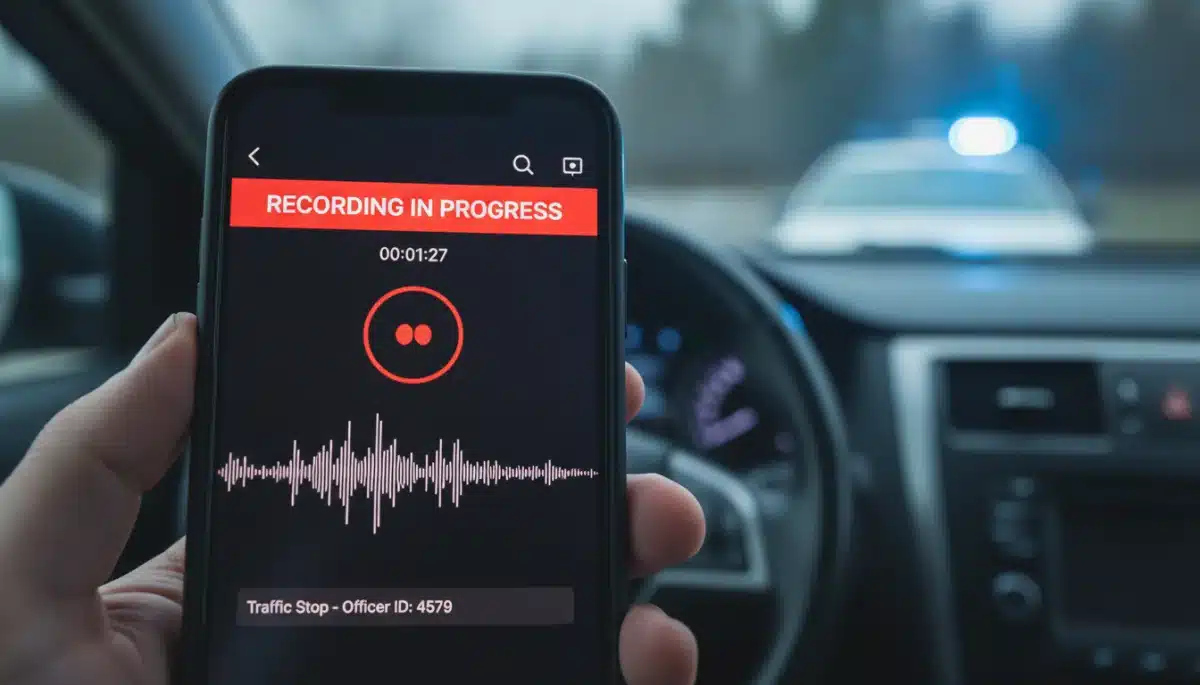
In 2026, technology plays an increasingly significant role in protecting your rights during a traffic stop. Many states allow citizens to record interactions with law enforcement, provided it does not interfere with the officer’s duties. This can be a powerful tool for accountability.
Before you begin recording, it’s wise to be aware of your state’s specific laws regarding recording police officers. While it’s generally permissible in public spaces, some states may have nuances. Informing the officer that you are recording can also be a good practice, though not always legally required. A dashcam or a smartphone app can provide an unbiased account of the interaction.
Best Practices for Recording
If you choose to record, ensure your device is easily accessible and can be operated without making sudden movements. Placing your phone on the dashboard or using a dashcam can provide a stable recording. The goal is to document the interaction without creating any perception of threat or non-compliance.
- Know your state’s laws on recording law enforcement.
- Inform the officer if you are recording (optional but recommended).
- Use a dashcam or easily accessible smartphone.
- Ensure recording does not interfere with the officer’s duties.
Leveraging technology responsibly can offer an invaluable layer of protection, providing objective evidence of what transpired during a traffic stop. This evidence can be crucial in challenging unlawful conduct or defending yourself in court, making it an essential tool for protecting your rights in 2026.
What if You Are Detained or Arrested?
Even if you’ve followed all the steps correctly, a traffic stop can sometimes escalate to detention or arrest. Understanding your rights in these situations is critical to preventing further complications and protecting your legal standing.
If an officer tells you that you are being detained, it means you are not free to leave, but you are not yet under arrest. During detention, you still have the right to remain silent and should reiterate your desire to not answer questions without an attorney. If you are arrested, the officer must inform you of your Miranda rights: the right to remain silent, and the right to an attorney.
Exercising Your Rights During Detention/Arrest
Upon arrest, immediately and clearly state that you wish to speak with an attorney. Do not say anything else until your attorney is present. Do not resist arrest, even if you believe it is unlawful. Resisting can lead to additional charges and can complicate your legal defense.
- Clearly state you wish to speak with an attorney.
- Do not answer questions without legal counsel.
- Do not resist arrest, even if you believe it is unjust.
- Remember your Miranda rights if arrested.
Navigating detention or arrest requires a clear understanding of your rights and the discipline to exercise them. Remaining silent and requesting an attorney are your most powerful tools in these high-stakes situations, ensuring your legal protections are fully invoked.
Common Misconceptions and Legal Updates for 2026
The legal landscape surrounding traffic stops is dynamic, with new precedents and legislative changes occurring regularly. Staying informed about common misconceptions and recent updates, particularly for 2026, is vital for every driver.
One common misconception is that you must always submit to a field sobriety test if requested. While refusing a breathalyzer test after arrest often carries penalties (implied consent laws), field sobriety tests are generally voluntary. You can politely decline, stating, “Officer, I respectfully decline to perform any field sobriety tests.” However, be aware that refusal might strengthen an officer’s suspicion and could still lead to arrest, particularly if there are other signs of impairment.
Emerging Legal Precedents and Technology
Recent court decisions in 2026 have clarified some aspects of digital evidence and surveillance during traffic stops. For instance, the use of AI in analyzing dashcam footage for minor infractions, or the legality of data extracted from vehicle black boxes, are areas seeing evolving interpretations. It’s crucial for legal professionals and citizens alike to stay abreast of these developments.
- Field sobriety tests are often voluntary; breathalyzers after arrest may have implied consent penalties.
- Refusal of field sobriety tests can still lead to arrest based on other factors.
- Be aware of evolving laws on digital evidence and AI surveillance.
- Always consult legal counsel for specific advice on new legal precedents.
Dispelling common myths and understanding the latest legal updates for 2026 ensures you are equipped with the most accurate information. This proactive approach reinforces your ability to make informed decisions and protect your rights effectively during any interaction with law enforcement.
| Key Right | Brief Description |
|---|---|
| Right to Silence | You are not required to answer questions beyond identification and documents. Politely state you prefer not to answer without an attorney. |
| Refuse Searches | You can refuse consent for vehicle searches unless there’s probable cause or a warrant. Verbally state your non-consent. |
| Record Interaction | In most states, you can record officers, provided it doesn’t interfere with their duties. This provides objective evidence. |
| Request Attorney | If detained or arrested, clearly state you wish to speak with an attorney before answering any questions. |
Frequently Asked Questions About Traffic Stops
While not legally required to roll your window down completely, it’s generally recommended to open it enough to allow for clear communication and to present your documents. This avoids creating unnecessary suspicion or tension. Ensure your hands remain visible and movements are slow and deliberate.
Yes, an officer can legally order you out of your vehicle during a lawful traffic stop, even without probable cause for a search or arrest. This is considered a safety measure for the officer. You must comply with this command, but it does not automatically grant them the right to search your vehicle.
If you don’t have your documents, inform the officer calmly. Depending on the state and circumstances, you might receive a citation for not having them, but it’s crucial not to lie or provide false information. Some states allow for digital proof of insurance, so check local regulations.
Generally, no, not without your consent, a search warrant, or probable cause. A routine traffic stop for a minor infraction does not automatically grant an officer the right to search your trunk. Always politely refuse consent to any search of your vehicle’s compartments.
No, it is highly advisable not to argue with the officer during the stop. Such actions can escalate the situation and potentially lead to additional charges. If you believe the officer is acting unlawfully or making an error, note the details and address them through the proper legal channels later, often with an attorney.
Conclusion
Understanding and asserting your rights during a traffic stop is an essential aspect of responsible citizenship and personal protection in 2026. By staying calm, knowing what to say and what to keep silent about, understanding the limits of searches, and leveraging available technology, you can navigate these interactions effectively. Always remember to be respectful, but firm in protecting your constitutional rights. Remaining informed about legal updates ensures you are always prepared to protect yourself legally on the road.