Habit Stacking for Organization: 3 Routines in 30 Days

Anúncios
Habit stacking for organization is a powerful strategy that allows individuals to build 3 new routines in 30 days, leading to a more ordered and efficient life in 2026 America.
Anúncios
Habit stacking for organization offers a practical pathway to a more structured existence. Imagine transforming your daily life by seamlessly integrating new, beneficial routines. This approach leverages existing habits to anchor desired behaviors, making personal growth not just achievable, but sustainable.
Anúncios
Understanding the Core of Habit Stacking
Habit stacking is a simple yet profound concept: instead of trying to create a new habit from scratch, you link a new habit to an existing one. This technique leverages the momentum of an established routine, making it easier for your brain to adopt new behaviors without expending excessive willpower. It’s about making small, incremental changes that collectively lead to significant transformations, especially for those seeking a more ordered life in 2026 America.
The Psychology Behind Linked Habits
Our brains are wired for efficiency, constantly seeking patterns and shortcuts. When you attach a new habit to an old one, you’re essentially providing a cue that your brain already recognizes. This reduces the mental effort required to initiate the new behavior, turning it into an automatic sequence rather than a conscious decision. This psychological principle is key to successful habit formation.
- Cue Recognition: Existing habits act as a trigger for new ones.
- Reduced Friction: Less mental energy is needed to start.
- Compounding Effect: Small additions build into larger changes over time.
The power of habit stacking lies in its simplicity. It doesn’t ask you to overhaul your entire life overnight, but rather to subtly weave improvements into the fabric of your existing day. This gentle integration makes it a highly effective method for sustained organizational success.
Preparing for Your 30-Day Organizational Challenge
Embarking on a 30-day challenge to build new routines requires a bit of foresight and preparation. It’s not just about picking habits; it’s about setting yourself up for success by understanding your current patterns and identifying areas ripe for improvement. This foundational work ensures your efforts in habit stacking for organization yield lasting results.
Identifying Your Current Routines
Before you can stack new habits, you need a clear picture of your existing ones. Spend a few days observing your daily schedule. What do you do consistently, almost without thinking? These are your habit anchors. They can be anything from your morning coffee ritual to checking your email after lunch. Document these to create a baseline.
- Morning Rituals: Waking up, brushing teeth, making coffee.
- Workday Habits: Starting your computer, taking a break.
- Evening Routines: Eating dinner, watching TV, going to bed.
Understanding these anchors is crucial because they provide the natural breakpoints where new habits can be inserted. Don’t underestimate the power of seemingly small, inconsequential habits; they are often the most robust anchors.
Defining Your Desired Organizational Routines
With your anchors identified, the next step is to pinpoint the three new organizational routines you want to cultivate. Be specific and realistic. Instead of ‘be more organized,’ think ‘put away dishes after every meal’ or ‘plan my top three tasks for tomorrow before leaving work.’ These specific goals are measurable and actionable, making them ideal candidates for habit stacking.
Consider what aspects of your life feel most disorganized. Is it your workspace, your finances, or your daily schedule? Choose habits that directly address these pain points. Remember, the goal is a more ordered life in 2026 America, so select routines that truly contribute to that vision.
Crafting Your Habit Stacks: The First Routine
Once you’ve identified your existing habits and desired new routines, it’s time to build your first habit stack. This process involves a clear, concise formulation that links your new behavior to an established one. The precision in this step is vital for making the habit stick, ensuring your efforts in habit stacking for organization are effective.
The ‘After [Current Habit], I Will [New Habit]’ Formula
This simple formula is the cornerstone of habit stacking. It creates a direct, actionable link between an existing behavior and the new one you wish to install. For example, ‘After I brew my morning coffee, I will spend five minutes planning my day.’ This clear instruction leaves no room for ambiguity, making it easier for your brain to follow through.
Choose an existing habit that occurs reliably every day. The more consistent your anchor habit, the more consistent your new habit will become. Ensure the new habit is small enough to be easily completed immediately after the anchor, minimizing resistance.
Consider the context. If your goal is to organize your desk, stacking it after you sit down to work might be more effective than stacking it after your morning shower, as the environment is already conducive to the new action.
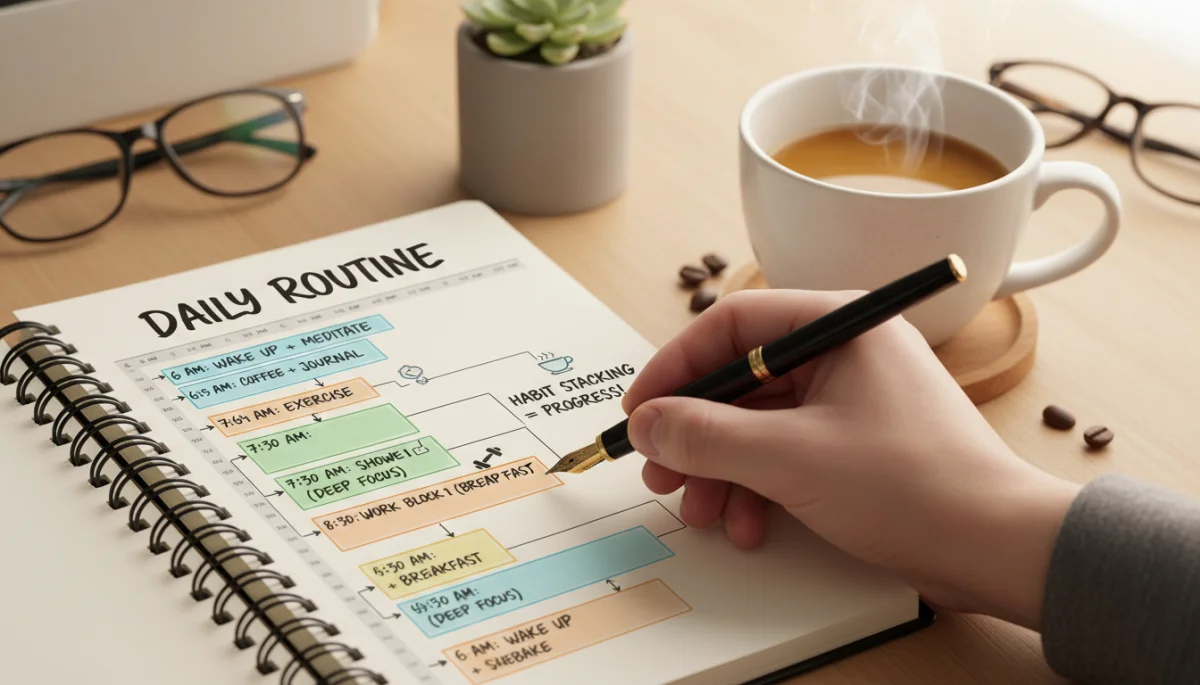
Building Your Second and Third Routines
After successfully establishing your first habit stack, you’re ready to integrate the second and third routines. The principles remain the same, but the experience from your first stack will make this process even smoother. This layered approach is what truly amplifies the benefits of habit stacking for organization.
Expanding Your Organizational Toolkit
With one successful stack under your belt, you’ve proven to yourself that this method works. Now, apply the same ‘After [Current Habit], I will [New Habit]’ formula to your next two desired organizational routines. Perhaps you want to tidy up a specific area of your home, or manage your digital files more effectively.
- Routine 2 Example: ‘After I finish eating dinner, I will wipe down the kitchen counters.’
- Routine 3 Example: ‘After I open my laptop in the morning, I will spend 10 minutes organizing my desktop files.’
Remember to keep the new habits small and manageable. The goal is consistency over intensity, especially in the initial 30 days. As these habits become ingrained, you can gradually increase their scope or add more complex behaviors.
The key is to find natural breakpoints in your day where these new routines can seamlessly fit. Don’t force them; observe where they can be most naturally integrated without feeling like a burden. This thoughtful placement is crucial for long-term adherence.
Overcoming Challenges and Staying Consistent
Even with the best intentions, building new routines can present challenges. Life in 2026 America is dynamic, and unexpected events can disrupt even the most well-planned habit stacks. The ability to anticipate and navigate these obstacles is vital for maintaining consistency and achieving a more ordered life.
Strategies for Maintaining Momentum
When you miss a day, don’t let it derail your progress. The ‘never miss twice’ rule is a powerful strategy: if you miss one day, make sure you get back on track the very next day. This prevents a single slip-up from snowballing into a complete abandonment of your new routine.
Additionally, consider setting up visual reminders. A checklist, a sticky note, or even an alarm can serve as a gentle nudge to perform your stacked habit. Public accountability, by sharing your goals with a friend or family member, can also provide an extra layer of motivation.
- Flexibility: Adapt your stack if your schedule changes.
- Self-Compassion: Don’t beat yourself up over missed days; just restart.
- Environmental Cues: Set up your environment to support your habits.
Review your progress regularly. At the end of each week, take a moment to reflect on what worked well and what didn’t. This iterative process allows you to refine your habit stacks and ensure they remain effective and sustainable for your lifestyle.
Integrating Habits for a More Ordered Life in 2026 America
The true power of habit stacking extends beyond merely adding new tasks; it’s about fundamentally reshaping your daily existence for enhanced order and efficiency. As you progress through your 30-day challenge, you’ll begin to see how these small, consistent actions compound into significant improvements, leading to a truly more ordered life in 2026 America.
The Long-Term Impact of Stacked Routines
Once a habit stack becomes automatic, it frees up mental bandwidth. You no longer have to consciously decide to perform the new behavior; it simply happens. This automation allows you to direct your willpower and cognitive energy toward more complex decisions and creative pursuits, rather than expending it on basic organizational tasks.
Imagine the cumulative effect of consistently putting things away, planning your day, and organizing your digital space. Over weeks, months, and years, these small efforts prevent clutter from accumulating, reduce stress, and create a sense of control over your environment. This isn’t just about tidiness; it’s about creating a foundation for greater productivity and peace of mind.
The beauty of this method is its scalability. Once you’ve mastered three routines, you can gradually introduce more, continuing to build upon your foundation of established habits. This continuous improvement fosters a lifestyle of ongoing organization, making it an integral part of who you are, rather than just a temporary project.
| Key Point | Brief Description |
|---|---|
| Habit Stacking Principle | Link new habits to existing ones for easier adoption and consistency. |
| 30-Day Challenge Goal | Build 3 new organizational routines within a month for lasting change. |
| Consistency is Key | Prioritize daily execution over perfection, using strategies like ‘never miss twice’. |
| Long-Term Benefits | Reduces mental load, minimizes clutter, and fosters a sense of control. |
Frequently Asked Questions About Habit Stacking for Organization
Habit stacking is a strategy where you attach a new desired behavior to an existing, established habit. It uses a simple formula: “After [current habit], I will [new habit],” making it easier to integrate new routines into your daily life without relying solely on willpower.
It leverages your brain’s natural tendency to follow established patterns. By linking new organizational tasks to existing cues, you reduce the mental friction of starting, making it more likely that the new routine will become automatic and sustainable over time, leading to a more ordered life.
For optimal success, focusing on building 2-3 new routines in 30 days is recommended. This allows enough time for each new habit to become firmly established without overwhelming your schedule, ensuring a higher chance of long-term adherence and organizational improvement.
Don’t worry if you miss a day. The key is to apply the “never miss twice” rule. If you skip one day, make a conscious effort to perform the habit the very next day. This prevents minor setbacks from derailing your overall progress and keeps you on track.
Absolutely! Habit stacking is a versatile technique applicable to any area of personal development, including fitness, learning, mindfulness, and productivity. The core principle of linking new behaviors to existing cues can be adapted to achieve a wide range of personal and professional goals effectively.
Conclusion
Embracing habit stacking for organization offers a powerful, sustainable path to a more ordered and efficient life in 2026 America. By strategically linking new, desired behaviors to existing routines, you bypass the common pitfalls of willpower depletion and inconsistency. The 30-day challenge to build three new routines is not merely about adding tasks; it’s about fundamentally restructuring your days for greater calm, control, and productivity. As these small, consistent actions become automatic, they free up mental energy and contribute to a compounding effect of positive change, transforming your daily existence for the better.