Clean Environment Rights 2026: Policy & Local Impact
Anúncios
Your right to a clean environment in 2026 is a fundamental principle, empowering citizens to advocate for policy changes and drive local impact towards healthier, sustainable communities.
As we navigate 2026, understanding and asserting your right to a clean environment is more critical than ever. This isn’t just an abstract concept; it’s a foundational aspect of public health and well-being, demanding active engagement in policy changes and fostering tangible local impact.
Anúncios
Understanding the legal framework of environmental rights in 2026
The legal landscape surrounding environmental rights continues to evolve significantly, reflecting growing global awareness and the urgent need for sustainable practices. In 2026, various statutes and precedents at federal, state, and local levels underpin citizens’ ability to demand a healthy environment, shaping how communities interact with their surroundings.
Anúncios
These legal frameworks often provide avenues for both proactive protection and reactive remediation. They empower individuals and groups to hold polluters accountable and to influence future development in an environmentally conscious manner. Recognizing these legal tools is the first step toward effective advocacy.
Federal environmental protections and their reach
At the federal level, landmark legislation like the Clean Air Act, Clean Water Act, and various Superfund amendments continue to be cornerstones of environmental protection. These acts establish broad standards and regulatory bodies, such as the Environmental Protection Agency (EPA), tasked with enforcement and oversight.
- Clean Air Act (CAA): Regulates air emissions from stationary and mobile sources, aiming to protect public health and welfare.
- Clean Water Act (CWA): Governs water pollution, establishing quality standards for surface waters and controlling discharge of pollutants.
- Superfund (CERCLA): Addresses hazardous waste sites, providing mechanisms for cleanup and holding responsible parties accountable.
State and local environmental regulations
Beyond federal mandates, individual states and municipalities often enact their own, sometimes more stringent, environmental protection laws. These local regulations are crucial as they address specific regional challenges, from waste management and zoning to conservation of unique ecosystems. Understanding these localized rules can provide direct avenues for intervention and advocacy.
For instance, a city might have specific ordinances on urban tree canopy preservation, or a state could implement advanced renewable energy mandates. These local policies often reflect the immediate concerns and values of the communities they serve, offering closer points of engagement for citizens.
In conclusion, the legal framework for environmental rights in 2026 is a multi-layered system designed to safeguard natural resources and public health. Navigating these laws, from federal mandates to local ordinances, is essential for any citizen or group seeking to advocate effectively for a cleaner, healthier environment.
Emerging environmental challenges and their impact on communities
As 2026 unfolds, communities across the United States face a complex array of emerging environmental challenges that directly threaten public health and quality of life. These issues, often interconnected, demand innovative solutions and robust policy responses. Understanding their specific impacts is crucial for effective advocacy.
From persistent pollution to the accelerating pace of climate-related events, these challenges underscore the urgency of upholding environmental rights. Their effects are not evenly distributed, often disproportionately affecting vulnerable populations and exacerbating existing inequalities.
The persistent threat of industrial pollution
Despite regulations, industrial pollution remains a significant concern. Legacy contamination from past industrial activities continues to pose health risks, while ongoing emissions from factories and agricultural operations contribute to air and water quality degradation. Communities situated near industrial zones frequently bear the brunt of these impacts, experiencing higher rates of respiratory illnesses, water contamination, and other health issues.
The long-term health consequences and the economic burden on affected communities highlight the need for stricter enforcement and more proactive preventative measures. Advocating for cleaner industrial practices and robust monitoring systems is paramount.
Climate change and local vulnerabilities
The impacts of climate change are increasingly localized and diverse. Rising sea levels threaten coastal communities, extreme weather events such as floods and wildfires devastate inland regions, and prolonged droughts strain water resources. These phenomena disrupt ecosystems, infrastructure, and livelihoods, creating new vulnerabilities for residents.
- Coastal Erosion: Threatens homes and natural barriers, displacing communities.
- Extreme Heat: Increases health risks, particularly for the elderly and those without adequate cooling.
- Water Scarcity: Affects agriculture, drinking water supplies, and ecosystem health.
Addressing plastic waste and microplastics
Plastic pollution, particularly microplastics, has emerged as a pervasive environmental threat. These tiny particles infiltrate ecosystems, food chains, and even human bodies, with still-unfolding health implications. Managing plastic waste effectively and transitioning towards sustainable alternatives are critical challenges.
From single-use plastics to packaging, the scale of the problem requires systemic changes in production, consumption, and disposal. Local initiatives to reduce plastic use and improve recycling infrastructure are vital components of a broader solution.
In summary, the environmental challenges of 2026 are multifaceted and deeply impactful, affecting health, economy, and community stability. Addressing these issues requires a comprehensive understanding of their nature and a commitment to advocating for sustainable and equitable solutions.
Policy changes and legislative initiatives for a cleaner future
In 2026, the push for a cleaner environment is increasingly driven by a wave of innovative policy changes and legislative initiatives at all levels of government. These efforts aim to not only mitigate existing environmental damage but also to foster a sustainable future through proactive measures. Understanding these developments is key to supporting and influencing their trajectory.
From carbon pricing to renewable energy mandates, these policies reflect a growing consensus on the urgency of environmental action. They often involve complex negotiations between various stakeholders, including government, industry, and environmental groups.
Federal initiatives for environmental protection
The federal government continues to explore and implement policies designed to accelerate the transition to a green economy. This includes significant investments in renewable energy infrastructure, tax incentives for sustainable technologies, and updated regulations for industries to reduce their carbon footprint and pollutant emissions.
There’s also a growing emphasis on environmental justice, ensuring that the benefits of environmental protection are equitably distributed and that no community disproportionately bears the burden of pollution. Legislation targeting emissions from power plants and vehicles, alongside efforts to protect critical habitats, remain central.
State-level innovations and mandates
Many states are at the forefront of environmental policy innovation, often adopting more ambitious goals than federal standards. These initiatives range from aggressive renewable portfolio standards and electric vehicle mandates to comprehensive waste reduction strategies and conservation programs.

For example, some states have implemented carbon cap-and-trade programs, while others offer substantial rebates for energy-efficient home improvements. These state-level actions often serve as models for broader national policy, demonstrating the feasibility and benefits of green initiatives.
- Renewable Energy Targets: Mandates for a certain percentage of electricity from renewable sources.
- Zero-Emission Vehicle (ZEV) Programs: Promoting the adoption of electric vehicles through incentives and infrastructure development.
- Plastic Bag Bans: Local and state laws restricting single-use plastic bags to reduce waste.
The role of local ordinances in environmental governance
Local governments play a critical role in translating broader environmental goals into tangible community improvements. Through zoning laws, building codes, and public works projects, municipalities can directly influence local environmental quality. This includes promoting green spaces, managing stormwater runoff, and establishing local recycling and composting programs.
Local ordinances often have the most immediate and visible impact on residents’ daily lives, making local advocacy particularly powerful. Engaging with city councils and planning commissions can lead to direct improvements in neighborhood environmental health.
In conclusion, policy changes and legislative initiatives are vital engines for achieving a cleaner future. By understanding and engaging with these efforts at federal, state, and local levels, citizens can play a significant role in shaping environmental governance for the better.
Empowering local communities for environmental action
Empowering local communities is paramount to realizing the vision of a clean environment in 2026. While policy changes are crucial, true transformation often begins at the grassroots level, where residents can directly address local environmental concerns and implement sustainable practices. This section explores how communities are mobilizing and what tools are available for effective local action.
Community empowerment involves not only raising awareness but also providing the resources and platforms for residents to take ownership of their environmental future. This collective action can lead to significant, lasting change.
Grassroots movements and advocacy groups
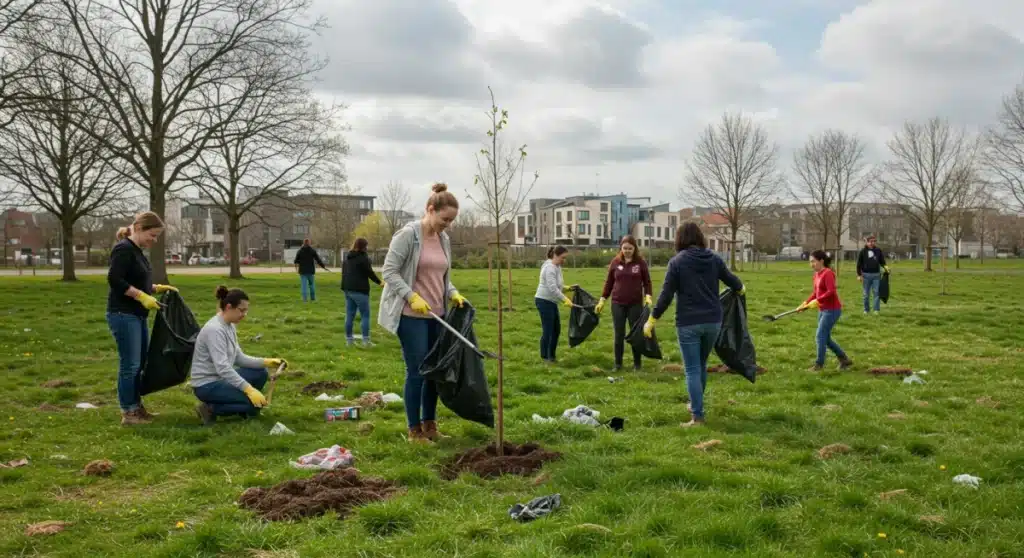
Across the nation, grassroots organizations and local advocacy groups are at the forefront of environmental protection. These groups, often driven by volunteers, organize clean-up events, raise awareness about local pollution issues, and lobby local officials for stronger environmental protections. Their strength lies in their deep understanding of local challenges and their ability to mobilize residents.
These movements act as watchdogs, holding local industries and governments accountable, and as catalysts for positive change. Supporting or joining such groups is a direct way to contribute to local environmental health.
Community-based conservation and restoration projects
Many communities are engaging in hands-on conservation and restoration projects. These initiatives range from planting trees in urban areas to restoring wetlands and protecting local wildlife habitats. Such projects not only improve ecological health but also foster a sense of community ownership and pride.
- Urban Greening Initiatives: Creating parks and green spaces to improve air quality and biodiversity.
- River and Stream Cleanups: Removing pollution and restoring riparian habitats.
- Native Plant Gardens: Promoting local flora to support pollinators and reduce water usage.
Utilizing citizen science for local impact
Citizen science is an increasingly powerful tool for local environmental action. Residents can contribute to scientific research by collecting data on air and water quality, biodiversity, and pollution levels. This data can then be used to inform local policy, identify problem areas, and advocate for specific interventions.
Platforms and apps make it easier for ordinary citizens to participate, transforming them into active monitors of their local environment. This engagement not only provides valuable data but also educates participants on environmental issues.
In conclusion, empowering local communities is essential for driving environmental action. Through grassroots movements, conservation projects, and citizen science, residents can effectively advocate for and implement changes that lead to a healthier, cleaner environment for everyone.
The role of technology and innovation in environmental advocacy
In 2026, technology and innovation are transforming the landscape of environmental advocacy, offering unprecedented tools for monitoring, communication, and mobilization. These advancements empower individuals and organizations to gather data, raise awareness, and influence policy more effectively than ever before. Leveraging these technologies is critical for advancing your right to a clean environment.
From satellite imagery to social media platforms, digital tools are democratizing access to environmental information and enabling more coordinated global and local responses to ecological challenges.
Advanced monitoring and data collection
Cutting-edge technologies like drones, remote sensors, and AI-powered analytics are revolutionizing how environmental data is collected and analyzed. These tools provide real-time insights into air and water quality, deforestation rates, and pollution hotspots, allowing advocates to pinpoint issues and present compelling evidence.
Satellite imagery, for instance, can track changes in land use and carbon emissions over vast areas, providing irrefutable evidence of environmental degradation or successful restoration efforts. This data is invaluable for holding polluters accountable and informing policy decisions.
Digital platforms for public engagement and mobilization
Social media, online petitions, and crowdfunding platforms have become powerful engines for public engagement and mobilization in environmental advocacy. These digital tools enable rapid dissemination of information, facilitate community organizing, and allow millions to voice their support for environmental causes.
- Social Media Campaigns: Raising awareness and driving public discourse on environmental issues.
- Online Petitions: Gathering widespread support for legislative changes and corporate accountability.
- Crowdfunding for Green Initiatives: Funding local environmental projects and research.
Geographic Information Systems (GIS) for spatial analysis
GIS technology plays a crucial role in environmental advocacy by allowing the visualization and analysis of geographical data. This enables advocates to map pollution sources, identify vulnerable communities, and illustrate the impact of environmental policies. GIS helps in making complex environmental data accessible and understandable to a broader audience.
By overlaying various data layers—such as demographic information, pollution levels, and natural resource distribution—advocates can build a compelling case for targeted interventions and equitable environmental planning. This spatial intelligence is indispensable for strategic advocacy.
In conclusion, technology and innovation are indispensable allies in the fight for a clean environment. By embracing advanced monitoring, digital engagement platforms, and spatial analysis tools, advocates can amplify their impact and drive meaningful progress towards a sustainable future.
How to effectively advocate for environmental policy changes
Effectively advocating for environmental policy changes in 2026 requires a strategic and multifaceted approach. It involves understanding the policymaking process, building alliances, and communicating your message clearly and persuasively. Your active participation is crucial to ensuring that environmental concerns are heard and acted upon.
Advocacy is not just about protesting; it’s about informed engagement, persistent effort, and a willingness to work within the system to achieve desired outcomes. Every voice contributes to the collective power of environmental action.
Engaging with elected officials and policymakers
Direct engagement with elected officials and their staff is one of the most impactful ways to advocate for policy changes. This can take many forms, including writing letters, making phone calls, attending town halls, and scheduling direct meetings. It’s essential to be well-informed, articulate your concerns clearly, and propose actionable solutions.
Building relationships with policymakers, even if they don’t initially agree with your stance, can open doors for future dialogue and influence. Personal stories about how environmental issues affect you or your community can be particularly powerful.
Participating in public hearings and comment periods
Before new environmental policies or regulations are finalized, there are often public hearings and comment periods. These forums provide an opportunity for citizens to formally submit their feedback, concerns, and suggestions. Participating actively in these processes ensures that community perspectives are considered.
- Research the Proposal: Understand the details and potential impacts of the policy.
- Prepare Your Testimony: Draft clear, concise, and evidence-based comments.
- Submit on Time: Adhere to deadlines for public comments to ensure they are reviewed.
Building coalitions and community partnerships
Environmental advocacy is often more effective when undertaken collectively. Building coalitions with other environmental groups, community organizations, businesses, and even unlikely allies can amplify your message and increase your influence. Shared goals and resources can lead to more comprehensive and impactful campaigns.
These partnerships can also foster a broader base of support, bringing diverse perspectives and skills to the table. Collective action demonstrates widespread concern and can exert greater pressure on decision-makers.
In conclusion, effective advocacy for environmental policy changes is a dynamic process that requires strategic engagement, informed participation, and collaborative efforts. By actively engaging with policymakers and building strong community ties, you can significantly contribute to a cleaner, healthier environment.
Measuring impact: assessing the effectiveness of environmental initiatives
Assessing the effectiveness of environmental initiatives is crucial for ensuring that efforts to secure your right to a clean environment in 2026 are truly making a difference. Measurement and evaluation provide valuable feedback, allowing advocates and policymakers to refine strategies, allocate resources wisely, and demonstrate tangible progress. Without robust impact assessment, even well-intentioned efforts can fall short.
This process involves setting clear objectives, collecting relevant data, and analyzing outcomes against established benchmarks. It helps in understanding what works, what doesn’t, and why.
Key metrics for environmental impact assessment
Various metrics are used to measure the success of environmental initiatives. These can range from quantitative data, such as reductions in pollutant levels or increases in renewable energy capacity, to qualitative data, like improved public health outcomes or enhanced community engagement. The choice of metrics depends on the specific goals of the initiative.
For example, a clean water initiative might track reductions in contaminants, while a reforestation project would measure the number of trees planted and their survival rate. It’s important to select metrics that are both measurable and directly relevant to the initiative’s objectives.
Case studies of successful local environmental projects
Examining successful local environmental projects provides valuable lessons and inspiration. These case studies often highlight innovative approaches, strong community partnerships, and effective advocacy strategies that led to positive outcomes. They serve as blueprints for other communities facing similar challenges.
- Urban Farm Initiatives: Transforming vacant lots into productive green spaces, improving food security and local air quality.
- Renewable Energy Cooperatives: Communities investing in and managing their own solar or wind power projects.
- Waste Diversion Programs: Implementing comprehensive recycling and composting programs that significantly reduce landfill waste.
Challenges in measuring long-term environmental change
Measuring long-term environmental change presents unique challenges, including the complexity of ecological systems, the time lag between intervention and observable effects, and the influence of external factors. Attributing specific outcomes solely to one initiative can be difficult.
However, by establishing baseline data, employing consistent monitoring methods, and utilizing advanced analytical tools, it is possible to track progress over extended periods. Long-term studies are essential for understanding the true impact and sustainability of environmental interventions.
In conclusion, measuring the impact of environmental initiatives is fundamental to effective advocacy and policy-making. By rigorously assessing outcomes and learning from both successes and challenges, we can ensure that our efforts continue to advance the right to a clean environment for all.
| Key Aspect | Brief Description |
|---|---|
| Legal Framework | Federal, state, and local laws provide the basis for environmental protection and citizen action. |
| Emerging Challenges | Industrial pollution, climate change, and plastic waste pose significant threats to communities. |
| Policy & Legislation | New initiatives at all levels aim to foster a cleaner, more sustainable future. |
| Community Action | Grassroots efforts and local projects are vital for tangible environmental improvements. |
Frequently asked questions about environmental rights
In 2026, the ‘right to a clean environment’ refers to the legal and ethical entitlement of all individuals to live in an environment free from pollution and degradation that threatens health and well-being. It encompasses access to clean air, water, and healthy ecosystems, often enshrined in various federal, state, and local laws, allowing citizens to advocate for these conditions.
You can advocate locally by joining or forming grassroots groups, participating in community clean-up projects, volunteering for conservation efforts, and engaging with local government officials. Attending public hearings, submitting comments on proposed policies, and utilizing citizen science initiatives are also effective ways to make an impact and influence local environmental decisions.
Key environmental challenges in the US today include persistent industrial pollution affecting air and water quality, the localized impacts of climate change (such as extreme weather and sea-level rise), and the widespread issue of plastic waste, particularly microplastics. Energy consumption, deforestation, and biodiversity loss also remain significant concerns that require urgent attention and policy solutions.
Technology in 2026 supports environmental advocacy through advanced monitoring tools like drones and sensors for data collection, digital platforms for public engagement and mobilization (e.g., social media, online petitions), and Geographic Information Systems (GIS) for spatial analysis. These tools enhance data-driven advocacy, raise awareness, and facilitate coordinated action, making environmental efforts more efficient and impactful.
Measuring environmental impact is crucial because it assesses the effectiveness of initiatives, ensures resources are used efficiently, and provides data to refine strategies. It demonstrates tangible progress, holds stakeholders accountable, and informs future policy decisions. Without proper measurement, it’s difficult to know if efforts are achieving desired outcomes or if adjustments are needed to meet environmental goals.
Conclusion
In conclusion, securing your right to a clean environment in 2026 is an ongoing journey that demands informed action, strategic advocacy, and widespread community engagement. From understanding the intricate legal frameworks and confronting emerging environmental challenges to leveraging technological innovations and accurately measuring impact, every step contributes to a healthier, more sustainable future. By actively participating in policy discussions and supporting local initiatives, individuals can collectively drive the necessary changes to protect our planet for generations to come. Your voice and your actions truly make a difference in shaping environmental outcomes.