Online Purchase Rights 2026: Returns & Refunds Guide

Anúncios
This guide offers a comprehensive overview of online purchase rights in 2026, specifically addressing returns and refunds for consumers in the United States.
Anúncios
In an increasingly digital world, understanding your online purchase rights is more critical than ever. As e-commerce continues to evolve at a rapid pace, so do the regulations designed to protect you, the consumer. This guide for 2026 aims to demystify the complexities of online returns and refunds, empowering you to shop with confidence and assert your rights when necessary.
Anúncios
The Evolving Landscape of Online Consumer Protection in 2026
The digital marketplace of 2026 is a dynamic environment, constantly shaped by technological advancements and legislative updates. Consumer protection laws have adapted to address new challenges, such as sophisticated online scams, data privacy concerns, and the complexities of cross-border transactions. Staying informed about these changes is your first line of defense.
Federal and state regulations work in tandem to safeguard consumers. While federal laws like the Magnuson-Moss Warranty Act and the Federal Trade Commission (FTC) Act provide broad protections, individual states often implement more specific rules regarding online sales, returns, and refunds. It’s crucial to be aware of both federal guidelines and any state-specific nuances that might apply to your purchases, especially concerning digital goods and services which often have different return stipulations.
Key Federal Protections for Online Shoppers
Several federal laws form the bedrock of online consumer protection in the United States. These laws aim to ensure fair business practices and provide recourse for consumers encountering issues with their online purchases.
- FTC Act: Prohibits unfair and deceptive acts or practices in commerce, including misleading advertising and fraudulent online sales tactics.
- Magnuson-Moss Warranty Act: Governs product warranties, ensuring that manufacturers and sellers clearly define the terms of any written warranty.
- Electronic Fund Transfer Act (EFTA): Protects consumers engaging in electronic fund transfers, offering recourse for unauthorized transactions and billing errors.
- Consumer Review Fairness Act (CRFA): Protects consumers’ ability to share their honest opinions about a business’s products or services.
Understanding these foundational laws helps you recognize when a merchant might be violating your rights, providing a basis for taking action. Always keep records of your transactions and communications with sellers.
The landscape is also seeing increased focus on data privacy, with new regulations influencing how companies handle your personal information during online transactions. This adds another layer of protection, ensuring that your shopping experience is not only secure but also respects your privacy. Knowing these rights helps you evaluate merchant trustworthiness.
Understanding Return Policies: What to Look For Before You Buy
Before finalizing any online purchase, a thorough review of the seller’s return policy is paramount. This seemingly minor step can save you significant frustration and financial loss down the line. A clear and accessible return policy is a hallmark of a reputable online retailer.
Return policies typically outline the timeframe within which an item can be returned, the condition in which it must be, and whether a refund, exchange, or store credit will be issued. Pay close attention to any restocking fees, shipping costs for returns, and whether certain items are non-returnable. Customized items, perishable goods, or digital downloads often fall into this category.
Essential Elements of a Clear Return Policy
A comprehensive return policy should leave no room for ambiguity. Look for these key details:
- Return Window: The number of days you have to initiate a return (e.g., 30 days from delivery).
- Condition of Item: Requirements for the item’s state (e.g., unworn, original packaging, tags attached).
- Refund Method: How you will receive your money back (e.g., original payment method, store credit).
- Return Shipping: Who pays for return shipping (buyer, seller, or specific conditions apply).
- Non-Returnable Items: A clear list of products that cannot be returned.
Always screenshot or save a copy of the return policy at the time of purchase. Policies can change, and having a record of the terms you agreed to can be invaluable if a dispute arises. This proactive approach ensures you are fully aware of your online purchase rights from the outset.
Many retailers now offer extended return windows during holiday seasons or for loyalty program members. While this can be beneficial, it’s still crucial to understand the standard policy first. Don’t assume all items from the same retailer have the same return terms; some product categories may have stricter rules.
Navigating the Refund Process: From Initiation to Reimbursement
Once you’ve decided to return an item, initiating the refund process correctly is crucial for a smooth experience. Most online retailers have a dedicated section on their website for returns, often requiring you to log into your account or use an order number.
The first step usually involves requesting a Return Merchandise Authorization (RMA) number. This number helps the seller track your return and process your refund efficiently. Ensure you follow all instructions for packaging and labeling the item, as failure to do so can delay or even invalidate your refund. Keep proof of shipment, such as a tracking number, until your refund is fully processed.
Common Challenges and How to Overcome Them
While most refunds proceed without issue, consumers can sometimes encounter hurdles. Knowing how to address these can expedite the process and protect your rights.
- Delayed Refunds: If a refund takes longer than specified, first check your payment method. If still missing, contact the seller’s customer service with your RMA and tracking information.
- Partial Refunds: Understand why a partial refund was issued. It might be due to restocking fees, damage, or missing components. If you disagree, dispute it with evidence.
- Refused Returns: If a return is refused, ensure you met all policy criteria. If you believe the refusal is unjust, escalate the issue with the seller.
Document every step of your communication with the seller, including dates, times, names of representatives, and summaries of conversations. This documentation is vital if you need to escalate the issue further to your credit card company or a consumer protection agency. Your online purchase rights include the right to a fair and timely refund when policy conditions are met.
Many credit card companies offer chargeback protection, which can be a powerful tool if a merchant refuses to issue a legitimate refund. Familiarize yourself with your credit card’s specific policies on disputed charges, as there are usually time limits for filing a claim. This can provide an additional layer of security for your online transactions.
When Products Are Defective, Damaged, or Not as Described
Receiving a product that is defective, damaged, or significantly different from its online description is a common, yet frustrating, experience for online shoppers. In these scenarios, your online purchase rights typically extend beyond standard return policies, offering stronger protections.
Under federal consumer protection laws, and often state laws, merchants are obligated to provide goods that are fit for their intended purpose and match their description. If a product fails to meet these basic expectations, you generally have the right to a full refund, exchange, or repair, often with the seller covering return shipping costs.

Steps to Take When an Item is Faulty
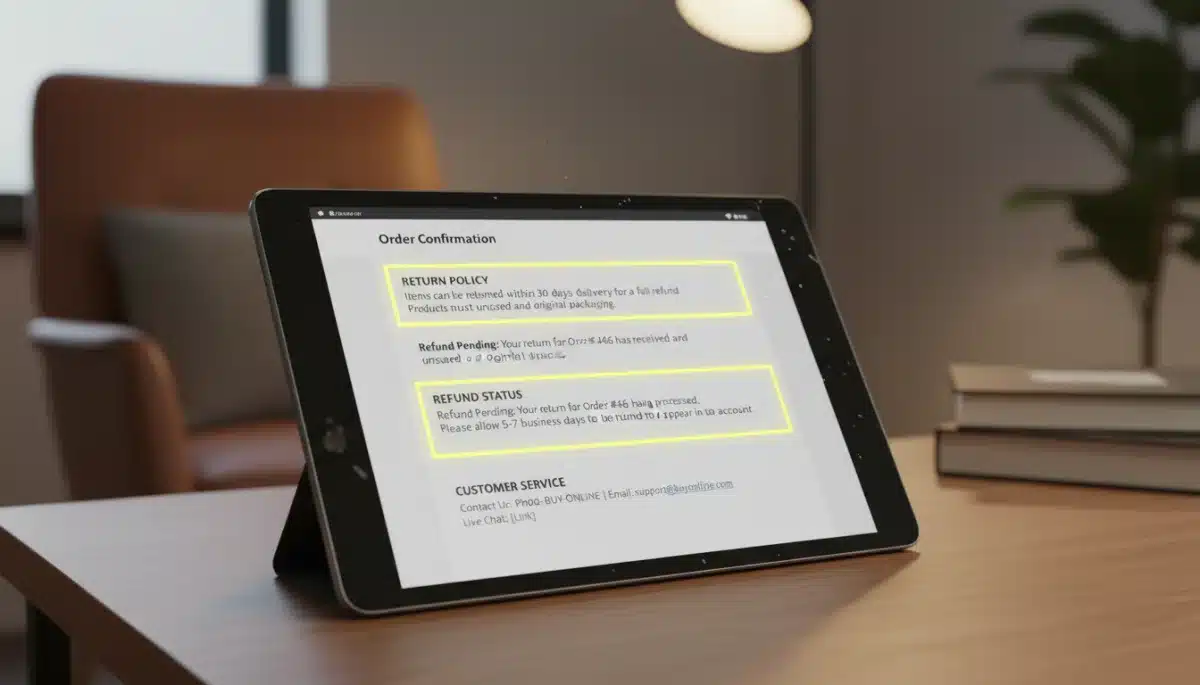
Immediate action and thorough documentation are key when dealing with faulty products. This ensures you have a strong case for asserting your rights.
- Document the Issue: Take photos or videos of the damage or defect as soon as you receive the item.
- Contact the Seller Promptly: Notify the seller immediately, explaining the issue and providing your evidence.
- Refer to Warranty Information: If the product has a warranty, understand its terms for repair or replacement.
- Keep All Packaging: Original packaging may be required for returns, especially for damaged goods.
Be persistent but polite in your communication. Clearly state your desired resolution – whether it’s a full refund, a replacement, or a repair. If the seller is unresponsive or unhelpful, consider escalating the issue through their internal complaint process or external consumer protection bodies. Remember, you should not be penalized for receiving a product that was not as advertised or was damaged in transit.
Some states have specific ‘lemon laws’ for certain types of goods, though these are more common for vehicles. However, the principle of implied warranty of merchantability generally applies, meaning goods sold must be fit for their ordinary purpose. This is a powerful protection for consumers when items fail prematurely or do not function as expected.
The Role of Payment Providers and Consumer Protection Agencies
When direct resolution with a seller proves difficult or impossible, various third parties can offer assistance and further avenues for recourse. Your payment provider, such as your credit card company or PayPal, can be a powerful ally.
Most credit card companies offer robust dispute resolution services, allowing you to initiate a chargeback if a merchant fails to deliver goods or services as promised, or refuses a legitimate refund. This process typically involves providing evidence of the issue and your attempts to resolve it with the seller. Similarly, platforms like PayPal have buyer protection programs that can mediate disputes and issue refunds.
Key Resources for Consumer Assistance
Beyond payment providers, several governmental and non-profit organizations are dedicated to protecting consumer rights and assisting with disputes.
- Federal Trade Commission (FTC): The FTC collects consumer complaints, which can inform investigations and enforcement actions against businesses.
- Better Business Bureau (BBB): While not a government agency, the BBB helps resolve disputes between consumers and businesses and provides business reliability ratings.
- State Attorney General’s Office: Your state’s Attorney General’s office can often intervene in consumer disputes and provide guidance on state-specific laws.
- Consumer Financial Protection Bureau (CFPB): The CFPB handles complaints related to financial products and services, including those involved in online transactions.
These resources are invaluable for consumers who feel their online purchase rights have been violated and direct communication with the seller has failed. Always keep meticulous records of all communications and evidence related to your purchase and dispute. Filing a complaint not only helps you but also contributes to a broader effort to hold businesses accountable and improve consumer protection for everyone.
It’s important to understand the hierarchy of these resources. Starting with the seller is always the first step. If that fails, your payment provider is often the next most effective avenue. Consumer protection agencies come into play when broader patterns of misconduct are observed or when individual disputes cannot be resolved through other means. These agencies play a crucial role in maintaining a fair and trustworthy online marketplace.
Future Trends and What They Mean for Your Rights in 2026 and Beyond
The landscape of online shopping is perpetually evolving, and with it, the nature of consumer rights. Looking ahead to 2026 and beyond, several key trends are likely to shape how we understand and enforce our online purchase rights, particularly concerning returns and refunds. Artificial intelligence (AI) and blockchain technology are two such areas poised to have a significant impact.
AI is increasingly being used by retailers for customer service, product recommendations, and even fraud detection. While this can streamline processes, it also raises questions about algorithmic fairness and potential biases in return decisions. Consumers may need to be more vigilant in understanding how AI-driven systems influence their interactions and outcomes. Blockchain, on the other hand, offers the promise of enhanced transparency and security for transaction records, potentially simplifying dispute resolution by providing immutable proof of purchase and delivery.
Emerging Challenges and Opportunities
- Subscription Models: The proliferation of subscription services requires clearer terms for cancellation and refunds, often leading to new legislative scrutiny.
- Cross-Border Purchases: Shopping from international sellers can complicate returns and refunds due to differing legal jurisdictions and shipping costs.
- Digital Goods and NFTs: The unique nature of non-fungible tokens (NFTs) and other digital assets presents novel challenges for traditional return and refund policies.
- Personalized Pricing: AI-driven dynamic pricing models may lead to calls for greater transparency and fairness in pricing practices.
Educating yourself on these emerging trends is crucial for navigating the future of online commerce. Consumer advocacy groups and regulatory bodies are continuously working to address these evolving issues, but proactive consumers who understand their rights and the technological context will be best equipped to protect themselves. The goal is to ensure that technological progress enhances, rather than diminishes, consumer trust and protection in the digital realm.
Furthermore, sustainable consumption practices are gaining traction, influencing return policies. Some retailers are exploring ways to reduce returns for environmental reasons, which could impact consumer flexibility. Understanding these broader societal shifts, alongside technological ones, will be essential for consumers to effectively exercise their rights in a future-forward marketplace.
Best Practices for Exercising Your Consumer Rights Online
Empowering yourself as an online shopper goes beyond merely knowing your rights; it involves adopting best practices to ensure a smooth and protected purchasing experience. Proactivity and meticulous record-keeping are your most valuable tools in this digital age.
Always prioritize shopping with reputable vendors. While a good deal is tempting, an unknown seller with vague policies can lead to significant headaches. Look for clear contact information, transparent return policies, and positive customer reviews. Utilize secure payment methods that offer buyer protection, such as credit cards or established digital wallets, rather than less secure options like direct bank transfers to unknown entities.
Tips for a Secure and Satisfying Online Shopping Experience
Implementing these practices can significantly reduce your risk and enhance your ability to assert your rights effectively.
- Read the Fine Print: Always review product descriptions, shipping costs, and especially return and refund policies before purchasing.
- Keep Records: Save all order confirmations, shipping notifications, and communications with the seller. Screenshots can be very helpful.
- Inspect Deliveries Promptly: Check items for damage or defects immediately upon arrival.
- Use Secure Payment Methods: Credit cards and reputable digital payment services offer fraud protection and dispute resolution.
- Be Wary of Too-Good-To-Be-True Offers: Scammers often lure buyers with unusually low prices.
By adopting these best practices, you create a robust defense against potential issues and ensure that you are well-prepared to exercise your online purchase rights if a problem arises. Being an informed and cautious consumer is the strongest form of protection in the bustling world of e-commerce. Remember, your rights are only as effective as your ability to document and assert them.
Regularly check your bank and credit card statements for unauthorized transactions. Early detection of suspicious activity can prevent larger financial losses and simplify the dispute process. Many financial institutions offer alerts for transactions, which can be an excellent tool for real-time monitoring of your online spending. This vigilance is a cornerstone of responsible online consumer behavior.
| Key Aspect | Brief Description |
|---|---|
| Return Policies | Crucial to review before purchase; covers timeframe, condition, and refund type. |
| Refund Process | Initiate with RMA, follow instructions, keep tracking info for smooth reimbursement. |
| Defective Items | Document damage, contact seller immediately; stronger rights apply than standard returns. |
| Consumer Agencies | FTC, BBB, State AGs offer assistance if seller resolution fails. |
Frequently Asked Questions About Online Purchase Rights
Most online retailers offer a return window of 14 to 30 days from the date of delivery. However, this can vary significantly by store and product type, so always check the specific return policy before making a purchase.
While many retailers prefer original packaging, some allow returns without it, especially if the item is defective. Always consult the specific return policy of the store. For damaged goods, keeping packaging is often crucial for insurance or claim purposes.
First, document all communications and evidence of the defect. Then, escalate the issue with the seller’s customer service. If unsuccessful, consider filing a dispute with your payment provider (credit card company or PayPal) or contacting a consumer protection agency like the FTC or BBB.
Returns and refunds for digital products (like software, e-books, or music) are often more restricted than for physical goods. Policies vary widely, with some offering a limited refund window if the product is faulty, while others are non-refundable once downloaded or accessed. Always check terms before purchase.
Use strong, unique passwords, enable two-factor authentication, shop only on secure websites (look for ‘https://’ and a padlock icon), and be cautious about sharing excessive personal data. Regularly monitor your financial statements for any suspicious activity to safeguard your privacy.
Conclusion
Navigating the world of online shopping in 2026 requires more than just a good internet connection; it demands an informed approach to your consumer rights. By understanding return policies, knowing how to handle defective items, and utilizing available consumer protection resources, you can ensure a safer and more satisfying e-commerce experience. Staying proactive and well-informed is your best strategy for exercising your online purchase rights effectively and confidently in an ever-evolving digital marketplace.