Free Speech Online: Navigating Content Moderation in 2026

Anúncios
Navigating free speech online in 2026 requires understanding the evolving landscape of content moderation policies and legal frameworks to effectively exercise and protect your digital expression.
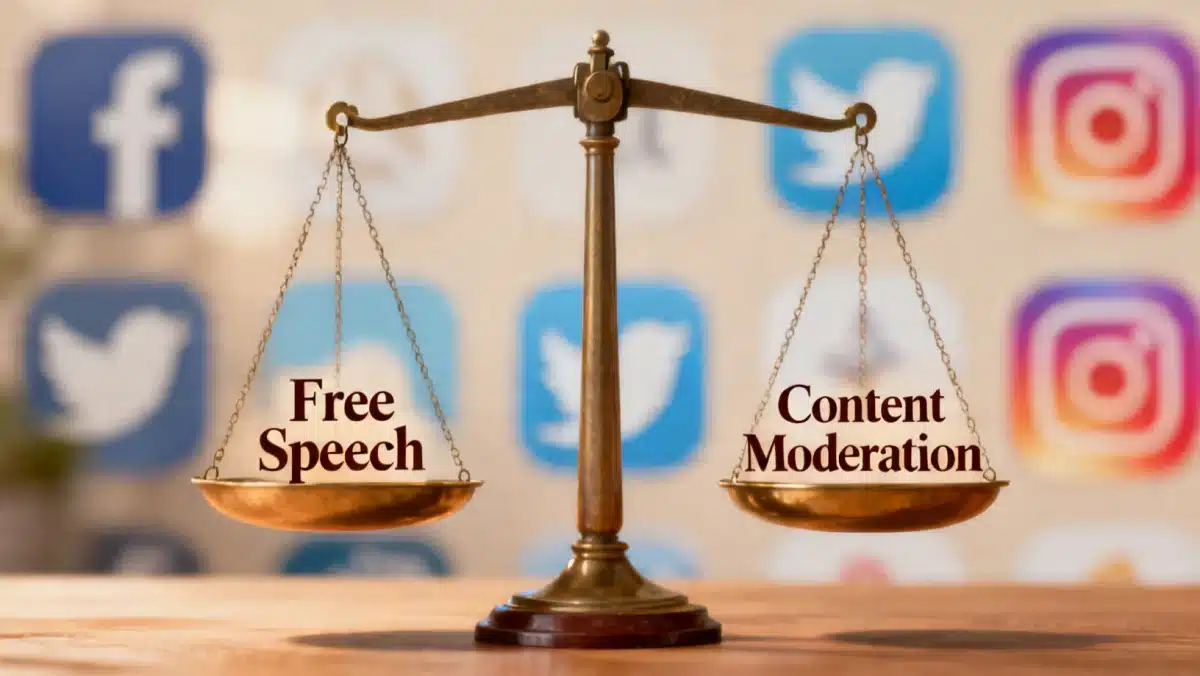
As we move further into 2026, the discussion around your right to free speech online: navigating content moderation policies in 2026 has never been more critical. How do digital platforms balance open expression with the need to curb harmful content? This article delves into the complexities, challenges, and evolving legal frameworks shaping our online interactions.
Anúncios
Understanding the evolving landscape of online free speech
The digital age has profoundly reshaped how we communicate, offering unprecedented opportunities for expression. However, this vast landscape also presents significant challenges, particularly concerning what constitutes free speech and how it is moderated on private platforms. The lines between public discourse and private platform rules are increasingly blurred.
Anúncios
In the United States, the First Amendment protects citizens from government censorship, but this protection doesn’t directly extend to private companies like social media platforms. These platforms, in their effort to maintain safe and inclusive environments, establish their own terms of service and content moderation policies, which can often feel restrictive to users.
The legal framework and its limitations
Understanding the legal nuances is crucial. While the government cannot generally restrict your speech online, platforms can. This distinction is often a source of confusion and frustration for users who feel their constitutional rights are being violated.
- Private vs. Public Sphere: The First Amendment primarily applies to government actions, not private entities.
- Terms of Service: Users agree to these terms when signing up, granting platforms the right to moderate content.
- Section 230 of the CDA: This critical piece of legislation largely protects platforms from liability for user-generated content and their moderation decisions.
The conversation in 2026 is moving towards potential legislative changes that might redefine platform responsibilities and user rights, aiming for a balance that preserves free expression while mitigating the spread of misinformation and hate speech. This ongoing debate highlights the dynamic nature of digital citizenship.
The mechanics of content moderation: AI and human oversight
Content moderation is a multi-faceted process, blending advanced artificial intelligence with human review to manage the vast amount of user-generated content. This intricate system is designed to enforce platform policies, but it is far from perfect, often leading to debates about fairness and transparency.
AI plays a significant role in identifying potentially harmful content, such as hate speech, graphic violence, or spam, at scale. These algorithms can flag content for review much faster than humans, acting as the first line of defense. However, AI often struggles with context, nuance, and satire, leading to both over-moderation and under-moderation.
Challenges in automated moderation
Relying heavily on AI presents unique challenges. What one algorithm flags as problematic, another might miss. Furthermore, malicious actors constantly evolve their tactics to circumvent detection, making the task a continuous arms race.
- Contextual Understanding: AI often misses the subtle nuances of human language and cultural references.
- Bias in Algorithms: Training data can inadvertently introduce biases, leading to disproportionate moderation against certain groups.
- Scalability vs. Accuracy: The sheer volume of content makes 100% human review impossible, forcing a trade-off.
Human moderators provide the crucial layer of contextual understanding and policy interpretation that AI lacks. They review flagged content, appeals, and complex cases that require a deeper understanding of intent and impact. This human element is vital for refining policies and ensuring a more equitable application of rules, though it also comes with its own set of challenges, including the psychological toll on moderators.
Navigating platform policies: what users need to know
For individuals to effectively exercise their free speech online, understanding the specific content moderation policies of each platform they use is paramount. These policies vary significantly between platforms like X (formerly Twitter), Facebook, Instagram, and TikTok, reflecting their different philosophies, user bases, and regulatory pressures.
Before posting, it’s always advisable to familiarize yourself with a platform’s community guidelines or terms of service. These documents outline what types of content are prohibited, such as hate speech, harassment, incitement to violence, misinformation, and copyright infringement. Being aware of these rules can help you avoid unintended violations and subsequent content removal or account suspensions.
Common policy areas and how they affect you
While specific rules differ, several common categories of prohibited content are nearly universal across major platforms. Understanding these can help users self-regulate and advocate for themselves if moderation decisions seem unjust.
- Hate Speech: Defined broadly, but generally targets content promoting hatred against protected characteristics.
- Harassment and Cyberbullying: Repeated, aggressive behavior intended to intimidate or distress.
- Misinformation and Disinformation: False or inaccurate information, particularly concerning public health, elections, or safety.
- Graphic Content: Policies vary on nudity, violence, and self-harm depictions.
When content is moderated, platforms typically notify the user, explaining the reason for the action and offering an appeals process. This process is a crucial mechanism for users to challenge decisions they believe are erroneous. Documenting the moderation notice and preparing a clear, concise appeal can significantly improve the chances of a favorable outcome.
The impact of misinformation and disinformation on free speech
The proliferation of misinformation and disinformation poses a significant threat to the integrity of online discourse and, by extension, to the responsible exercise of free speech. In 2026, distinguishing between genuine expression and harmful falsehoods remains one of the most pressing challenges for platforms and users alike.
Misinformation refers to false or inaccurate information, regardless of intent, while disinformation is deliberately fabricated or manipulated content intended to deceive. Both can have serious real-world consequences, from undermining public trust in institutions to inciting violence or influencing democratic processes.
Platform responses and user responsibility
Platforms have implemented various strategies to combat the spread of false information, including fact-checking partnerships, labeling misleading content, and downranking or removing posts that violate their policies. These measures, while necessary, often spark debates about censorship and the limits of free expression.
- Fact-Checking Initiatives: Collaborating with independent organizations to verify claims.
- Content Labels and Warnings: Alerting users to potentially false or disputed information.
- Algorithmic Adjustments: Reducing the visibility of content identified as misleading.
However, the responsibility does not solely rest with platforms. Users also play a critical role in curbing the spread of misinformation by critically evaluating sources, questioning sensational headlines, and refraining from sharing unverified content. Developing digital literacy skills is increasingly important for navigating the complex information ecosystem of 2026, empowering individuals to make informed decisions about what they consume and share.
Appealing moderation decisions and advocating for your rights
Even with sophisticated systems, content moderation is not infallible. Mistakes happen, and users may find their legitimate content removed or their accounts restricted. Knowing how to appeal these decisions and effectively advocate for your rights is crucial for maintaining your online presence and ensuring your voice is heard.
Most major platforms offer a clear appeals process. When your content is removed or an action is taken against your account, you typically receive a notification explaining the violation. This notification should also provide instructions on how to submit an appeal. It’s essential to follow these instructions carefully and provide all requested information.
Effective strategies for appealing decisions
A well-crafted appeal can significantly increase your chances of a successful reversal. Rather than simply expressing frustration, focus on providing clear, concise arguments supported by evidence.
- Be Specific: Clearly state why you believe the moderation decision was incorrect, referencing specific platform policies if possible.
- Provide Context: Explain the intent behind your content and any relevant background information that might have been missed.
- Maintain Professionalism: While frustrating, a respectful tone is more likely to be taken seriously by reviewers.
- Document Everything: Keep records of the original content, the moderation notice, and your appeal submission.
Beyond individual appeals, there’s a growing movement towards greater transparency and accountability from platforms. Advocacy groups and legal organizations are working to establish clearer frameworks for online free speech and robust mechanisms for redress. Staying informed about these developments and supporting such initiatives can contribute to a more equitable digital environment for everyone.
Future trends: legislation, decentralization, and user empowerment
The landscape of free speech online is continuously evolving, with several key trends shaping its future in 2026 and beyond. Legislative efforts, technological innovations like decentralization, and a growing emphasis on user empowerment are all contributing to a dynamic shift in how we understand and protect our digital expression.
Governments worldwide, including in the United States, are exploring new legislation to address the complexities of content moderation. These proposals range from reforming Section 230 to mandating greater transparency from platforms and establishing clearer guidelines for what constitutes harmful content. The goal is often to strike a better balance between protecting free speech and preventing online harms, though achieving consensus remains challenging.
Decentralized platforms and user control
Technological advancements are also playing a crucial role. The rise of decentralized social media platforms, often built on blockchain technology, offers an alternative model for online interaction. These platforms aim to give users more control over their data and content, reducing the power of centralized entities to moderate speech.
- Blockchain-Based Platforms: Offering immutable records and user-controlled content.
- Federated Networks: Allowing independent servers to interact, distributing moderation power.
- Personal Data Control: Empowering users to manage their own information and privacy settings.
Ultimately, the future of free speech online hinges on empowering users with better tools, greater transparency, and a deeper understanding of their rights and responsibilities. This includes fostering digital literacy, promoting critical thinking, and advocating for policies that support open discourse while safeguarding against abuse. By engaging actively in these discussions and developments, individuals can help shape a more resilient and equitable online future.
| Key Aspect | Brief Description |
|---|---|
| Legal Framework | First Amendment protects from government, not private platforms. Section 230 protects platforms from liability. |
| Content Moderation | Blend of AI and human review to enforce platform policies, often struggling with context. |
| Misinformation Impact | Threatens online discourse; platforms use fact-checking, but user responsibility is crucial. |
| Future Trends | Legislative changes, decentralized platforms, and user empowerment shaping future online speech. |
Frequently asked questions about online free speech
Generally, no. The First Amendment protects you from government censorship, but private companies like social media platforms are not government entities. They can set their own terms of service and moderate content as they see fit, provided they don’t violate other laws.
Section 230 largely shields online platforms from liability for content posted by their users and for their decisions to moderate content. This means platforms are generally not held responsible for what users say, nor for taking down or failing to take down content.
Most platforms offer an appeals process. When your content is removed, you should receive a notification with instructions. Clearly state why you believe the decision was incorrect, provide context, and cite relevant platform policies in your appeal.
Misinformation refers to false or inaccurate information spread without malicious intent. Disinformation, however, is deliberately created and spread to deceive or manipulate. Both can have harmful impacts, but their underlying intent differs significantly.
Decentralized platforms offer potential solutions by distributing control and reducing the power of single entities to moderate. They aim to give users more autonomy over their content and data, fostering environments less susceptible to traditional censorship, though new challenges may arise.
Conclusion
Navigating your right to free speech online: navigating content moderation policies in 2026 remains a complex and ever-evolving challenge. As digital platforms continue to shape our discourse, understanding the distinction between constitutional protections and platform policies is paramount. While AI and human moderation strive to create safer online spaces, the ongoing debates around misinformation, transparency, and accountability highlight the need for both legislative evolution and increased user literacy. Ultimately, safeguarding free expression in the digital age requires a collective effort from platforms, policymakers, and individuals to foster an environment where diverse voices can thrive responsibly.