Decoding Voting Rights 2026: Changes & Ballot Assurance
Anúncios
Understanding the evolving landscape of voting rights for the 2026 elections is crucial for every American citizen to ensure their democratic participation and that their ballot is properly counted.
As the 2026 election cycle approaches, many Americans are asking critical questions about their ability to participate. This guide to voting rights 2026 will help you navigate the latest changes and ensure your ballot counts, providing clarity in an often complex landscape.
Anúncios
Anúncios
Understanding the Evolving Landscape of Election Laws
The framework governing elections in the United States is dynamic, continually shaped by legislative actions, judicial rulings, and state-level initiatives. These changes, often subtle, can significantly impact voter access and the electoral process. For the 2026 elections, it’s vital to grasp the foundational shifts that might influence how and where you cast your vote.
Numerous factors contribute to the ongoing evolution of election laws. These include responses to past election challenges, efforts to enhance election security, and initiatives aimed at either expanding or restricting voter participation. Staying informed about these broad trends is the first step toward safeguarding your right to vote.
Recent legislative trends and their impact
In recent years, several states have enacted new voting laws, touching upon aspects like voter ID requirements, early voting periods, and mail-in ballot procedures. These legislative shifts often reflect differing philosophies on election administration.
- Voter ID laws: Many states have strengthened or introduced new photo ID requirements, which can pose challenges for voters without readily available identification.
- Early voting and absentee ballots: Some states have expanded early voting options, while others have tightened restrictions on absentee ballot eligibility and submission deadlines.
- Voter registration deadlines: Changes to voter registration cutoffs can affect last-minute registrants, making it crucial to plan ahead.
The impact of these legislative trends is not uniform across the nation. What applies in one state may be entirely different in another, necessitating a localized understanding of the rules.
Ultimately, the evolving landscape of election laws demands proactive engagement from citizens. Understanding these changes ensures that every eligible voter can navigate the system effectively and confidently exercise their democratic right in the 2026 elections.
Key Changes to Voter Registration for 2026
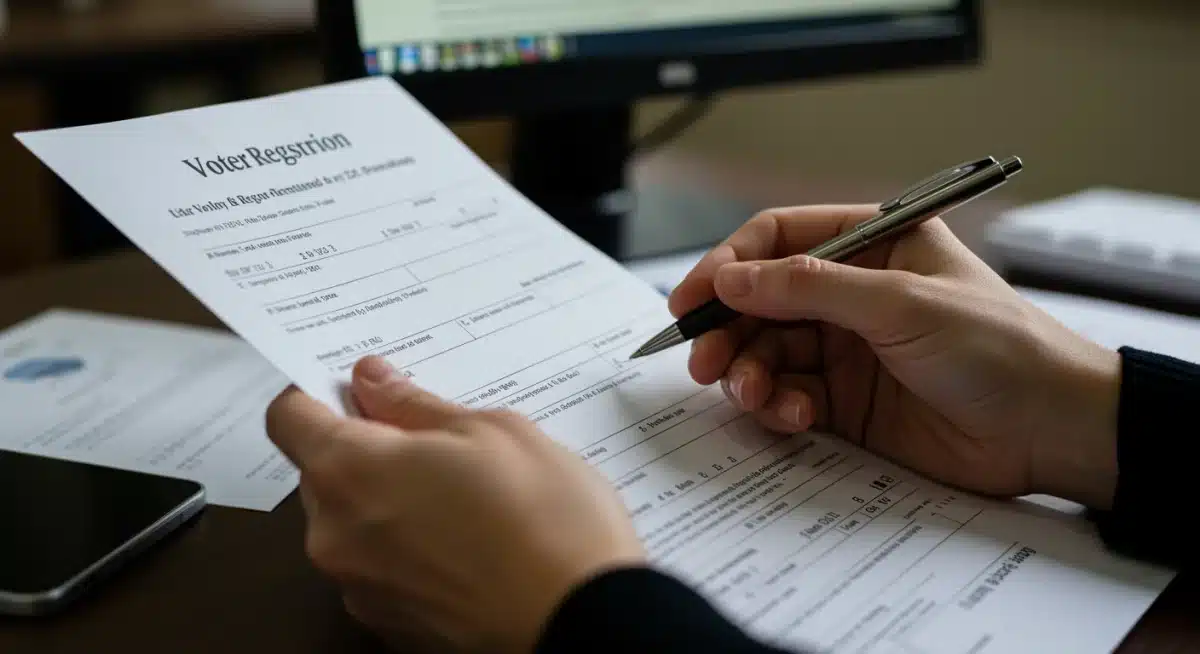
Voter registration is the bedrock of democratic participation, and for the 2026 elections, several states are implementing new protocols that could affect your ability to register and vote. These changes range from adjustments in online registration options to modifications in proof of residency requirements, making it essential to verify your status.
Many jurisdictions are streamlining their registration processes through digital platforms, while others are introducing more stringent verification steps. Being aware of these specific changes in your state is crucial to avoid any last-minute hurdles.
Online registration and automatic voter registration
The convenience of online registration has grown significantly, with many states now offering robust digital portals. Additionally, automatic voter registration (AVR) systems are gaining traction, enrolling eligible citizens when they interact with government agencies like the DMV.
- Online portals: Check your state’s official election website for secure online registration tools and deadlines.
- AVR expansion: Identify if your state has implemented or expanded AVR, which can simplify the registration process for many.
- Proof of residency: Be prepared to provide necessary documentation if your state requires it, especially if you have recently moved.
While these advancements aim to increase voter participation, they also come with specific requirements that must be met. Ensure all your information is current and accurately submitted to prevent any issues.
It is always a good practice to confirm your registration status well in advance of the election. Tools are often available online to verify your details, making sure your record is active and correct. Proactive checking is the best defense against any unforeseen registration problems for the 2026 elections.
Navigating New Voter ID Requirements
Voter identification requirements continue to be one of the most debated aspects of election law, and for the 2026 elections, new or updated ID rules may be in effect in your state. These regulations dictate what forms of identification are acceptable at the polls, ranging from photo IDs to non-photo alternatives.
The specifics vary widely by state, creating a patchwork of requirements across the country. Understanding whether your state demands a photo ID, a non-photo ID, or no ID at all is fundamental to a smooth voting experience.
Types of acceptable identification
States typically categorize acceptable IDs into several groups, each with its own set of rules. Some common forms include driver’s licenses, state-issued ID cards, and passports. However, some states also accept utility bills or bank statements.
- Photo ID states: If your state requires a photo ID, ensure yours is current and recognized by election officials. Examples include driver’s licenses, military IDs, and passports.
- Non-photo ID states: Some states allow non-photo documents like utility bills, bank statements, or government checks. Verify which documents are permissible.
- No ID required states: A few states do not require any identification at the polls, relying on signature verification or other methods.
It is crucial to know the precise requirements of your state and local jurisdiction. If you lack the necessary identification, many states offer free or low-cost options to obtain one, but this process takes time.
Preparing your identification in advance can prevent unnecessary stress and potential disenfranchisement on Election Day. Always check your state’s official election website for the most up-to-date and accurate information regarding voter ID laws for the 2026 elections.
Understanding Absentee and Early Voting Options
Absentee and early voting options offer flexibility for many voters, but their availability and specific rules are subject to change for the 2026 elections. These methods allow citizens to cast their ballots before Election Day, either by mail or at designated early voting centers, reducing congestion at traditional polling places.
The landscape of absentee and early voting is constantly evolving, with some states expanding access while others introduce new restrictions. Knowing your state’s specific policies is crucial for planning your vote effectively.
Deadlines and eligibility for mail-in ballots
Mail-in ballots, or absentee ballots, typically require voters to apply for them by a specific deadline and return them by Election Day. Eligibility criteria can vary significantly, with some states offering universal mail-in voting and others requiring specific reasons.
- Application deadlines: Be aware of the last day to request an absentee ballot in your state. Missing this deadline could mean you cannot vote by mail.
- Return deadlines: Understand when your completed ballot must be received by election officials. Postmarks are not always sufficient; some states require receipt by Election Day.
- Eligibility reasons: Check if your state requires a specific excuse (e.g., illness, travel) to vote absentee, or if it offers no-excuse absentee voting.
Early in-person voting provides another convenient option, allowing you to vote at a designated location before Election Day. These centers often have extended hours and can alleviate long lines.
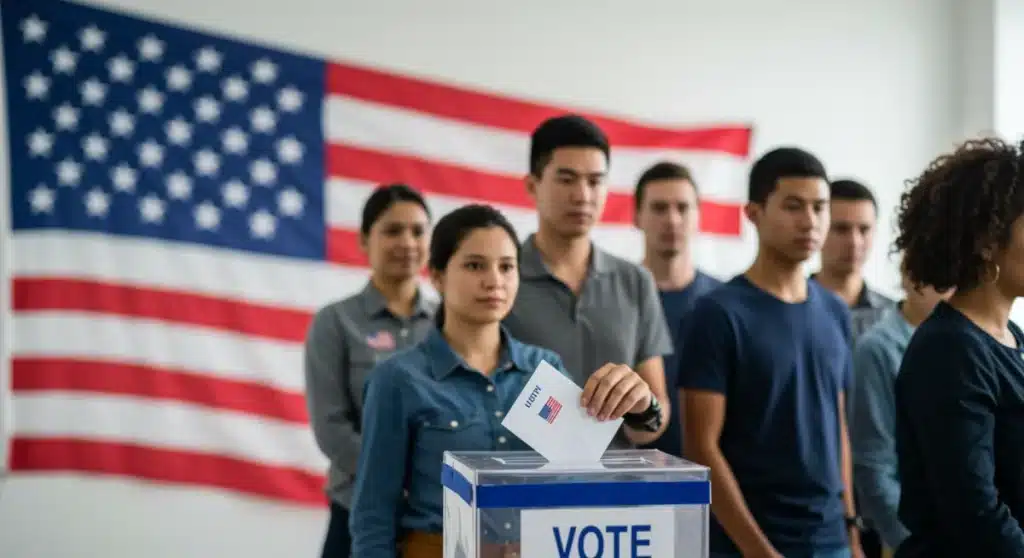
Regardless of your preferred method, it is vital to track all relevant deadlines and understand the procedures fully. Verify your options and plan your voting strategy well in advance to ensure your ballot for the 2026 elections is cast successfully.
Ensuring Your Ballot Is Counted: Common Pitfalls and Solutions
Even after successfully registering and casting your ballot, there are common issues that can lead to it being uncounted. Understanding these pitfalls and knowing how to address them is key to ensuring your democratic voice is heard in the 2026 elections. From signature mismatches to improperly filled-out forms, proactive measures are essential.
The process of ballot verification is rigorous, and minor errors can sometimes lead to rejection. Being informed about these potential issues empowers you to take corrective action if necessary.
Signature verification and ballot curing processes
One of the most frequent reasons for ballot rejection, particularly for mail-in ballots, is a signature mismatch. Election officials compare the signature on your ballot with those on file, and discrepancies can trigger a review.
- Signature consistency: Practice signing your name consistently, especially if you frequently vote by mail.
- Ballot curing: Many states have a ‘ballot curing’ process, allowing voters to correct issues like mismatched signatures or missing information. Respond promptly to any notifications from election officials.
- Filling out the ballot correctly: Follow all instructions carefully, using the correct pen, marking choices clearly, and avoiding stray marks.
Beyond signature issues, other common pitfalls include failing to sign the ballot envelope, not including required identification with an absentee ballot, or submitting a ballot past the deadline. Each of these can lead to your vote not being counted.
If you have any doubts about your ballot’s status, utilize online ballot tracking systems provided by your state or local election office. These tools allow you to monitor your ballot’s journey and confirm it has been received and counted. Staying vigilant helps guarantee your vote for the 2026 elections makes a difference.
Resources and Support for Voters in 2026
Navigating the complexities of voting rights and election procedures for the 2026 elections can be daunting, but numerous resources are available to help. From official government websites to non-partisan advocacy groups, these organizations provide crucial information, assistance, and support to ensure every eligible citizen can cast their vote with confidence.
Knowing where to turn for accurate, up-to-date information is paramount. Relying on credible sources helps cut through misinformation and provides clear guidance on your specific voting rights and responsibilities.
Official election websites and non-partisan organizations
Your state’s official election website is the primary source for localized information on voter registration, ID requirements, polling locations, and ballot tracking. These sites are maintained by election officials and are designed to provide accurate data.
- State election websites: Always start with your state’s Secretary of State or Election Commission website for the most authoritative information.
- Local election offices: Your county or municipal election office can provide hyper-local details, such as specific polling place changes or local ballot drop-off locations.
- Non-partisan advocacy groups: Organizations like the League of Women Voters, Vote.org, and Election Protection offer valuable resources, voter helplines, and educational materials.
These resources often provide voter guides, FAQs, and even direct assistance for voters facing challenges. Many also offer tools to check your registration status, find your polling place, and understand what will be on your ballot.
Don’t hesitate to reach out if you encounter any difficulties or have questions. Utilizing these resources can empower you with the knowledge and support needed to confidently participate in the 2026 elections, ensuring your voice is heard and your rights are protected.
| Key Point | Brief Description |
|---|---|
| Evolving Election Laws | Legislative and judicial changes continuously reshape voter access and election procedures for 2026. |
| Voter Registration Changes | New online options and adjusted deadlines require proactive verification of your registration status. |
| New Voter ID Rules | Understand specific state requirements for photo or non-photo identification at the polls. |
| Ballot Counting Assurance | Be aware of common pitfalls like signature mismatches and utilize ballot curing processes. |
Frequently Asked Questions About 2026 Voting Rights
The 2026 elections may see expanded online registration and automatic voter registration (AVR) in some states, while others might introduce stricter proof of residency requirements. Always check your state’s official election website for the most current and localized information on registration deadlines and processes.
To determine your state’s precise voter ID requirements, visit your state’s Secretary of State or Election Commission website. These official sources will detail whether a photo ID is required, what alternative forms of ID are accepted, or if no ID is needed at all for the 2026 elections.
Mail-in voting rules for 2026 will vary by state. Some states may have expanded no-excuse absentee voting, while others might have tightened eligibility criteria or introduced earlier application and return deadlines. Always check your state’s election website for specific eligibility, application, and submission details.
If your mail-in ballot is challenged, often due to a signature mismatch or missing information, you may have the opportunity to ‘cure’ it. Election officials are usually required to notify you, allowing you to correct the issue within a specific timeframe. Respond promptly to any official communication.
For reliable information, always consult your state’s official election website or your local county election office. Additionally, non-partisan organizations such as the League of Women Voters, Vote.org, and Election Protection provide valuable resources, voter guides, and assistance to citizens.
Conclusion
Understanding and actively engaging with your voting rights for the 2026 elections is more critical than ever. The evolving landscape of election laws, registration processes, and identification requirements necessitates informed action from every citizen. By staying updated with official government resources, preparing your documentation in advance, and understanding ballot verification processes, you can confidently navigate the electoral system. Your informed participation is not just a right, but a vital contribution to the democratic process, ensuring that your voice is heard and your ballot truly counts.