2026 Census Data: Impact on Public Services & Funding
Anúncios
The 2026 Census Data will critically inform how public services are allocated and funded across the U.S., reflecting significant demographic shifts and shaping future community needs.
Anúncios
Have you ever wondered how the numbers from a census truly affect your daily life? The upcoming 2026 Census Data Impact is set to be a pivotal moment, influencing everything from local schools to healthcare systems and even emergency services in your community.
Anúncios
Understanding the 2026 Census: More Than Just a Headcount
The 2026 Census is far more than a simple count of people; it’s a comprehensive snapshot of the nation’s ever-evolving demographic landscape. This vital data collection effort provides the foundational insights necessary for effective governance, resource allocation, and strategic planning across the United States for the next decade.
Without accurate census data, policymakers would be operating in the dark, unable to make informed decisions about where and how to invest in public services. The census captures critical information on population size, age, ethnicity, household composition, and housing characteristics, painting a detailed picture of who we are as a nation.
The Mechanics of Data Collection
Collecting census data is a monumental task, involving extensive outreach and sophisticated methodologies to ensure accuracy and completeness. The process relies on a combination of self-response questionnaires, field enumerations, and administrative records.
- Digital Self-Response: Encouraging online participation for efficiency and speed.
- Traditional Mail-In: Offering paper forms for those without internet access or preference.
- Field Operations: Census takers visiting households that do not self-respond, ensuring everyone is counted.
- Data Security: Implementing rigorous measures to protect individual privacy and data confidentiality.
The accuracy of this data is paramount, as even small inaccuracies can lead to significant misallocations of resources. The commitment to a thorough and inclusive count ensures that every community’s needs are appropriately represented in federal funding formulas and legislative district boundaries. Understanding these mechanisms helps appreciate the depth and reliability of the information we receive.
In essence, the 2026 Census will serve as the demographic compass for the nation, guiding decisions that will impact millions of Americans. Its findings will underscore the dynamic nature of our society, highlighting emerging trends and persistent challenges that require thoughtful and data-driven solutions. This foundational understanding is crucial for appreciating the subsequent impacts on public services and funding.
Demographic Shifts: A Changing American Landscape
The United States is a nation in constant flux, and the 2026 Census is expected to reveal significant demographic shifts that will redefine communities nationwide. These changes extend beyond simple population growth, encompassing alterations in age distribution, ethnic composition, and urban-rural migration patterns, each carrying profound implications for public services.
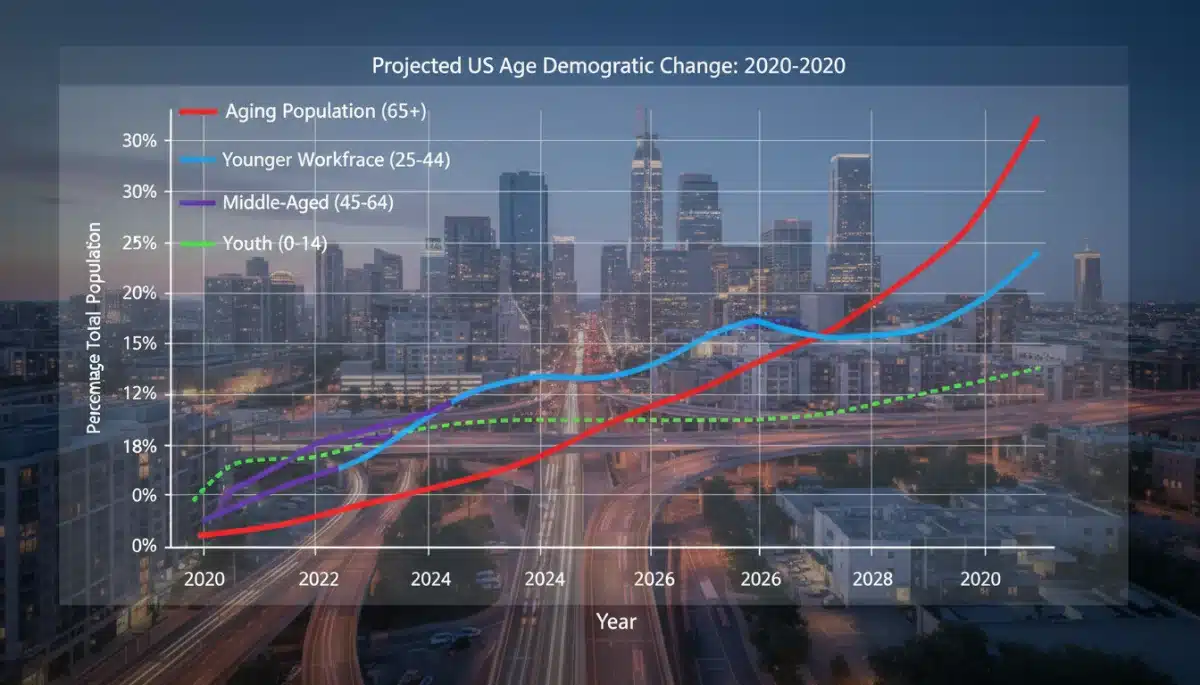
One of the most prominent trends is the continued aging of the population. As baby boomers advance into their senior years, the demand for healthcare services, elder care facilities, and accessible infrastructure will inevitably increase. This demographic shift places new pressures on social security, Medicare, and local support systems.
The Rise of Diverse Communities
Another critical aspect of demographic change is the increasing ethnic and racial diversity across the country. This trend enriches the cultural fabric of the nation but also presents challenges and opportunities for public services.
- Language Services: Greater need for multilingual support in schools, hospitals, and government offices.
- Culturally Competent Healthcare: Developing healthcare models that respect diverse cultural practices and beliefs.
- Educational Equity: Addressing varied educational needs and ensuring equitable access to resources for all students.
Furthermore, migration patterns continue to reshape urban and suburban areas. While some cities experience revitalization, others face declining populations, leading to unique challenges in maintaining infrastructure and services. Conversely, suburban areas may experience rapid growth, straining existing resources like schools, roads, and utilities. The census data will provide granular detail on these movements, allowing for more targeted and efficient planning.
These demographic shifts are not merely statistics; they represent fundamental changes in the lives of American families and individuals. Recognizing and preparing for these transformations is essential for creating resilient and responsive public service systems. The 2026 Census will provide the empirical evidence needed to guide these preparations effectively, ensuring that services remain relevant and accessible to all residents.
Federal Funding Allocation: The Data-Driven Budget
The 2026 Census Data plays an indispensable role in the allocation of federal funding, influencing how billions of dollars are distributed to states and local communities. This data-driven approach ensures that resources are directed to where they are most needed, based on population size, poverty levels, and other key demographic indicators.
Various federal programs, ranging from education and housing to transportation and healthcare, rely heavily on census figures. For instance, Title I funding for schools, Medicaid allocations, and highway planning grants are all directly impacted by the population counts and demographic characteristics reported in the census.
Key Programs Affected by Census Data
Understanding which programs are tied to census data highlights the profound financial implications of an accurate count.
- Medicaid: Funding for healthcare services for low-income individuals and families.
- SNAP (Food Stamps): Support for nutrition assistance programs.
- Section 8 Housing Vouchers: Assistance for affordable housing.
- Highway Planning and Construction: Grants for infrastructure development and maintenance.
The process of allocation is complex, often involving formulas that factor in not just raw population numbers but also specific demographic characteristics like age, income, and rurality. An undercount in any community can result in a significant loss of federal dollars, directly impacting the quality and availability of essential services for its residents. Conversely, an accurate count ensures that communities receive their fair share, enabling them to address local needs effectively.
The financial stakes are incredibly high for states and municipalities. The data collected in 2026 will determine funding levels for the next decade, making it a critical foundation for long-term fiscal planning. It underscores why an accurate and comprehensive census is not just a statistical exercise, but a fundamental pillar of equitable resource distribution across the nation.
Impact on Public Services: Adapting to New Realities
The demographic shifts revealed by the 2026 Census Data will necessitate significant adaptations in the provision of public services. From education to emergency response, virtually every sector will need to recalibrate its strategies to meet the evolving needs of the American populace.
In education, changes in school-age populations will dictate where new schools are built, where existing ones are expanded, or in some cases, where consolidation might be necessary. Furthermore, increasing diversity will require schools to enhance language support programs, culturally responsive curricula, and resources for students from various backgrounds.
Healthcare System Adjustments
The healthcare system, already under immense pressure, will face new challenges and demands based on census findings. An aging population will increase the need for geriatric care specialists, chronic disease management, and long-term care facilities.
- Geriatric Care: Expansion of services for the elderly, including specialized medical facilities.
- Mental Health Services: Increased demand for accessible and culturally sensitive mental health support.
- Telehealth Infrastructure: Investment in remote healthcare options to reach diverse and geographically dispersed populations.
Emergency services, including police, fire, and ambulance, will also need to adapt. Population density changes will influence deployment strategies and resource allocation, ensuring timely and effective responses. Communities experiencing rapid growth may require additional personnel and equipment, while those facing population decline might need to rethink service delivery models.
Beyond these immediate impacts, the census data will inform urban planning and infrastructure development. Decisions about public transportation routes, housing projects, and recreational facilities will all be guided by an understanding of where people live, work, and congregate. This adaptive planning is essential for creating sustainable and functional communities that serve the needs of all residents effectively.
Local Community Planning: Tailoring Solutions
While federal funding and national policies are crucial, the true impact of the 2026 Census Data is often felt most acutely at the local community level. Cities, towns, and counties rely on this granular information to tailor solutions that address their unique demographic profiles and specific needs.
Local planners use census data to forecast demand for public services, such as water, sanitation, and waste management. Understanding population density and growth projections helps them make informed decisions about infrastructure investments, ensuring that basic utilities can adequately support the community.
Strategic Planning for Growth and Decline
Whether a community is experiencing rapid growth or a decline in population, the census provides the necessary data for strategic planning.
- Growing Communities: Planning for new schools, housing developments, and transportation networks.
- Declining Communities: Strategies for revitalizing neighborhoods, managing vacant properties, and optimizing existing services.
- Economic Development: Attracting businesses and industries that align with the local workforce’s demographics and skills.
Community leaders also leverage census data for social planning. This includes developing programs for youth, seniors, and vulnerable populations, ensuring that support services are available where they are most needed. For example, an increase in single-parent households might prompt the expansion of childcare subsidies or after-school programs.
Furthermore, local advocacy groups and non-profits use census data to identify underserved populations and advocate for resources. This grassroots engagement ensures that the voices of all community members are heard and that their needs are represented in planning processes. The census empowers local stakeholders to build stronger, more equitable communities from the ground up, making data-driven decisions that directly improve residents’ quality of life.
Challenges and Opportunities for the Next Decade
The insights derived from the 2026 Census Data present both significant challenges and unparalleled opportunities for the United States over the coming decade. Navigating these will require innovative thinking, collaborative efforts, and a steadfast commitment to evidence-based policymaking.
One of the primary challenges will be ensuring equitable resource distribution in an increasingly diverse and dynamic nation. As some regions grow rapidly while others stagnate or decline, the political will to reallocate resources effectively will be tested. This will necessitate difficult conversations and potentially new funding formulas to prevent widening disparities.
Leveraging Data for Innovation
Despite these challenges, the census data offers immense opportunities for innovation in public service delivery. By understanding specific demographic needs, governments can design more targeted and efficient programs.
- Smart City Initiatives: Using data to optimize urban planning, traffic management, and resource consumption.
- Personalized Public Health: Tailoring health interventions to specific demographic groups with higher risk factors.
- Workforce Development: Aligning educational and training programs with the evolving demands of the labor market.
Another opportunity lies in fostering greater civic engagement. When communities understand how census data directly impacts their lives, it can motivate greater participation in local governance and advocacy efforts. This increased engagement can lead to more responsive and accountable public services, as citizens become more involved in shaping their own futures.
Ultimately, the 2026 Census Data provides a critical roadmap for the next ten years. It compels leaders and citizens alike to confront demographic realities and proactively plan for a future where public services are resilient, equitable, and capable of meeting the needs of all Americans. Embracing these insights will be key to building a more prosperous and inclusive society.
| Key Point | Brief Description |
|---|---|
| Federal Funding | Census data directly dictates billions in federal aid for states and communities. |
| Demographic Shifts | Reveals changes in age, diversity, and migration patterns impacting service demand. |
| Public Service Adaptation | Requires recalibration of education, healthcare, and emergency services. |
| Local Planning | Enables communities to tailor infrastructure and social programs to local needs. |
Frequently asked questions about 2026 census data
The 2026 Census Data is crucial as it provides the most comprehensive and accurate demographic information, directly influencing how billions of federal dollars are allocated for public services like education, healthcare, and infrastructure across the United States. It ensures resources are distributed equitably based on community needs.
Demographic shifts, such as changes in school-age population or ethnic diversity, directly affect local schools. They dictate the need for new facilities, teacher recruitment, language support programs, and culturally relevant curricula, ensuring that educational resources meet the evolving needs of students.
Census data is fundamental for healthcare funding by informing allocations for programs like Medicaid and Medicare. It helps identify areas with aging populations, specific health disparities, or growing communities, ensuring that healthcare services and facilities are adequately funded to meet patient demands.
Yes, census data significantly aids emergency services by providing insights into population density, age distribution, and geographic shifts. This information allows police, fire, and ambulance departments to strategically deploy resources, optimize response times, and plan for future needs in both growing and declining areas.
Communities can leverage 2026 Census Data for long-term planning by forecasting infrastructure needs, developing targeted social programs, and attracting appropriate economic development. It enables local governments to make informed decisions on housing, transportation, and public facilities for the next decade, fostering sustainable growth.
Conclusion
The 2026 Census Data stands as a critical blueprint for the future of public services and funding across the United States. Its profound insights into demographic shifts will not only redefine how federal resources are distributed but also compel local communities to adapt and innovate. By embracing the comprehensive understanding offered by this data, policymakers and citizens can collaboratively build more resilient, equitable, and responsive systems that truly serve the evolving needs of all Americans for the next decade and beyond.